FAQ
Frequently Asked Questions
Find answers to frequently asked questions about the Louise De Masi Art School, online classes, watercolour painting, art supplies, artwork and more.
Disclosure: This post contains affiliate links, which means I may earn a commission if you make a purchase through my link at no extra cost to you.
Watercolour Art
-
Watercolour art is a medium of painting using water-based pigments, usually on paper. The transparency and luminosity of the paint make it popular for creating delicate, airy and fluid artworks.
-
Watercolour wall art refers to watercolour paintings that are hung on walls. They can include a wide variety of subject matter, including animals, flowers, birds, landscapes, and more.
-
Item
Yes, Louise De Masi sells original watercolour art, paintings, and prints in her online shop. You can explore a variety of works that showcase her unique style and artistic vision.
description
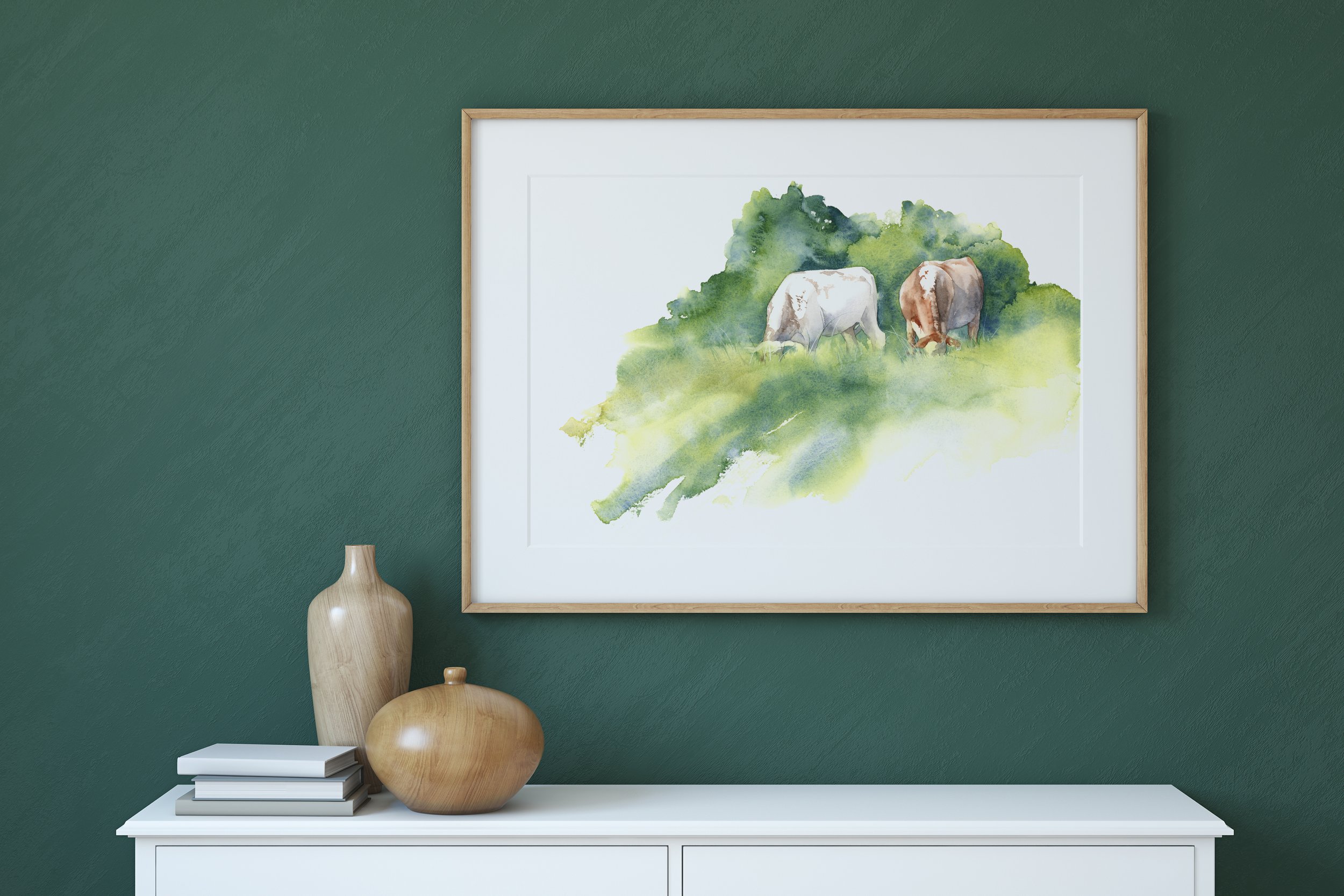
“Dorrigo Cows” Landscape vignette
Art Classes
-
The Louise De Masi Art School offers step-by-step classes for a range of skill levels. Louise specialises in watercolour, while selected guest teachers bring complementary subjects and mediums to the Art School, including drawing and illustration.
-
Yes. Many classes are suitable for beginners and are taught using clear, step-by-step instruction. If you’re completely new to watercolour, visit our Watercolour for Beginners page, where you can start with Louise’s free beginner class.
-
There are two main ways to learn with Louise:
Patreon membership — access Louise’s full tutorial library for as long as your membership remains active.
Louise De Masi Art School — purchase selected standalone classes with lifetime access and no subscription required.
Purchase an individual class, technique tutorial, or bundle at the Louise De Masi Art School and you’ll have lifetime access to the lessons and all downloadable files. You can learn in your own time at your own pace.
If you prefer, you can subscribe on Patreon and as long as your membership is active, you'll have unlimited access to all of her tutorials.
Louise has a full Patreon Index of all her online classes and technique videos that link directly to Patreon so that you can easily find each and every one of them.
Louise also has a selection of comprehensive step-by-step tutorials, available on Skillshare.
-
Patreon provides membership access to Louise’s extensive watercolour tutorial library, including new tutorials and downloadable resources.
The Louise De Masi Art School offers standalone classes that can be purchased individually with lifetime access. The Art School is also home to classes from selected guest teachers in complementary creative subjects.
-
Tutorials include a video demonstration, line drawings, a supplies list, progress photos, and a final reference image.
-
Louise De Masi is the founder and lead watercolour teacher. The Art School also features carefully selected guest teachers who bring their own artistic styles, subjects and skills while following the Art School’s clear, step-by-step teaching approach.
-
We’re interested in hearing from skilled artists and teachers whose subjects and mediums complement the Art School.
Visit Teach With Us to learn more about our teaching approach and submit an expression of interest
-
No. Guest teacher classes are standalone Louise De Masi Art School classes and are purchased separately. They include lifetime access and do not require a subscription.
-
Tutorials are designed to be accessible for all skill levels. Beginners have successfully completed advanced tutorials with guidance.
-
Subscribers gain access to over 200 exclusive video tutorials, reference materials, downloadable resources, and a supportive art community.
-
Yes, all previous tutorials remain accessible for as long as you are a patron.
-
Louise releases at least one new Patreon tutorial every month, along with other content to inspire and improve your skills.
-
You will lose access to the tutorials and resources after your billing period ends.
-
Louise does not provide individual feedback or live Q&A sessions at this time.
-
This depends on the class and the copyright or licensing conditions of the reference material used.
Unless otherwise stated, artwork created by following a Louise De Masi Art School class is for personal and educational use only. Where commercial use is permitted, this will be explained in the class materials or Supplies List.
Please check the copyright and usage information provided with your class before selling artwork or entering it into a competition.
For Louise De Masi’s tutorials
The Supplies List for each tutorial identifies the source of the reference photograph.
Permission is not given to reproduce Louise’s earlier paintings that are not tutorials. Some of these artworks are licensed, while others were painted from photographs that Louise received individual permission from the photographer to use. That permission applies to Louise and does not extend to others.
If Louise uses a photograph that is available for others to download and use, such as an eligible image from Pixabay, you may sell artwork you create from the tutorial provided the reference image’s licence permits commercial use. Please check the current usage rights for the image.
If Louise uses a photograph purchased from Wildlife Reference Photos, you will need to purchase and download the photograph yourself before selling artwork created from the tutorial. This is in accordance with the licensing terms of Wildlife Reference Photos.
If you share a finished painting from one of Louise’s tutorials on social media, Louise would really appreciate you crediting her and mentioning that you created the painting as part of one of her tutorials.

Louise painting a rose for a tutorial
Art Supplies & Materials
-
To get started with watercolour painting, you'll need watercolour paints, 100% cotton watercolour paper, brushes, and water. You will also need a palette, old towel, and a water container. If you decide to stretch your paper you will also need a rigid board such as gator board some gummed tape, stapler and staples. Check out the Art Supplies page.
-
For beginners in watercolour painting, choosing the right set of paints is essential. Some highly recommended brands include Winsor & Newton, Daniel Smith, Schmincke, and Roman Szmal. A good beginner set typically features a diverse selection of colours. As you advance your skills, consider supplementing your collection with individual tubes or pans. To create a broad spectrum of colours, ensure you have at least a warm and cool red, a warm and cool yellow, and a warm and cool blue. These foundational colours will enable you to mix an array of shades for your artwork. Check out Louise's recommended art supplies.
-
Yes she does. Louise recently partnered with Jackson’s Art Supplies to produce several Louise De Masi branded art supplies. This exclusive collection includes :
Schmincke Horadam Watercolour Paint: Louise De Masi Set – 5ml – Set of 12
Studio Synthetic Watercolour Brushes: Round – Louise De Masi Selection Set of 5
Ceramic Palette: 33 Well – 32.5x32.5cm (Apx.13x13in)
Stackable Round Ceramic Palette: 7.5cm (3in) Diameter – Set of 6
Fabriano Artistico Fat Pad: Spiral Bound – 100% Cotton, 300gsm – A4, 20 Pages
-
No, but Louise mainly uses her Schmincke watercolour palette and branded tools in tutorials, to simplify and enhance your experience.
-
The best paper for watercolour painting is 100% cotton rag paper. Louise De Masi recommends brands such as Arches, Saunders Waterford, and Fabriano Artistico.
Watercolour paper comes in different weights and textures. Look for paper specifically designed for watercolour painting, and choose a weight that suits your painting style. A rough texture will create a more textured look (good for landscapes), while a smoother texture is better for fine details and printing. The texture of cold press paper, sits in between hot press and rough paper and is the most popular texture among artists.
Watercolour board is as it sounds, a thick board, that doesn’t require stretching and can be great for large or small paintings if you don’t want to stretch your paper.
-
Different brushes have different shapes and sizes, which are suited to different techniques. Generally, round brushes are good for washes and details, while flat brushes are good for broad strokes and edges. Experiment with different brushes to see which ones work best for you. Read more about brushes here.
-
It’s useful to know the pigment codes of the paint you use because colour names vary between different brands. The same pigment can have different names. For example, the pigment code PB15 is called Manganese Blue Hue in the Daniel Smith brand but in the Winsor & Newton brand it’s called Winsor Blue.
If you are following a painting tutorial, knowing the pigment codes can help you substitute colours between different brands. Louise made a post about substituting paint colours.
-
Whilst gouache and watercolour paints may look similar at first glance, they have distinctive qualities that set them apart. Differences in opacity, transparency, texture, and permanence help set them apart.
Watercolour is a transparent medium that tends to be more fluid, while gouache is an opaque medium with a much thicker consistency. Watercolour paints are known for their soft, delicate washes of colour while gouache offers bright, heavy pigment coverage when applied. Because gouache has larger pigment particles than watercolour, it is more opaque. See more information at this post on the Difference Between Watercolour and Gouache.
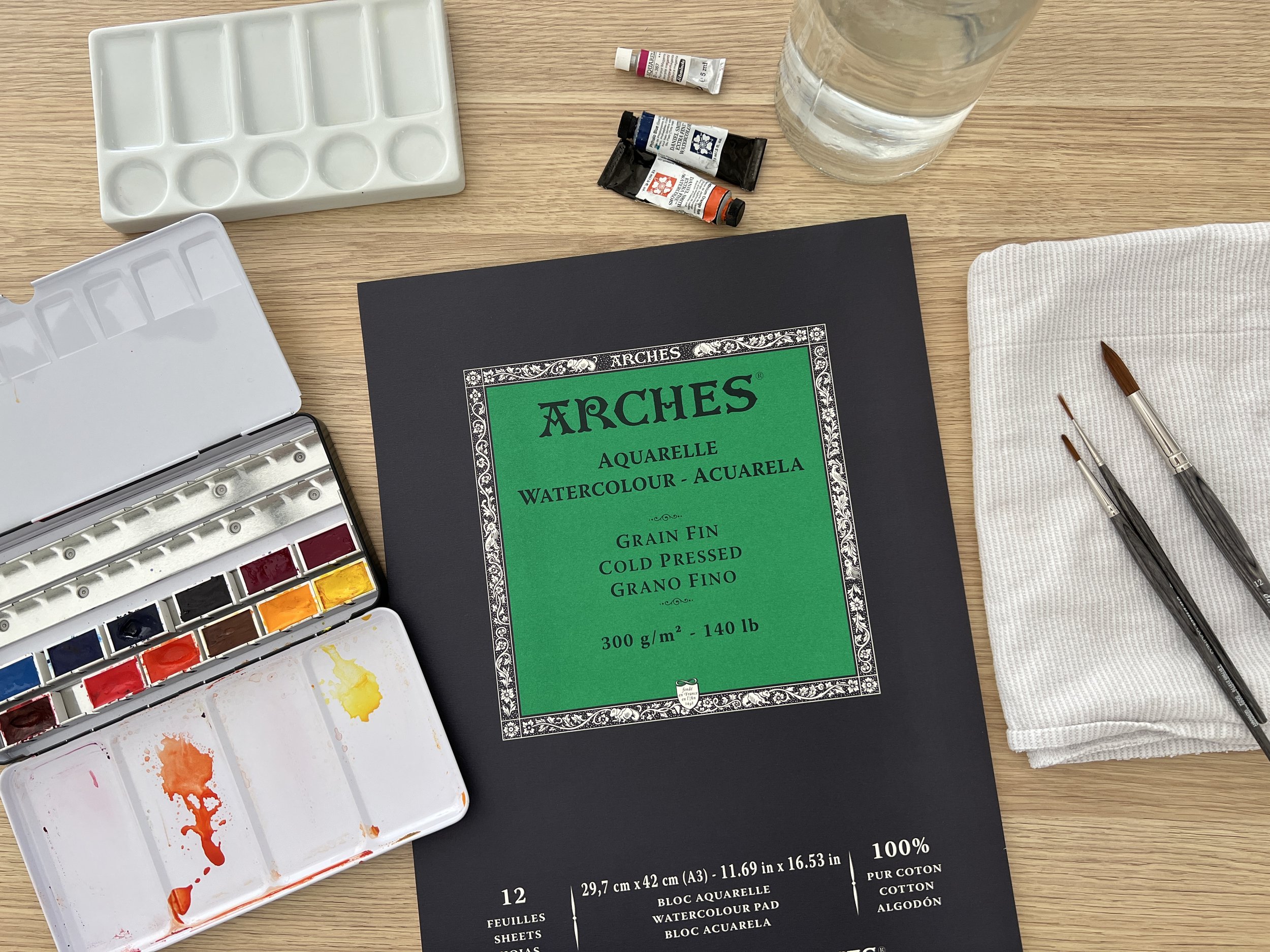
Art Supplies used by Louise
Techniques & Guides
-
One of the main benefits of using watercolour is that, once you have an understanding of the basic techniques, it is relatively easy to learn. This makes it ideal for beginners and experienced artists alike who are looking to explore the medium further.
Read more about watercolour painting here.
-
It's a good idea to stretch your watercolour paper before painting on it, especially if you're using a lightweight paper. This will prevent the paper from buckling or warping as it absorbs water. Read here about how Louise stretches her paper.
-
There are many ways to create textures and effects with watercolours, including wet-on-wet, dry-brushing, lifting, splattering, and masking. Granulating medium that can be mixed with paint is also used for creating texture. Experiment with different techniques to see which ones work best for the effect you want to achieve.
Read more here "25 techniques" and here "9 techniques".
-
Watercolour techniques include wet-on-wet, wet-on-dry, dry brush, glazing, charging and more. Each technique has its own unique effects and challenges, and mastering them can help artists create a range of styles and moods in their artworks.

Wet on Wet
Original Paintings and Prints
-
You can purchase original watercolour paintings and archival prints from Louise De Masi's online shop. Her collection includes a range of subjects and styles, from animals to birds to botanical subjects.
-
When framing and displaying your watercolour paintings, it's important to choose a good quality frame that complements the painting and protects it from damage. Use only acid-free, archival matting to prevent deterioration over time.
This applies to framing archival prints as well so they will last a long time.
-
To care for and preserve your watercolour paintings, avoid exposing them to direct sunlight or moisture, and store them in a dry, cool place. Use acid-free materials when framing and matting your paintings.
If you need to clean your painting, use a soft, dry brush to gently remove dust and debris.
Read about more option here.
-
Yes, we ship internationally. Shipping rates may vary depending on your location.
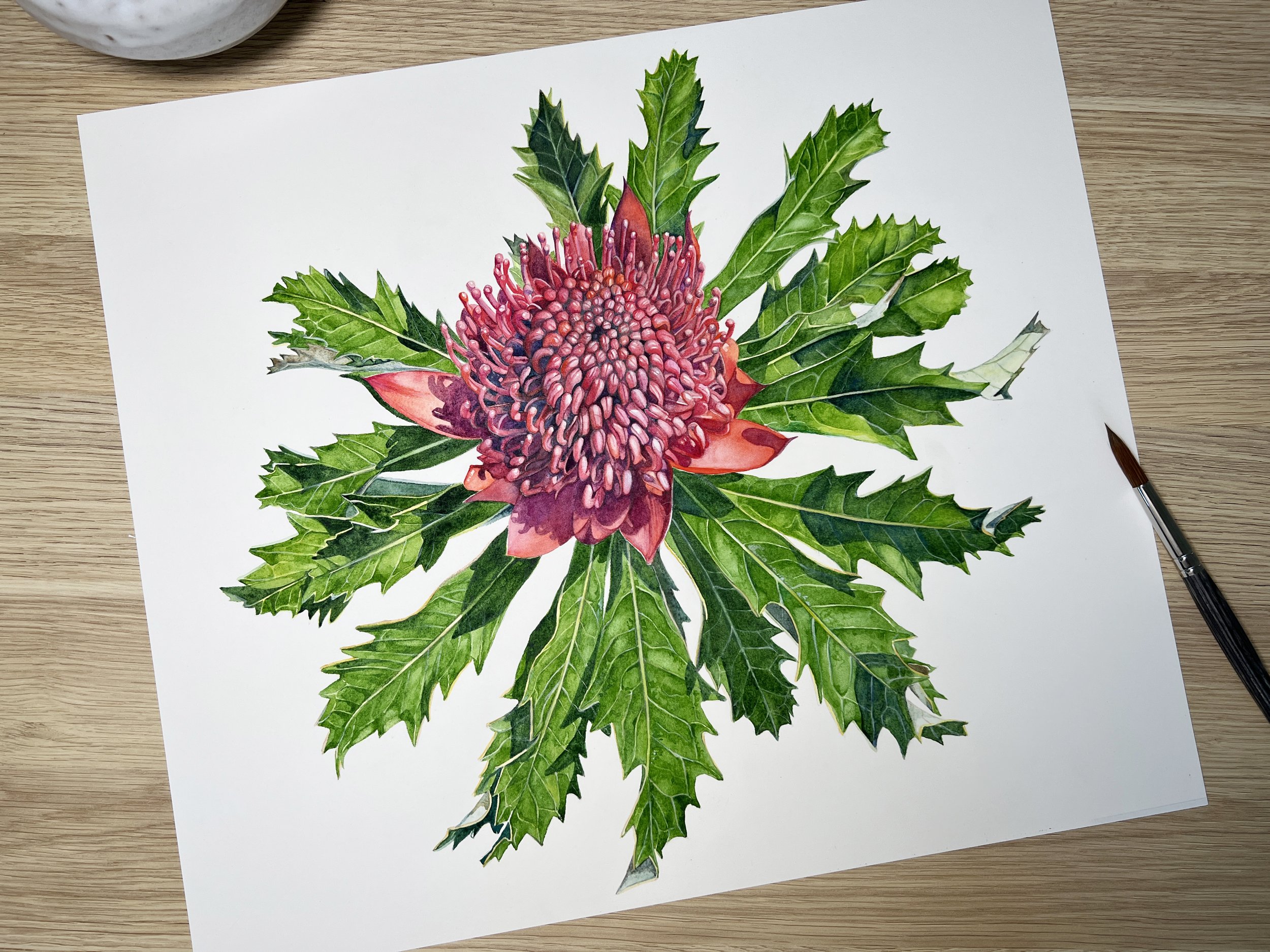
Warratah Painting
Inspiration
-
Louise’s watercolour paintings are inspired by the beauty of nature, the play of light and shadow, and the vibrant colours of the world around us. She lives on a large property that backs on to a state forest and she loves the wildlife and birds that are nearby.
-
The time it takes to complete a watercolour painting can vary depending on the size, complexity, and style of the painting. It can take anywhere from a few hours for a simple painting to many days for a more complex painting.
-
Louise is not available for commission work. All of her time is taken up developing new online classes and tutorials which leaves her little time for anything else. She does, however, ask Patrons about the types of paintings they would like to be considered for a subject of a tutorial.
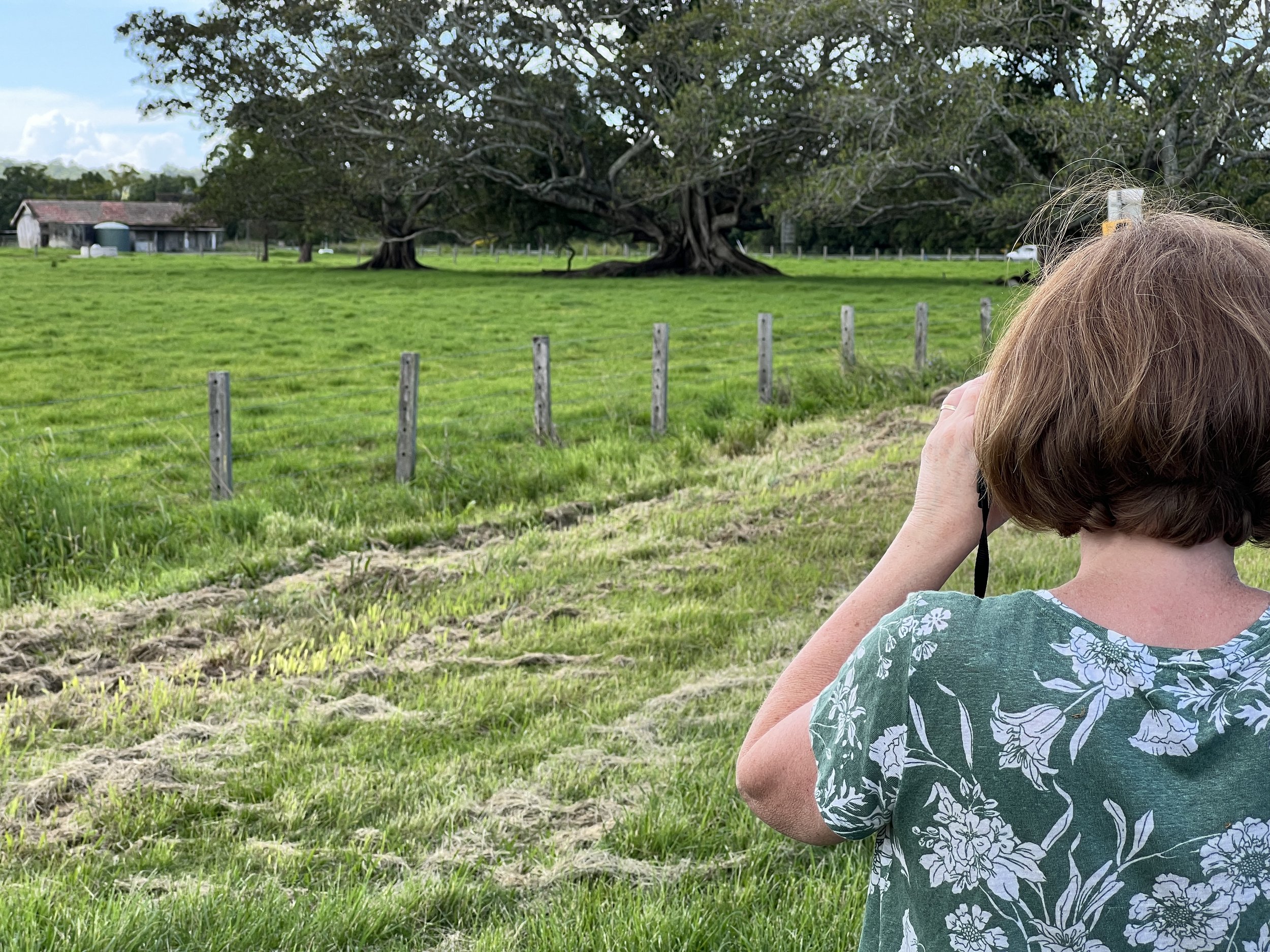
Louise Gathering Reference Photos
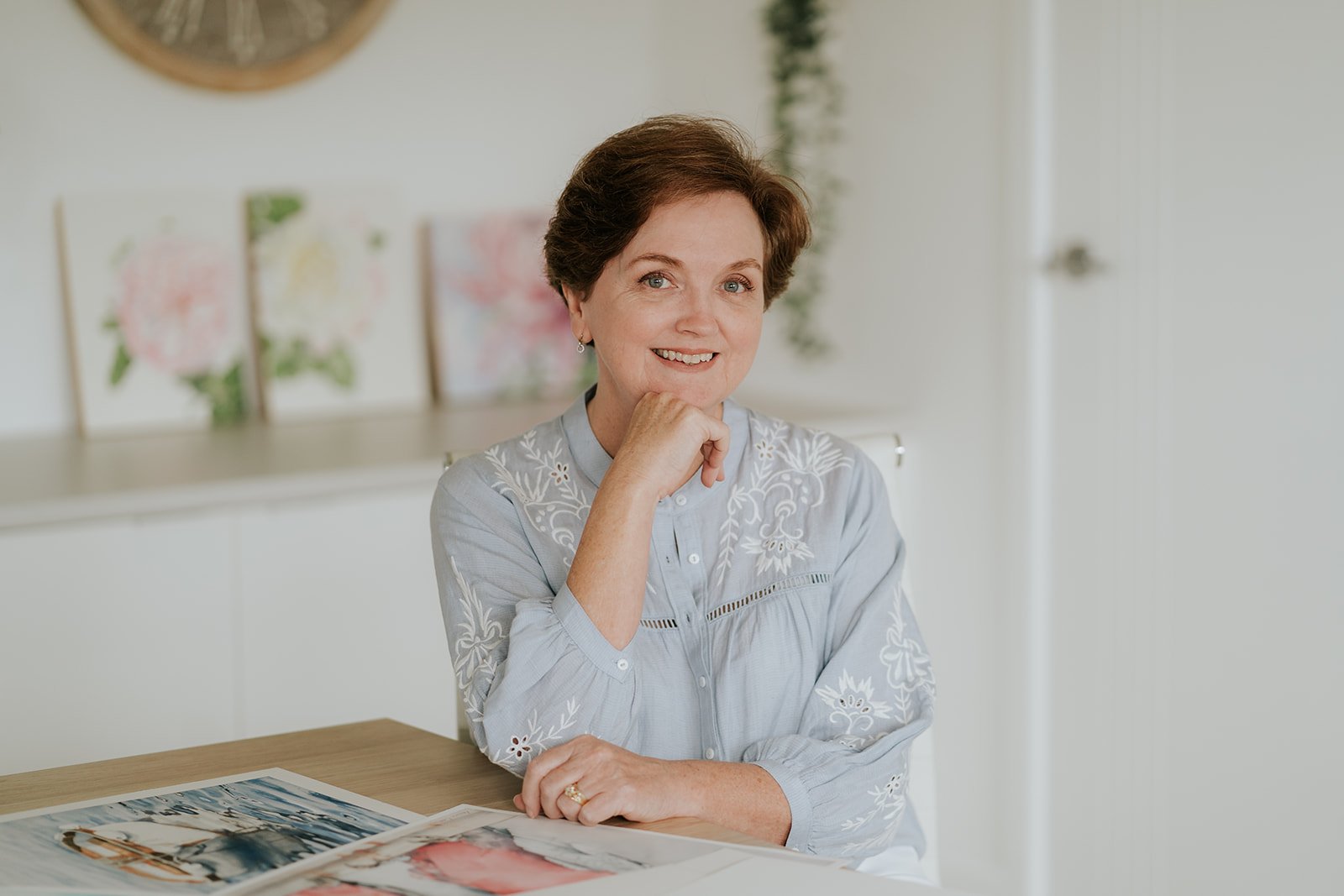
Louise during her professional photoshoot.