Watercolour for Beginners: What you Need to Get Started

Painting in watercolour is magical! I became captivated by it in 2011, and my excitement for it has not waned since then.

With its delicate washes, amazing luminosity, and unpredictable nature, once watercolour has you in its spell there is no turning back. Every brush stroke becomes an adventure as you watch the wet paint dance over the paper. There is no other medium like it.

Read More
How to Mix Watercolour Paints: My Top 13 Tips

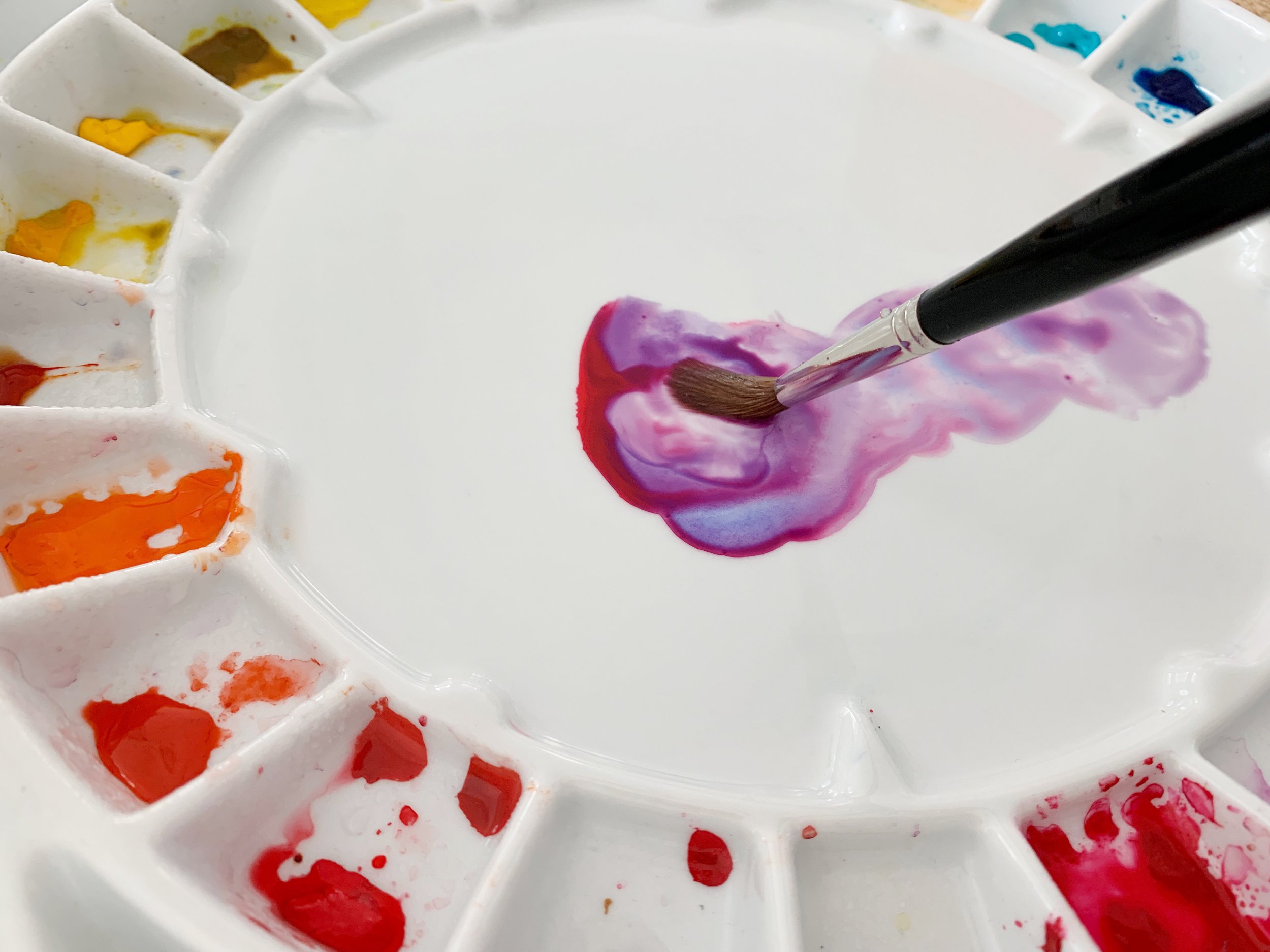
When you mix colours it’s a good idea to start with the lighter colour or the colour that has the lighter value.

For example, if you want to mix green, it’s best to start with yellow and mix blue into it gradually until you reach your desired colour, rather than the other way around where you start with blue and mix yellow into it. Blue has a darker value than yellow- it is more dominant than yellow.

Doing it this way will reduce paint wastage.

Read More
Watercolour Negative Painting Tutorial

It's called negative painting because it refers to the technique of painting or utilising the area of negative space around a subject. You are effectively, painting the negative spaces in order to leave the positive shapes.

Negative spaces on a painting are those empty areas that surround your subject. The positive spaces or positive shapes, are the subject itself.

Read More
9 Watercolour Texture Techniques

Visual texture in a watercolour painting refers to the illusion of different surface qualities that are created through the use of various brushstrokes, colours, and techniques. It adds depth, dimension, and interest to the artwork. Artists can use textured areas to create focal points and draw the eye to specific areas of the painting. Texture can be used to convey emotions and enhance the expressive qualities of a watercolour painting.

Read More
A Watercolour Technique for Beginners Called ‘Charging’

Charging can be used to create interesting textures and visual effects in watercolour paintings. By manipulating the wet paint or water, you can create patterns, ripples, and organic shapes, adding depth and visual interest to your artwork.

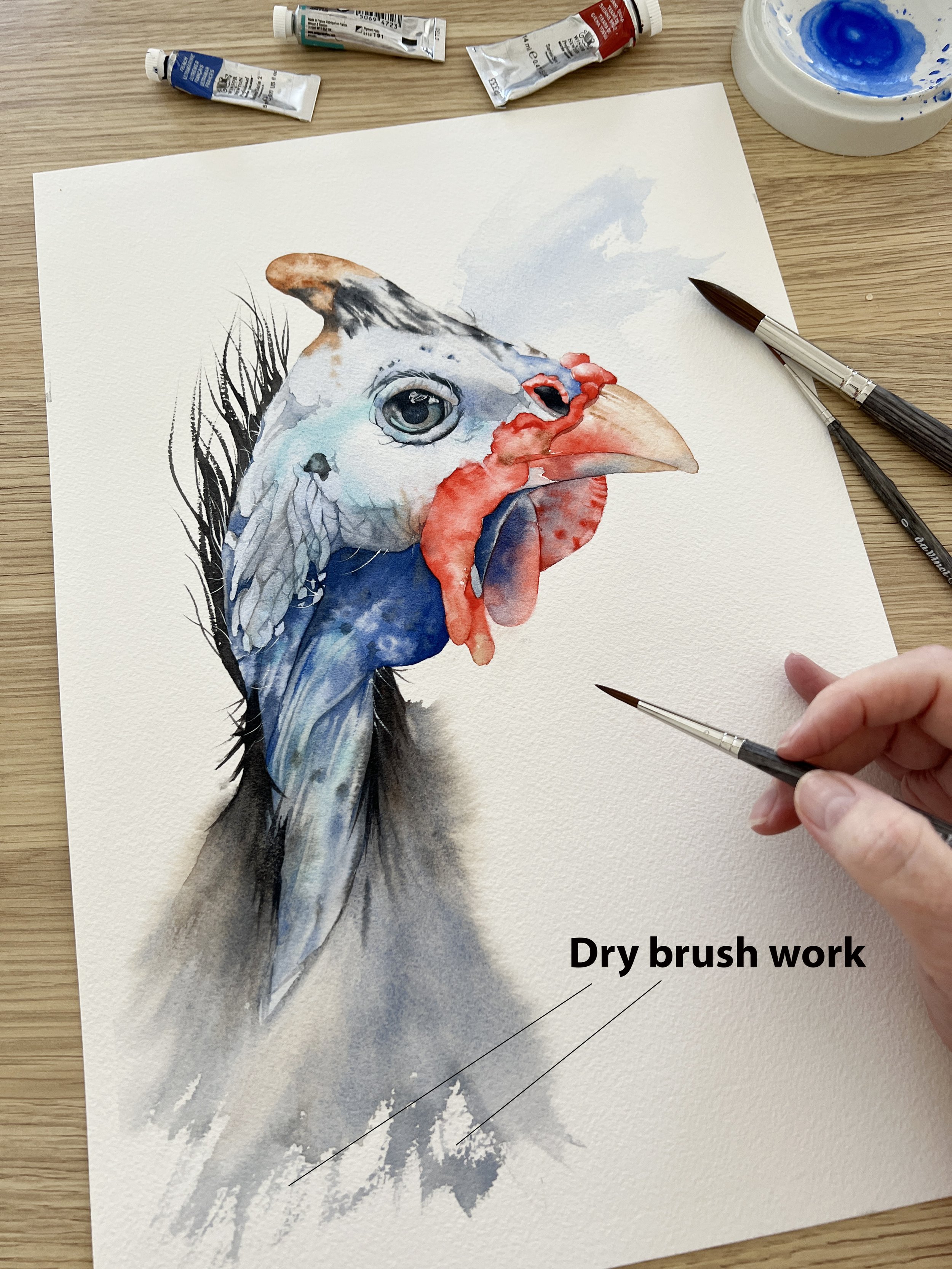
When I paint initial washes on a subject I like to add interest by dropping in another unexpected colour as I did here on this Rooster painting.

Read More
9 Tips to Avoid Muddy Colours

When we refer to muddy colours or creating mud on our watercolour paintings we mean we have lost the vibrancy that watercolour paintings are renowned for. The colours on your painting might appear dull, lifeless or lacking in vibrancy. They just look …….meh.

Read More
What is the difference between a watercolour block and a watercolour pad?

I find painting on watercolour blocks to be a frustrating process. Despite my best efforts, I often end up with puckered paper and the resulting hills and valleys make for an unpleasant painting experience. I paint with a lot of water though, so maybe if you paint with a drier painting process you might find them suitable to paint on.

Read More