Posts tagged Technical Guides
Watercolour Is Hard!

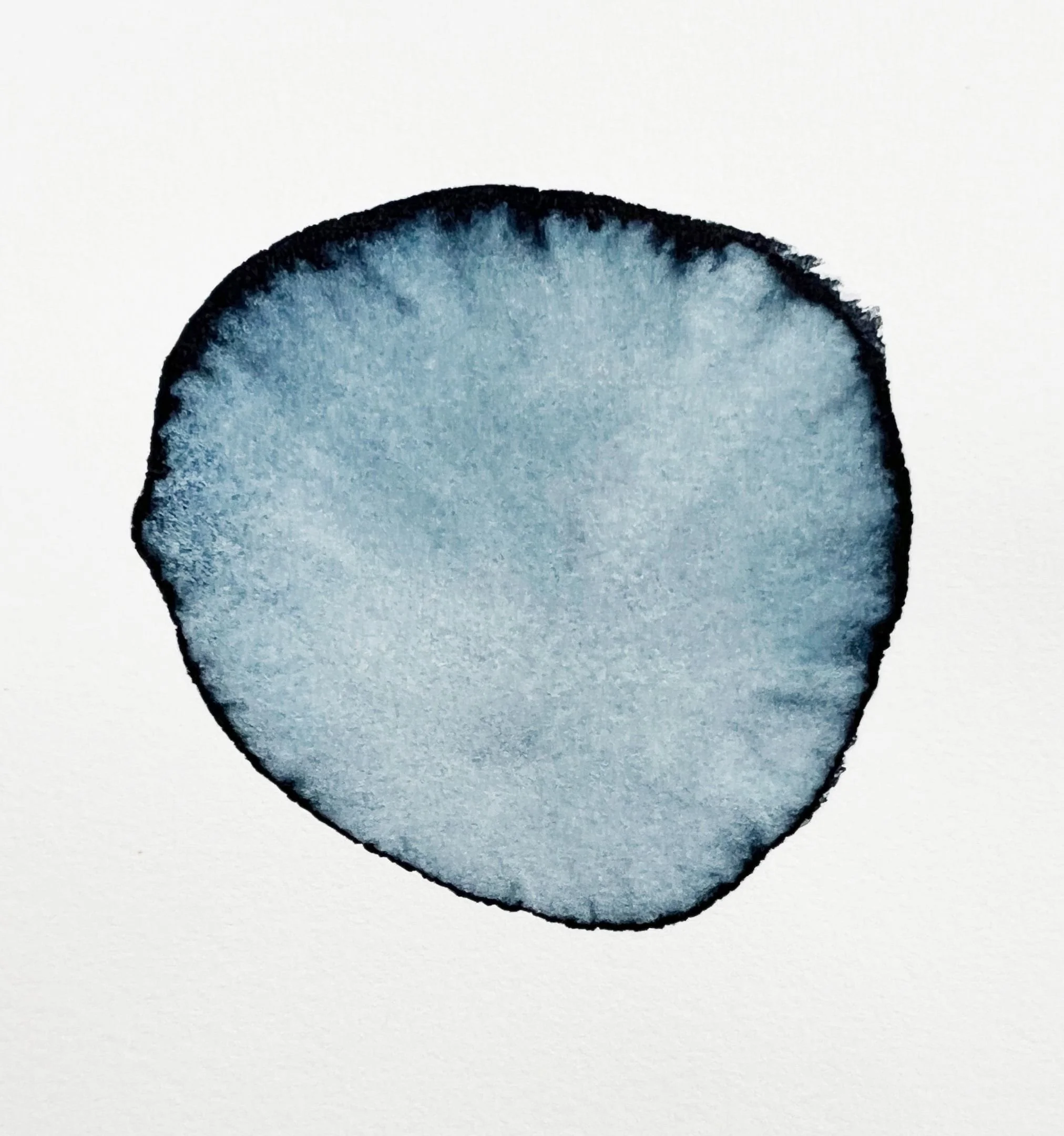
A very wet, diluted mix can easily create a puddle on the paper, and that’s when dark edges form. When there’s too much water in the wash (and on the paper), it spreads out across the wet area as it dries and carries the pigment with it, leaving that darker ring around the outside. Using a slightly stronger mix when you apply paint gives you much more control and helps your washes dry evenly.

Read More
How to Create a Watercolour Mixing Chart

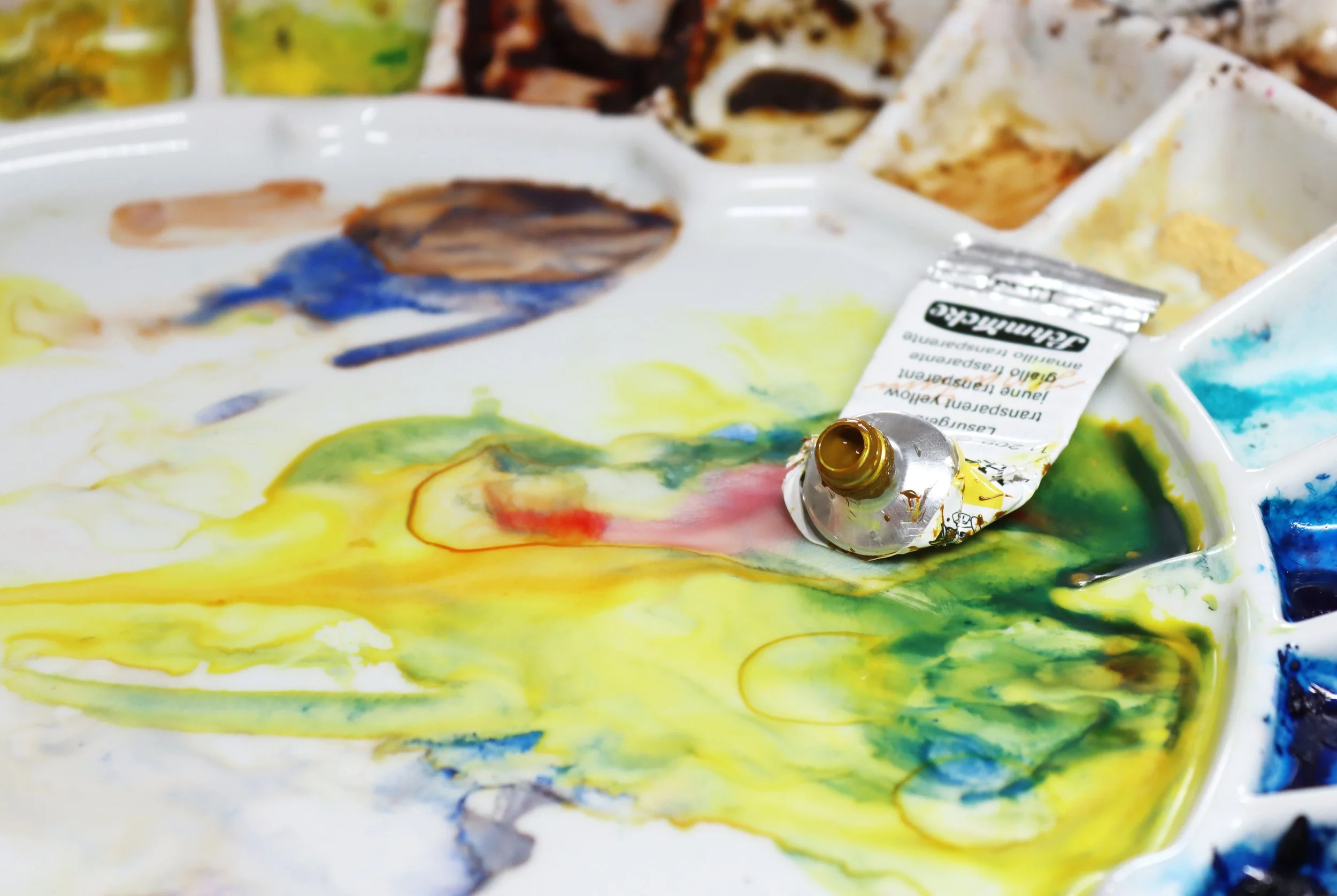
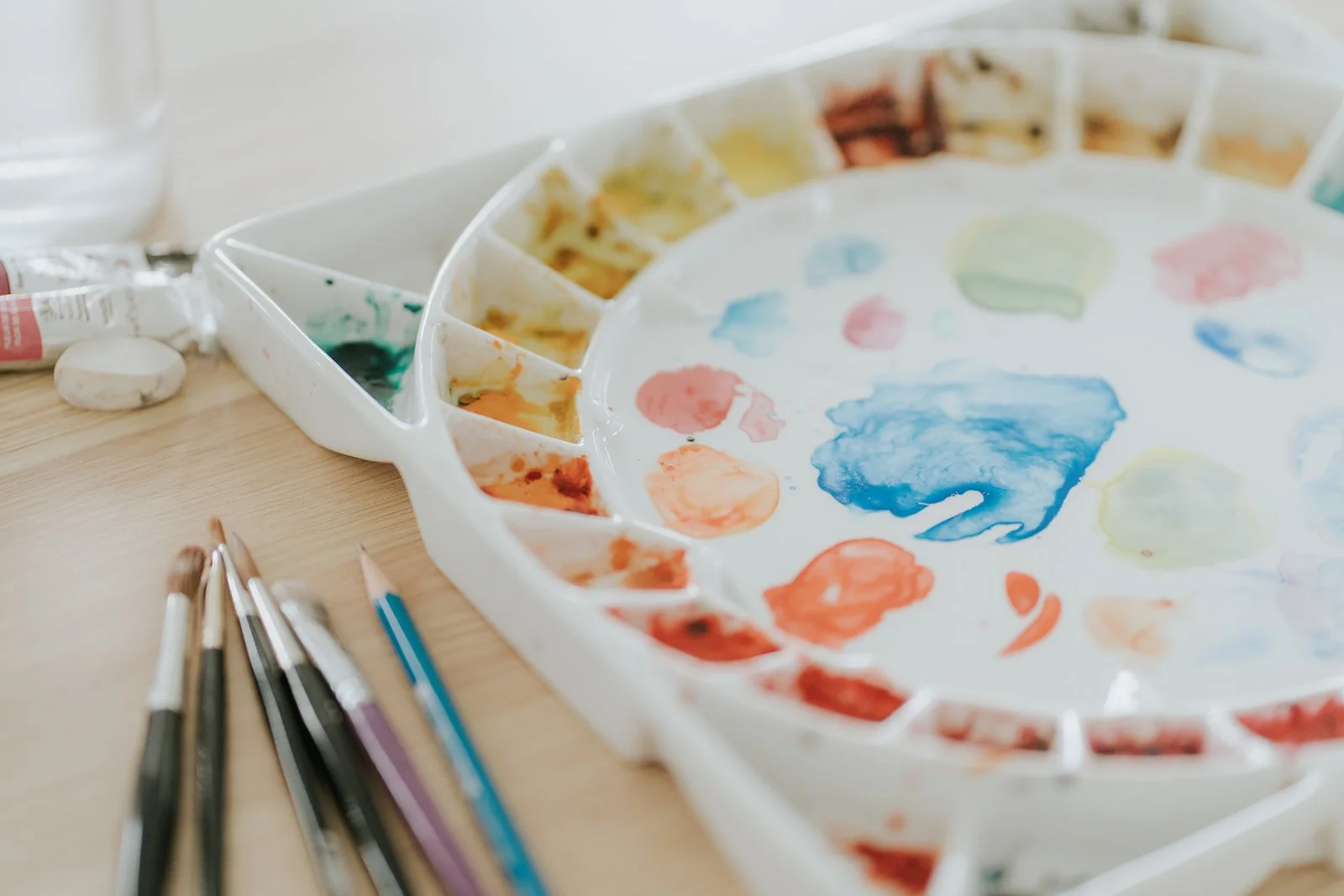
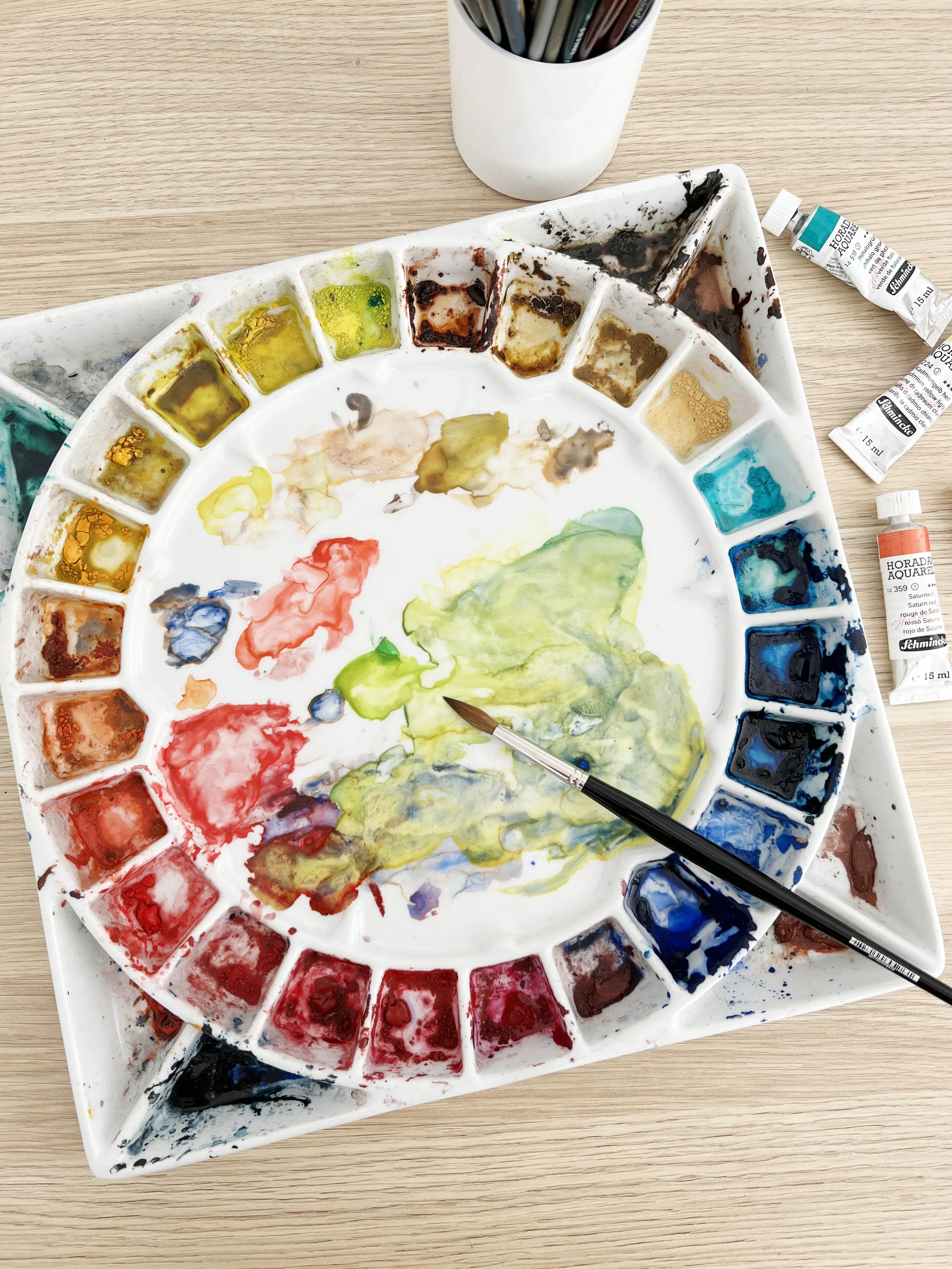
There’s an almost magical shift that happens when you see how two pigments combine. A transparent yellow suddenly turns into olive when it meets a touch of French Ultramarine; a pretty violet emerges from a whisper of Ruby Red and French Ultramarine. When you understand those relationships, you no longer guess - you choose your colours with confidence.

Read More
Does Brush Size Matter in Watercolour?

There’s something so rewarding about watching my students grow as painters. Each painting tells its own story of curiosity, courage, and those little discoveries that quietly change the way we paint forever.

Recently, while looking through some of my students’ paintings, I noticed something interesting. A few of them were struggling with uneven washes and edges that looked a little soft or overworked. As I studied their work, it dawned on me that many of them were simply using brushes that were far too big for the level of control they needed.

Read More
How to Use Watercolour Pencils

At first glance, a watercolour pencil looks just like an ordinary coloured pencil. The magic happens when water touches the pigment. Suddenly, the dry strokes transform into fluid, paint-like washes. You can use them dry for detailed line work, or you can activate them with a damp brush for soft, flowing colour. They’re a wonderful bridge between drawing and painting.

Read More
Using Procreate to Help You on Your Watercolour Journey

One of the biggest advantages of using Procreate for planning is that it saves paper and materials. You can test countless colour combinations and compositions without committing them to paper until you’re sure.

For example, I created a digital illustration of a happy little girl, which I plan to recreate on a larger scale using watercolours. The app can help me decide on colours and compositions before I even touch my paper.

Read More
How Do You Choose Colours for a Watercolour Painting?

Sometimes when you're looking at a reference photo, it can be hard to figure out exactly what colour you're seeing. Is that shadow a grey? A purple? A cool green?

When I’m unsure, I open the image in Photoshop and use the eyedropper tool to grab the colour I’m trying to identify. Then I paste it onto a blank canvas so I can see it on its own, without being influenced by the surrounding colours. It really helps to isolate the colour and understand what’s actually there.

This is especially handy if you’re trying to figure out subtle tones in a shadow, fur, or petal - areas where the colours can be more complex than they first appear.

Read More
What Makes a Good Reference Photo for Watercolour Painting?

A strong painting needs a focal point - something that draws the viewer’s eye and gives the composition a sense of purpose. So when you’re choosing a photo, ask yourself: What is the star of the show?

It might be the eye of an animal, the curve of a petal, or the way the light hits a glass bottle, that fills you with inspiration. But there has to be something that grabs you. If a photo is too evenly detailed across the whole image, it can be difficult to know what to focus on in your painting.

Personally, I often find myself drawn to reference photos that have a bit of drama - a close-up angle, an expressive pose, or a little sparkle of light that adds interest. Once I’ve identified that focal point, I build the rest of the surrounding composition, supporting it rather than competing with it.

Read More
Watercolour Edges: Taming the Wobbly and Avoiding the Ugly

A big part of how your edges behave comes down to one simple but powerful thing: your water-to-paint ratio. If your brush is loaded with too much water, the pigment will pool and drift unpredictably. If it’s too dry, you’ll get scratchy, uneven marks.

The sweet spot lies in understanding the relationship between water and pigment - how they dance together on the page.

Read More
Following a Step-by-Step Watercolour Tutorial as a Student

I’ve learned the hard way that Louise’s first layers always look way darker in the video than they actually are. Determined to remember this, I mix a watery paint.

I’ve also learned that if your paper is too wet and your paint is too watery, the pigment will migrate to the edges, leaving behind an unwanted harsh line. So, keeping all this in mind, I put paint on the paper—only to immediately want to quit.

Read More
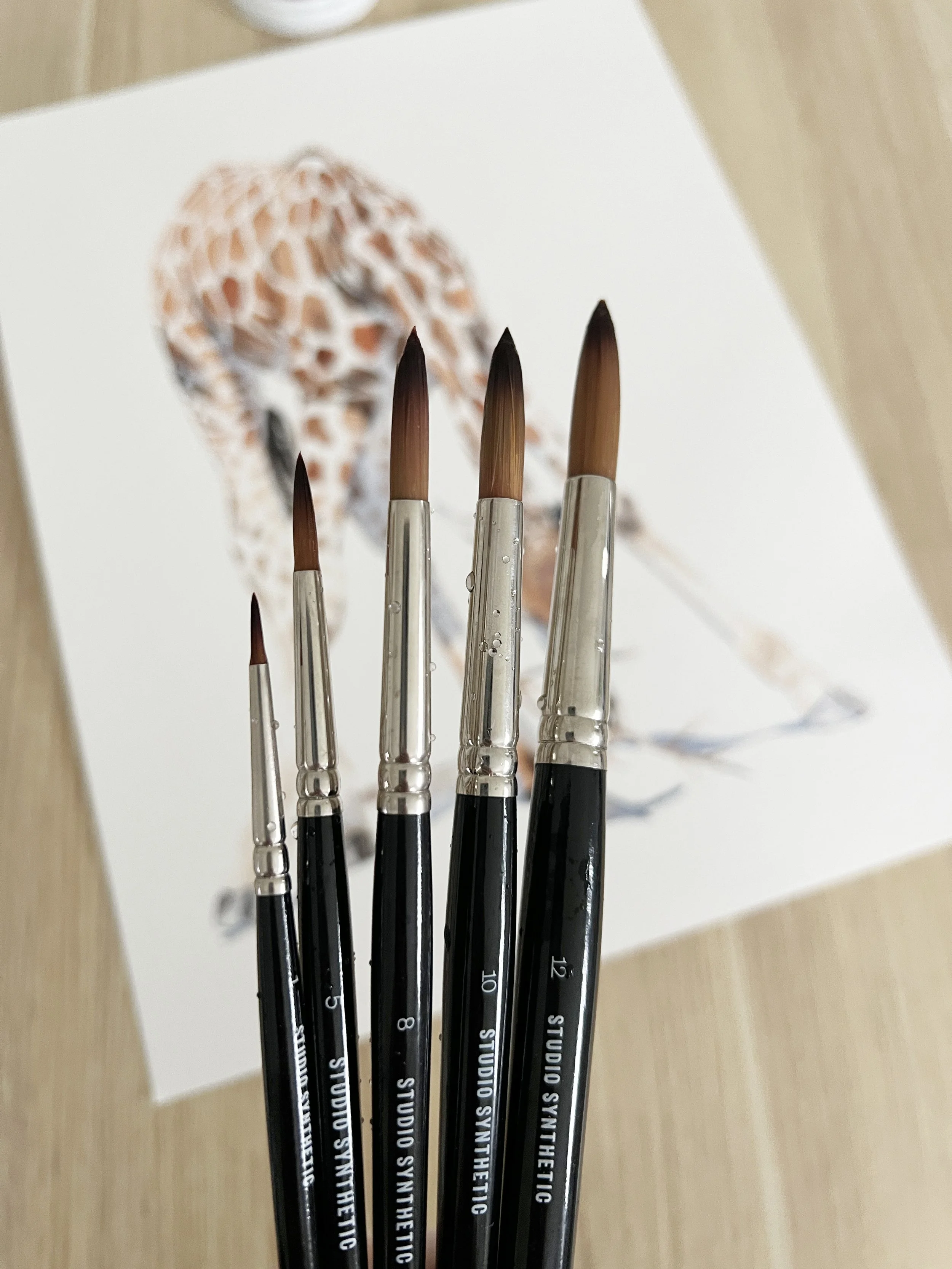
Choosing the Right Watercolour Brush

If I had to choose just one brush to take with me to a deserted island (assuming there’s watercolour paper on this island, of course), it would be a round brush. These brushes are the workhorses of watercolour painting, and for good reason. With their tapered shape and pointed tip, they offer an incredible range of mark-making possibilities.

You can create everything from whisper-thin lines to broad, sweeping strokes - all with a single brush! The trick is to adjust the pressure: light pressure for fine details, and heavier pressure for broader strokes. Round brushes are fantastic for general painting, detailed work, and fluid line variation. If you’re just starting out, investing in a high-quality round brush with a fine point will serve you well for years to come. Trust me, this is one brush you don’t want to be without!

Read More
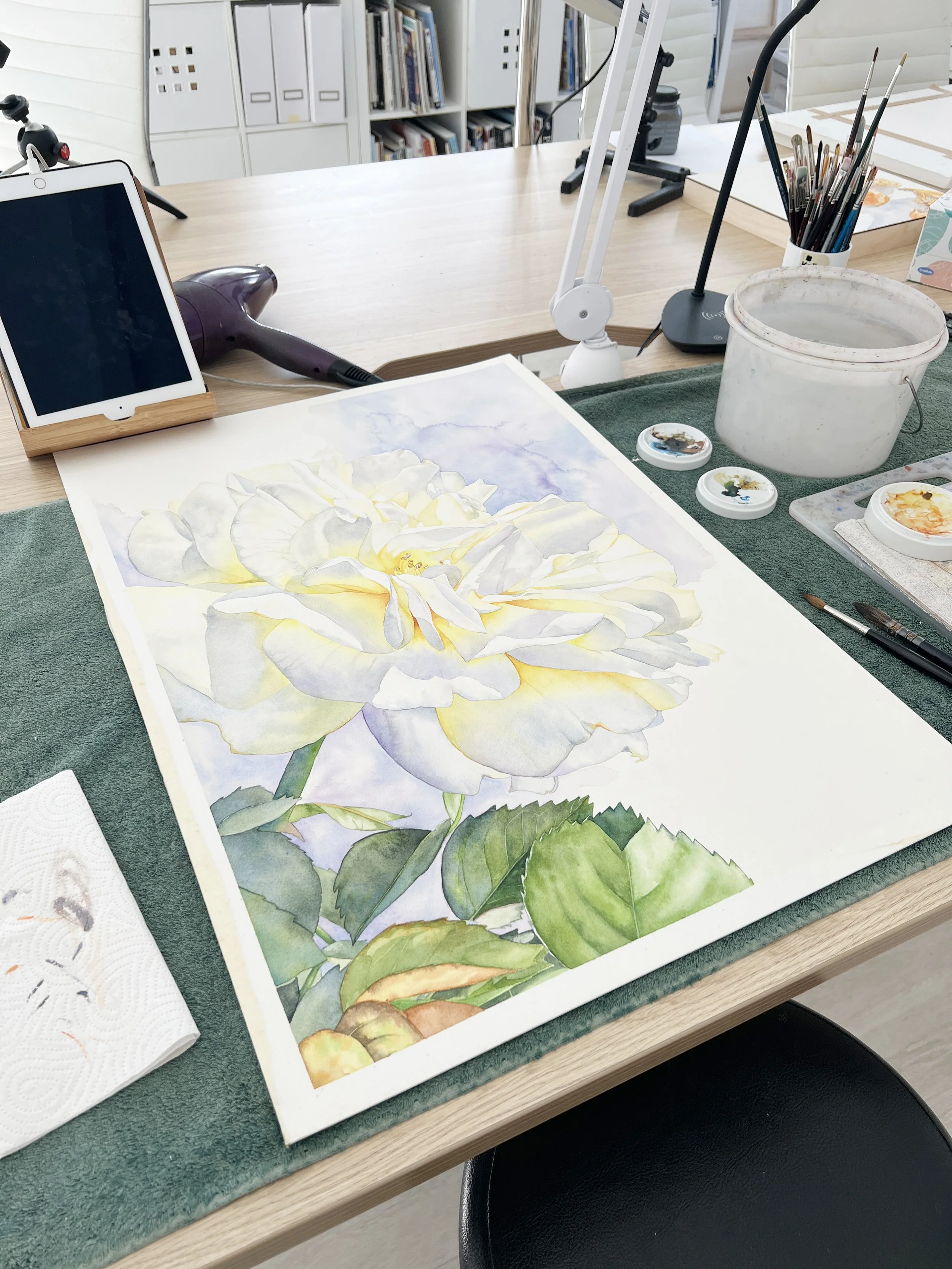
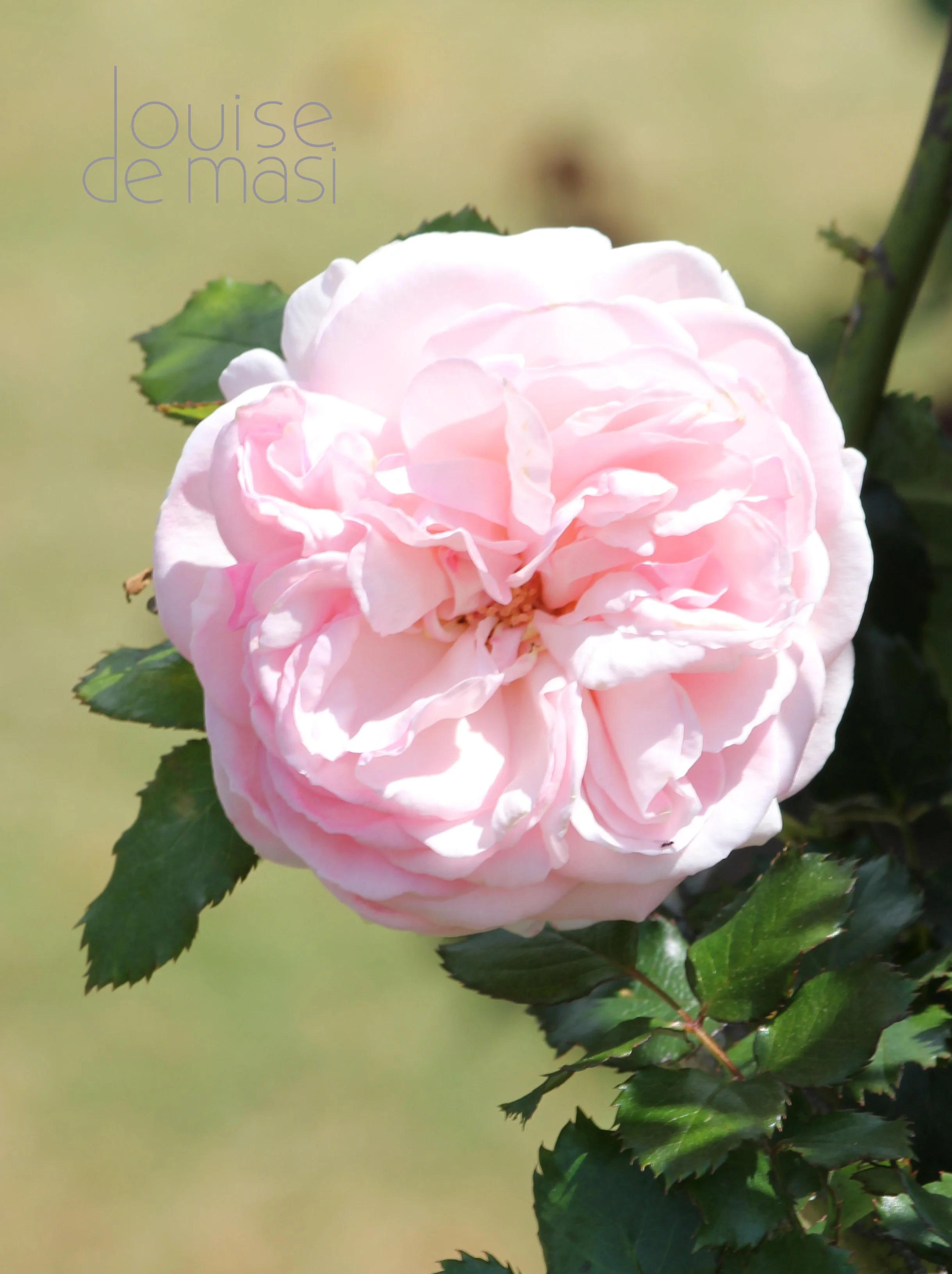
How to Paint Florals in Watercolour

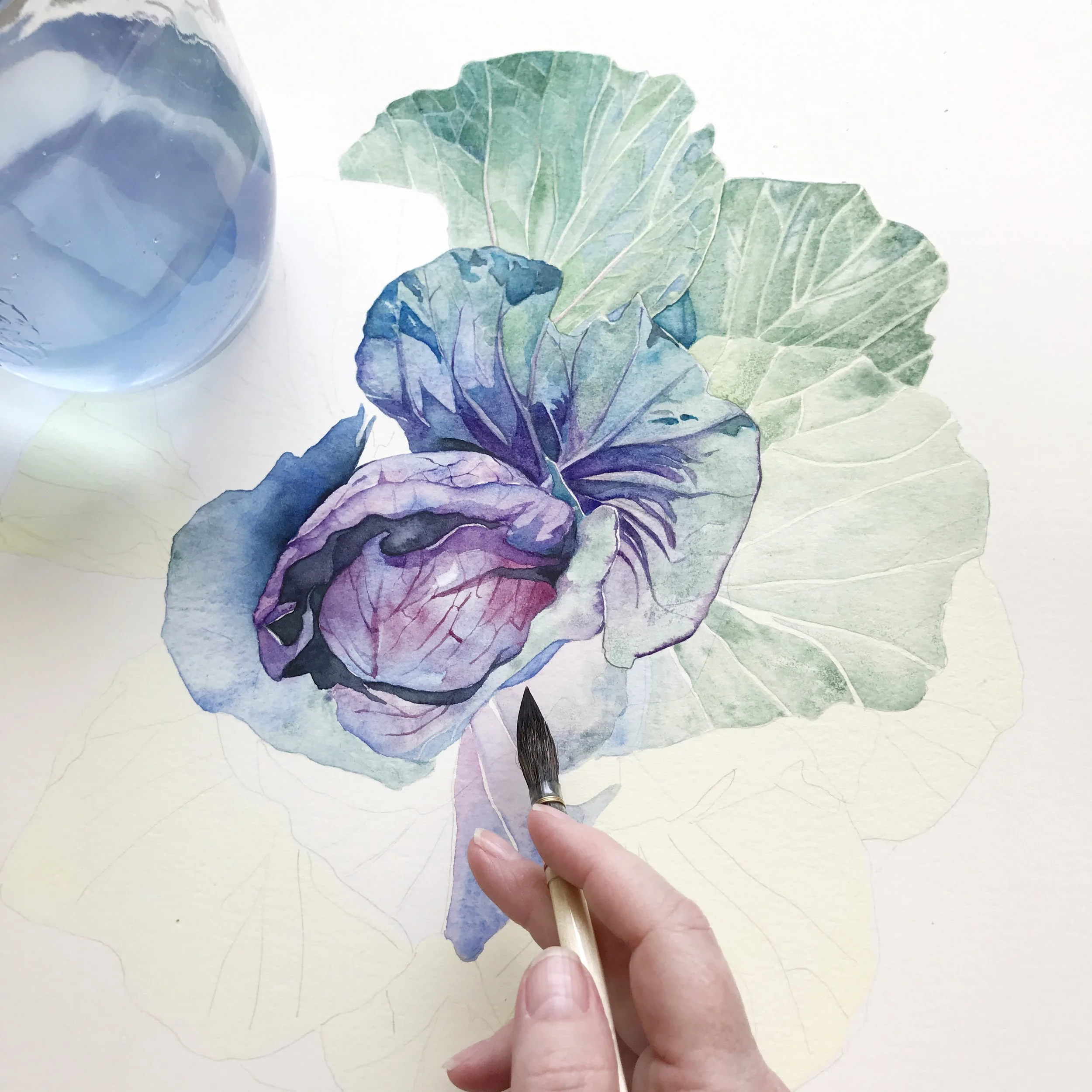
I always begin my floral paintings with a wet-on-wet technique for the initial wash, embracing the unpredictability and softness it brings. This stage is about capturing the ephemeral qualities of petals- their delicacy and the gentle interplay of light and shadow. I wet the paper first, allowing the paint to flow freely, blending seamlessly into the damp surface. Sometimes, I paint each petal individually, while other times I apply a wash over the entire flower at once. It depends on the flower and the level of colour or value variation within each petal.

Read More
The Importance of Using a High-Quality Watercolour Journal

I love using watercolour sketchbooks for small studies. They’re perfect for experimenting with colours and working out compositions before committing to a larger painting. These quick studies not only help me refine my ideas but also build my confidence, knowing I’ve tested my approach beforehand. A journal becomes a safe space to explore and make mistakes without pressure.

Read More