Confidence in Art: Dealing with Artist Anxiety
Finding Joy in the Creative Process
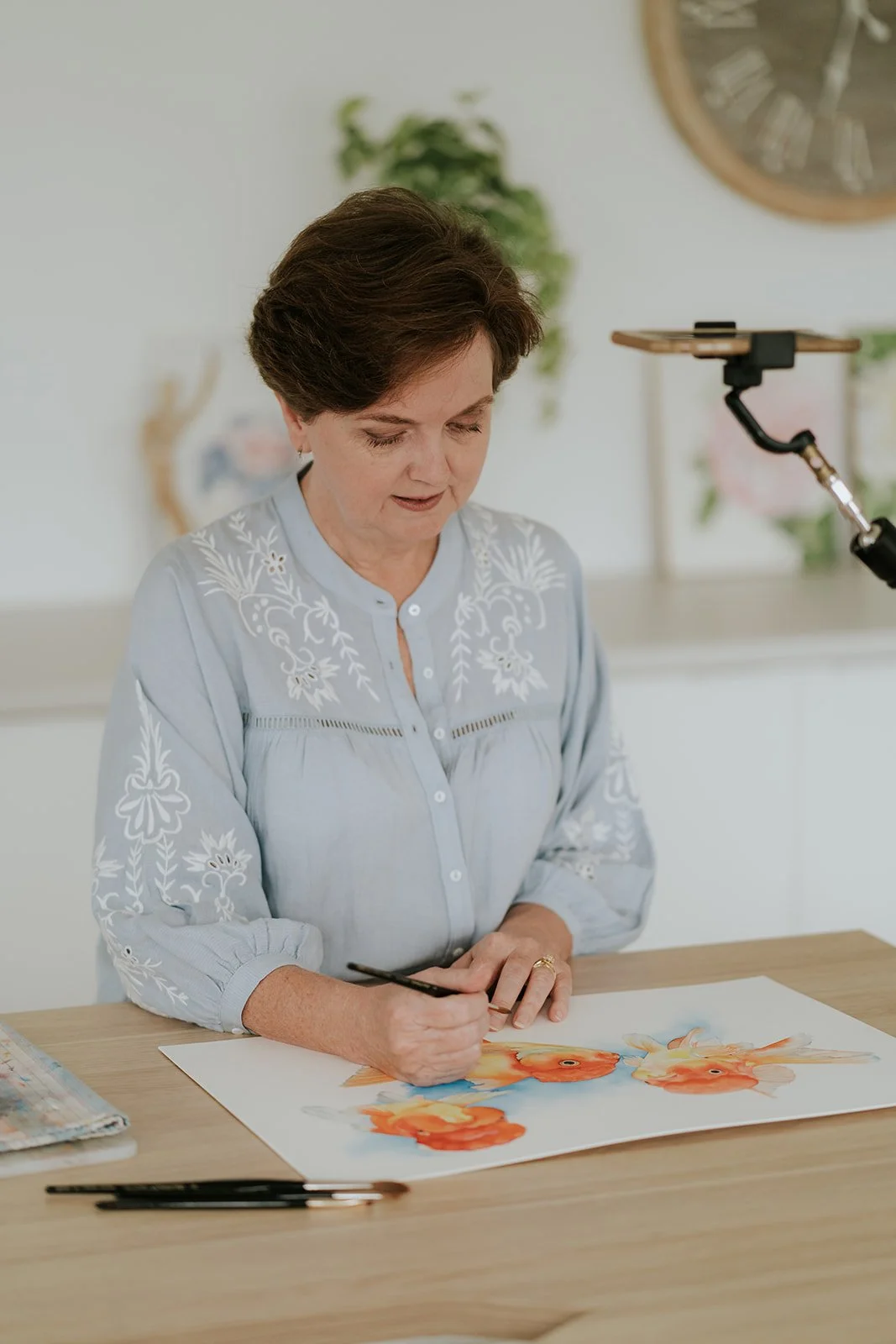
Artist anxiety and low self esteem are far more common than most people realise. Many painters experience a quiet sense of unease when they sit down to work, a lack of confidence in art that shows up as hesitation, overthinking, or the fear of starting a painting at all.
If you have ever felt nervous before touching brush to paper, worried about making mistakes, or wondered whether you are really an artist, you are not alone. These feelings do not mean you are doing something wrong. More often, they mean you care deeply about your painting and want to do it justice.
Learning how to work with these feelings rather than against them can transform your relationship with art, build your confidence, and help you paint with more ease and enjoyment.
The Fear of the Empty White Page
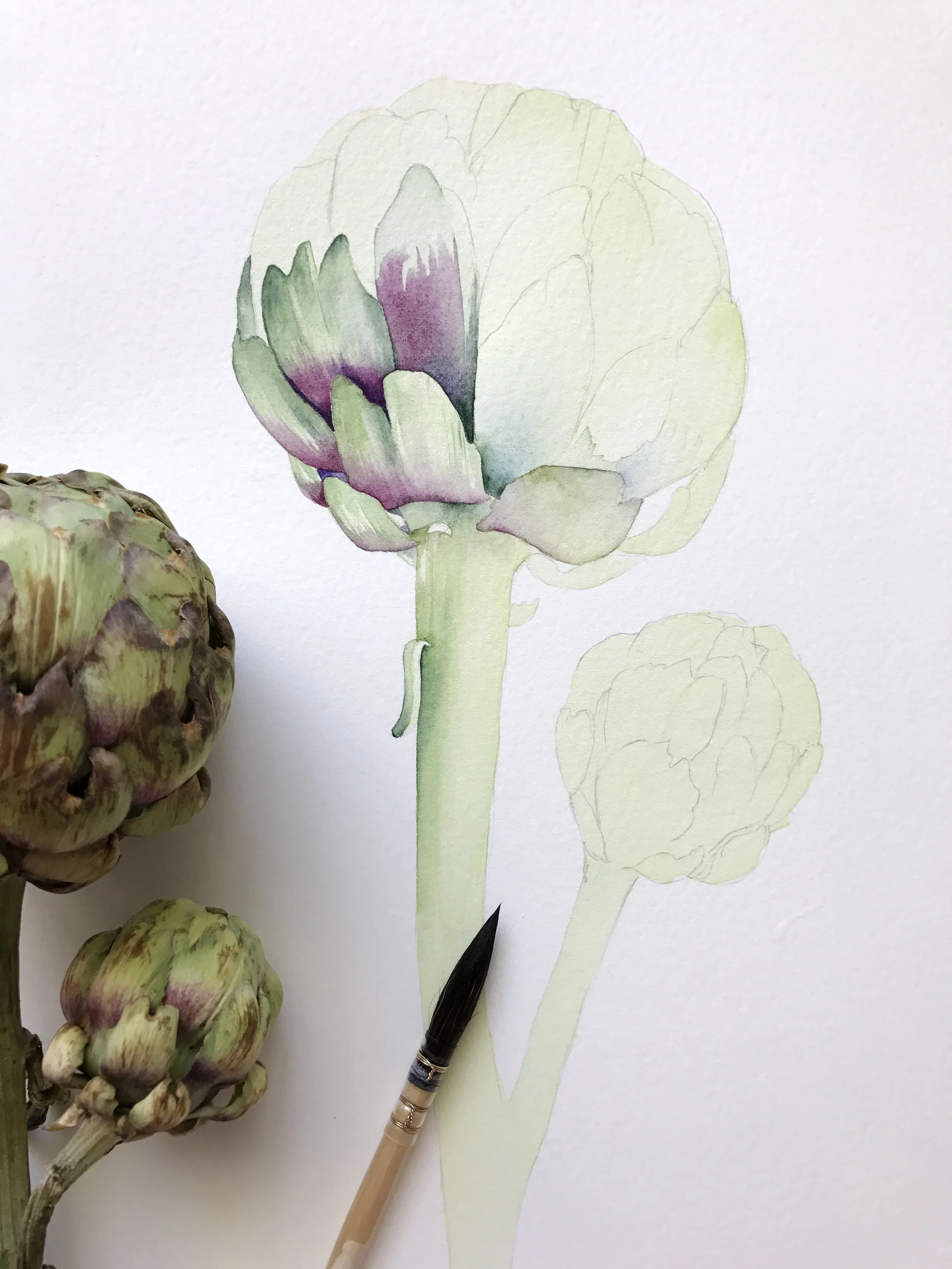
The fear of the blank page (or blank canvas) is one of the most common forms of artist anxiety. That untouched sheet of watercolour paper can feel intimidating precisely because of what it represents - possibility, expectation, and the pressure to “get it right.”
Very quickly, the mind starts filling the silence:
What if I ruin it? What if I don’t know where to begin? What if this painting fails before it even starts?
It helps to remember something very grounding:
It’s just a piece of paper.
At this stage of the creative process, the paper has no success or failure attached to it. The fear doesn’t come from the page itself, but from the meaning we project onto it. When we treat the first mark as an experiment rather than a commitment, the fear of starting a painting begins to soften.
A loose wash, a simple line, or even a playful shape is often enough to break the spell. Once the paper is no longer perfect, it becomes a place to explore rather than something to fear, where making art is the only thing that matters.
It's Your Artistic Journey so Don't Compare Yourself to Other Artists
Comparing yourself to other artists in your own artistic journey is one of the quickest ways to undermine confidence in painting. With so much beautiful work visible online, it’s easy to feel as though everyone else is progressing faster, painting better, or feeling more assured than you are.
But comparison almost always leaves out context. We see finished pieces, not the failed studies, abandoned sketches, or years of quiet practice behind them.
A far more supportive approach is this:
Compare your paintings to your own paintings - not to others.
Look at your own work you made months or years ago. Notice how your brush control has improved, how your colours are clearer, how your eye has become more sensitive to tone and shape. Growth in art is often gradual, but it is real and it’s easiest to see when you look at your own path of making art rather than someone else’s. Creating art is the goal, not seeking perfection.
Imposter Syndrome in Art
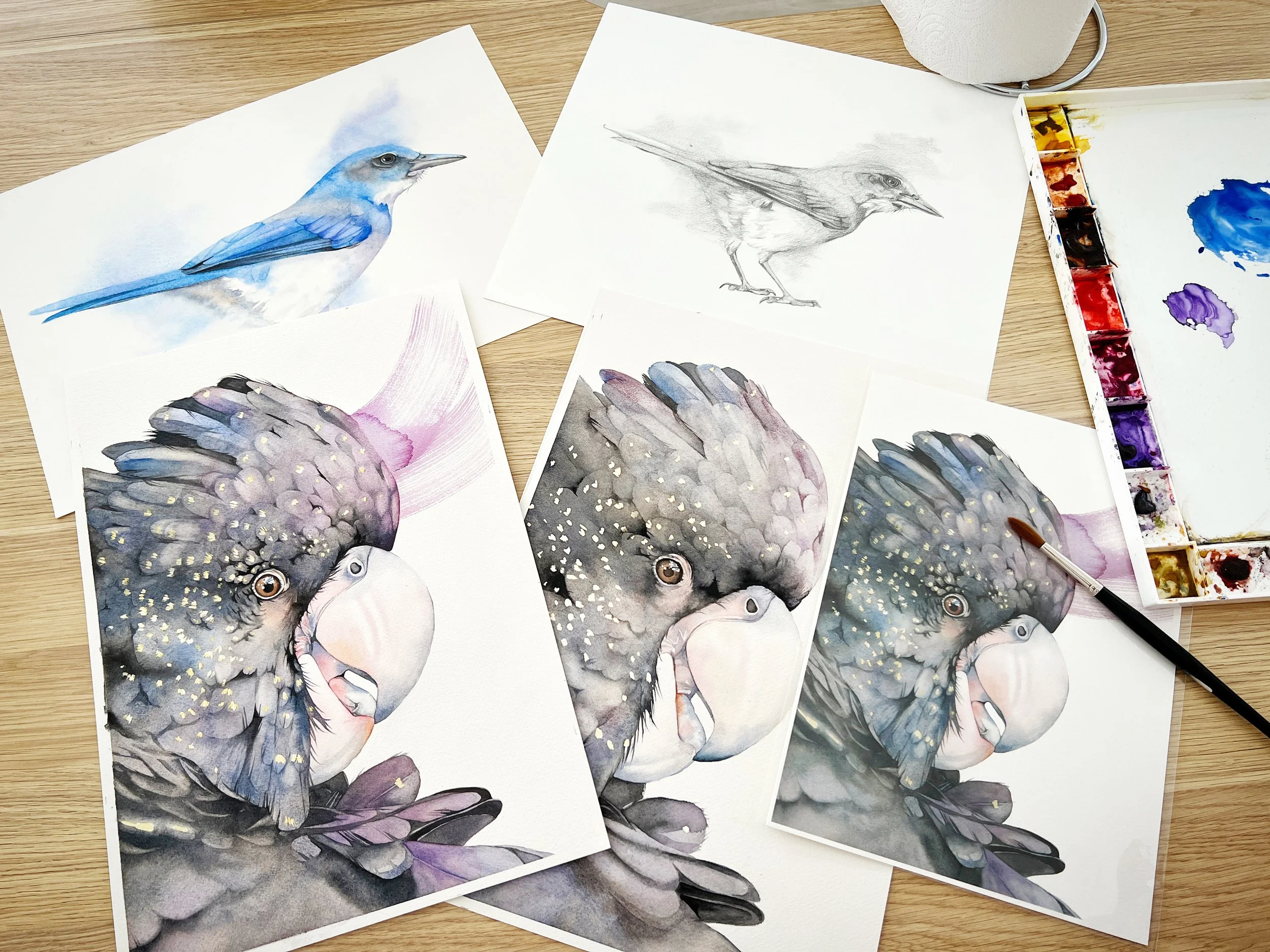
Imposter syndrome in art often shows up as a persistent inner voice that says, I’m not good enough yet or I don’t really belong here. Even artists with years of experience can feel like they’re pretending or waiting to be “found out.”
This feeling usually appears when you care deeply about learning and improving. As your awareness grows, so does your understanding of how much there still is to explore. A struggle us artists know all too well.
It’s worth remembering:
You don’t become an artist by reaching a certain level, you become an artist by painting.
You don’t need to feel confident every time you sit down to work. The act of showing up, experimenting, and continuing despite self-doubt is what builds self confidence over time.
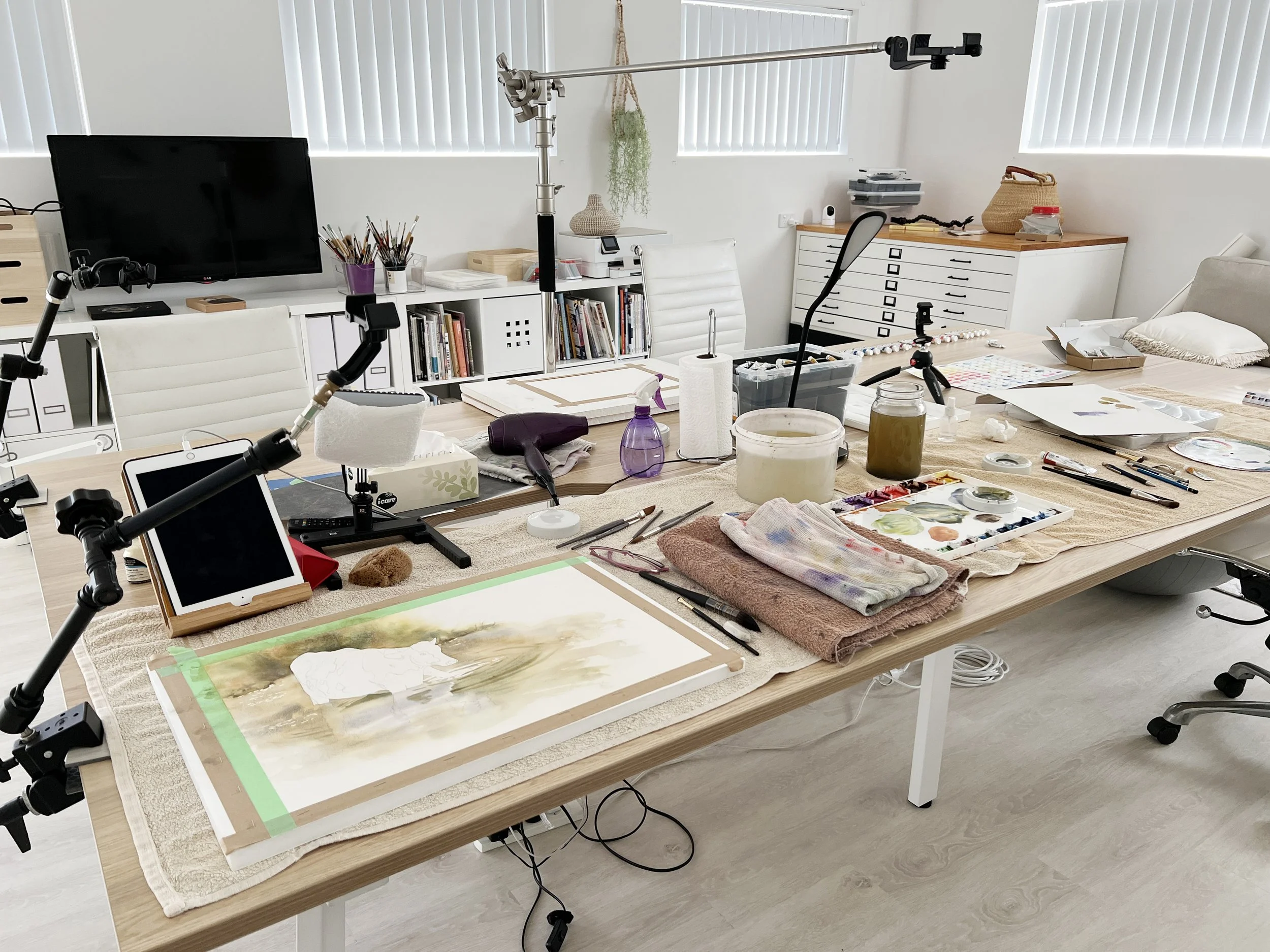
Artistic confidence in watercolour painting grows through regular practice and experience.
Fear of Failure in Art
Fear of failing in art can be especially powerful because painting often feels personal. When something does not work, it is easy to see that as a reflection of your ability rather than part of the learning process.
Failure is not the opposite of progress. It is part of it. Every painting teaches you something about timing, water control, colour mixing, the creative process and decision making. Even a painting that feels unsuccessful contributes to your growth.
When you allow yourself to fail, you give yourself permission to try new things. Trying new things is where self confidence begins to develop.

Trusting your own way of painting.
Letting Go of Perfection and Painting Without Pressure
One of the most effective ways to ease artist anxiety is to let go of perfection and shift your attention to the process of painting itself.
Remind yourself often.
Nobody has to see this painting.
Not every piece needs to be shared, framed or judged. Painting without pressure allows you to reconnect with curiosity, with how the brush feels in your hand, how water moves pigment across the page, and how colours interact in unexpected ways.
When the focus moves away from outcome and back to experience, painting becomes calmer, more playful and more enjoyable.
If everything else fails, treat yourself to new art materials and play around with them rather than aiming to create a perfect piece. Create a safe space where you can stay within your comfort zone, rediscover your creativity and enjoy art making purely for yourself.
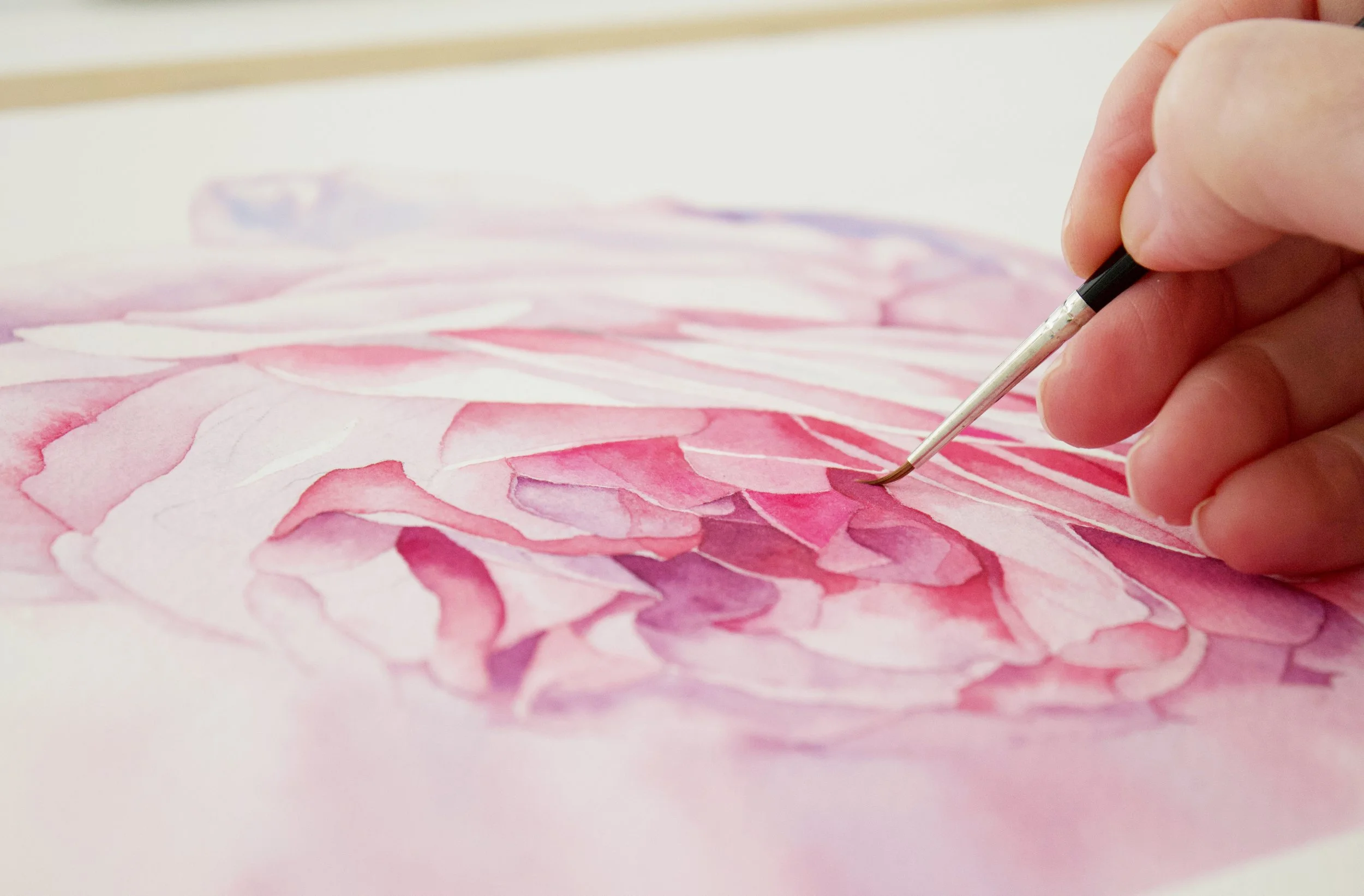
Nobody but you has to see the final piece, let go of the end result.
Building Confidence Through Gentle Daily Practice
This is where low pressure habits, such as daily doodles, can be incredibly powerful. Small, regular painting sessions help reduce the fear of the blank page and build familiarity with your materials.
Daily doodles are not about creating finished work. They are about:
building muscle memory
gaining confidence through repetition
painting without overthinking
Over time, this kind of practice changes how you approach larger paintings. The page feels less intimidating because you learn through experience that you can always begin again. You will notice your self confidence growing, along with your personal growth. Allow yourself to feel comfortable with these exercises, play without pressure or fear of complicated techniques, and develop your skills in a gentle, supportive way.
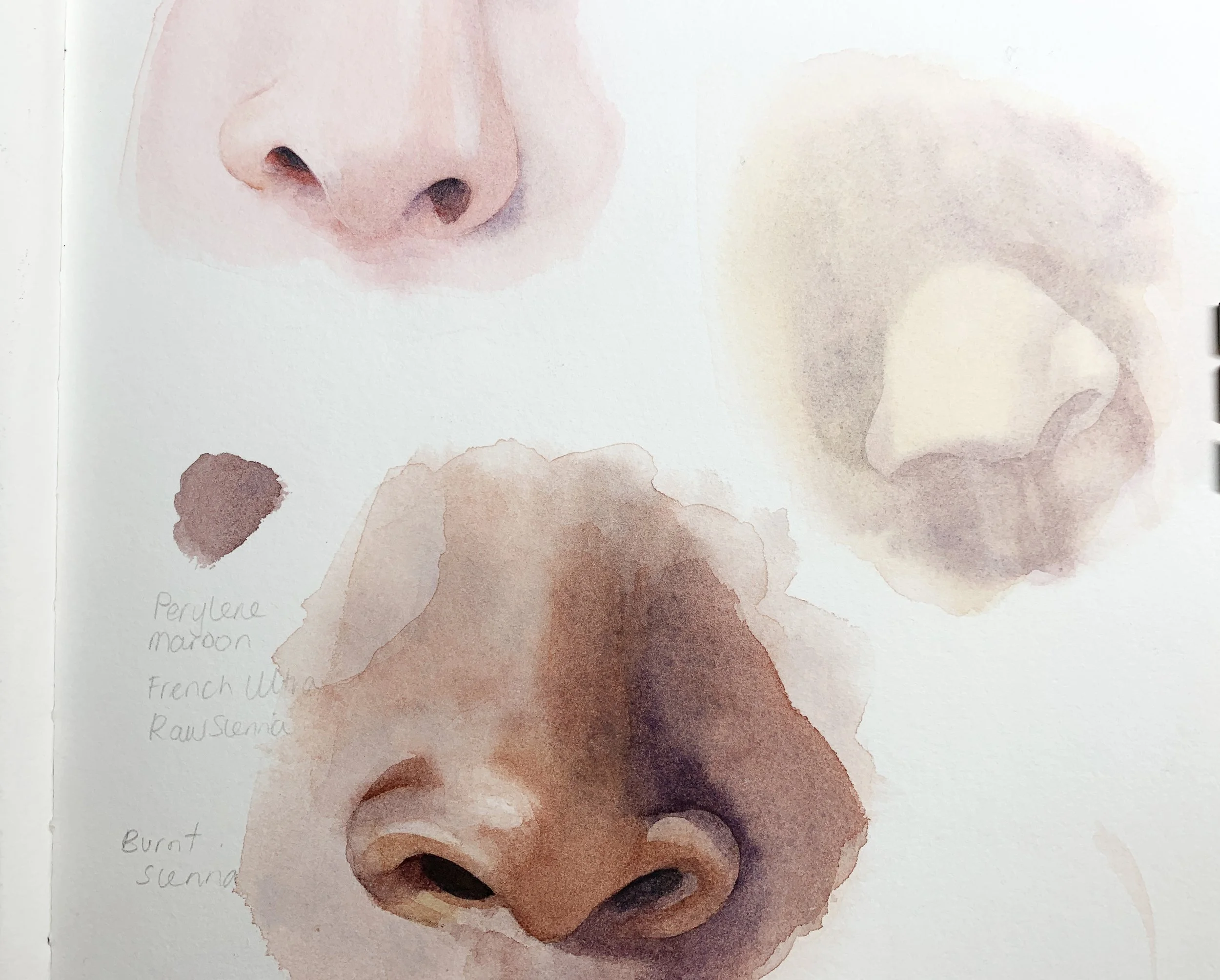
If you’re feeling stuck or unsure where to start, this gentle nose studies tutorial is a great way to practise without pressure.
Sometimes it helps to paint alongside someone else. If that feels right for you, my watercolour tutorials are designed to be slow, encouraging, and focused on the process rather than perfection.
Using Art Journaling to Ease Anxiety
Another way to practice painting without pressure is to keep an art journal. Journaling gives you a private space to experiment freely, track your progress, and explore new ideas without worrying about the outcome. Every page becomes a playground where mistakes are embraced as learning, curiosity leads the way, and growth is visible over time. Like daily doodles, art journaling can gently build confidence, reduce fear of failure in art, and help you reconnect with the joy of painting itself and help you to create more art.
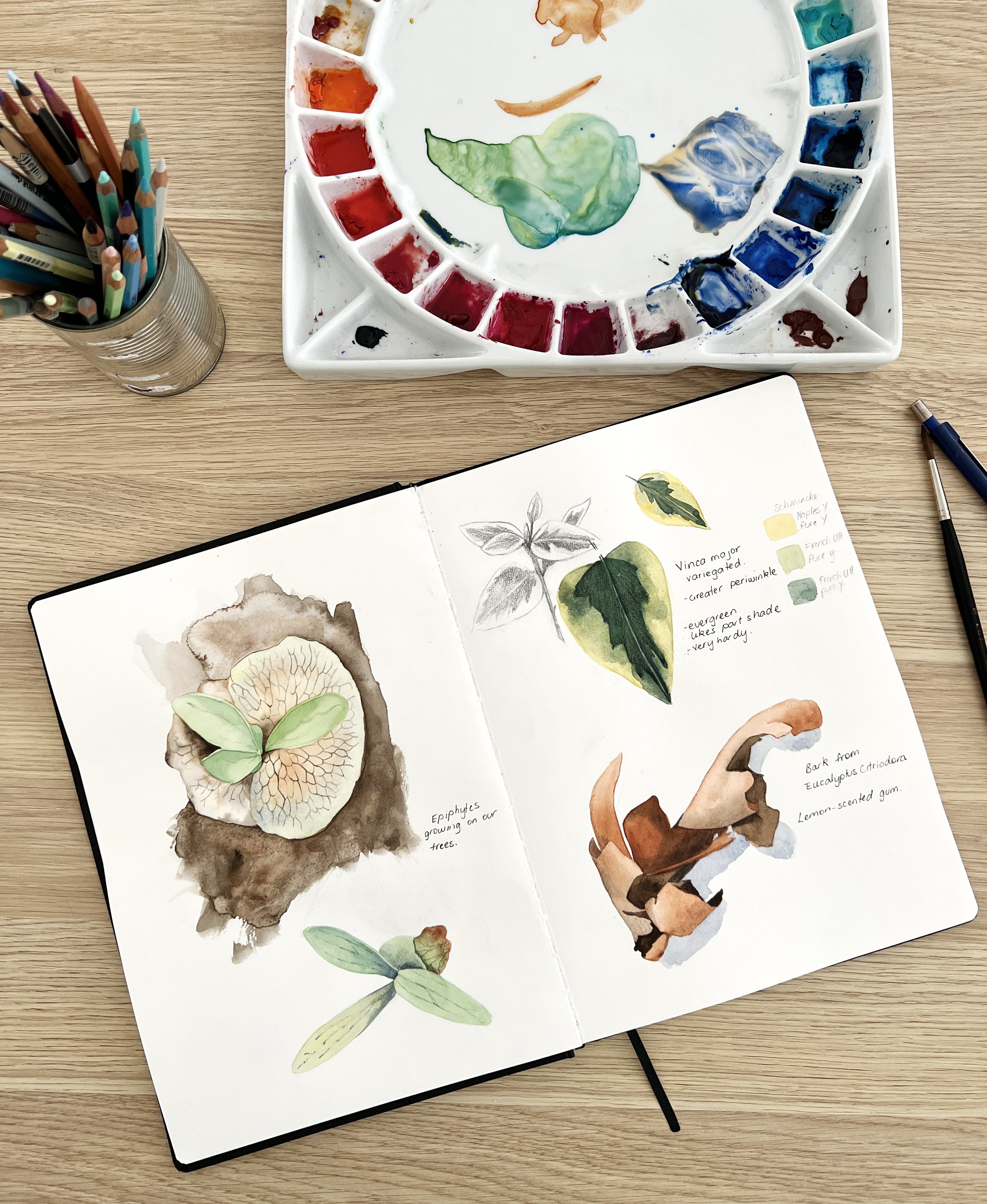
Use a journal for daily art therapy sessions.
A Kind Reminder
Artist anxiety may come and go throughout your creative life. It often appears when you’re growing, learning, or stepping into something new.
When it does, try to meet it with patience rather than judgment. Paint gently. Paint imperfectly. Paint with curiosity instead of expectation.
Confidence in art doesn’t come from never feeling fear, it comes from continuing to paint, even when fear is present.
And that, in itself, is more than enough.
Much love,
Louise
A few years ago, I looked back at some of my older paintings and found one of a tulip that I had overworked.
It was a useful painting to look at because I could see exactly what I had been doing wrong.
I'd used too many colours and too many layers. I'd tried to record almost everything I could see in my reference photo. I'd worked and reworked areas until the paint had lost its transparency and luminosity.