
5 Common Watercolour Mistakes and How to Fix Them
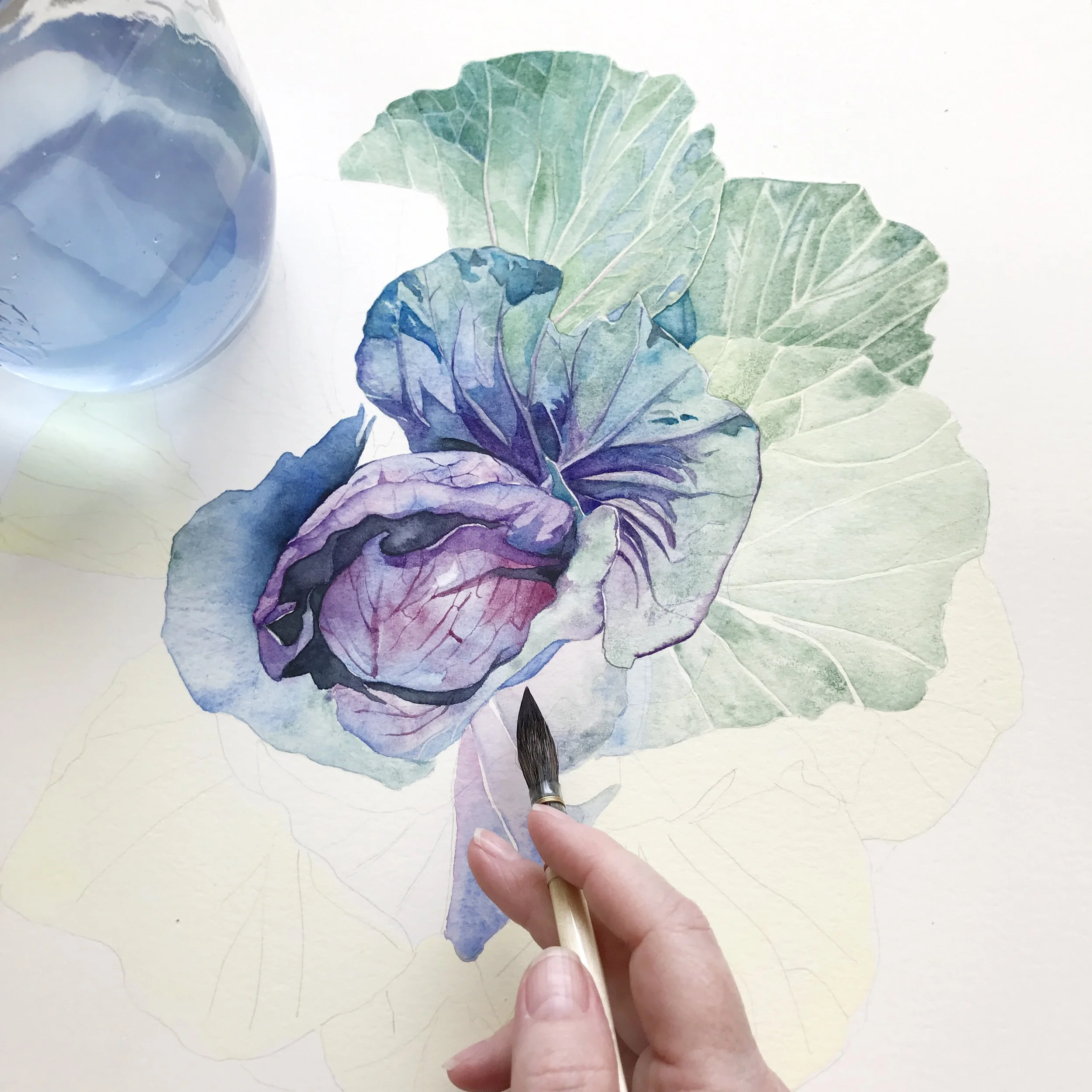
Watercolour has a reputation for being difficult. Not because it lacks beauty, quite the opposite, but because it asks for a particular kind of attention. It responds immediately. It records every choice you make, whether intentional or not. Where other mediums allow for correction and revision, watercolour asks for awareness, patience, and trust.
Many beginners assume they lack talent when learning to paint with watercolours. More often, they are simply missing a few foundational understandings about watercolour painting. How water behaves on paper, how timing affects layers, and how small decisions quietly shape the final artwork.
These challenges tend to appear again and again, whether you have just started painting or have been working with watercolour for years. They are not failures. They are part of the process, gentle signals showing you where your attention is needed.
Who This Post Is For
This post is for painters who love watercolour but sometimes feel stuck. Whether you are just starting out or have been painting for years, these reminders can help you paint with more ease and intention.
If you’d like a clear starting point, I have step by step watercolour tutorials that walk through these fundamentals slowly and calmly. Explore beginner watercolour tutorials.
Mistake 1. Watercolor brushes: Using the Wrong Brush Size
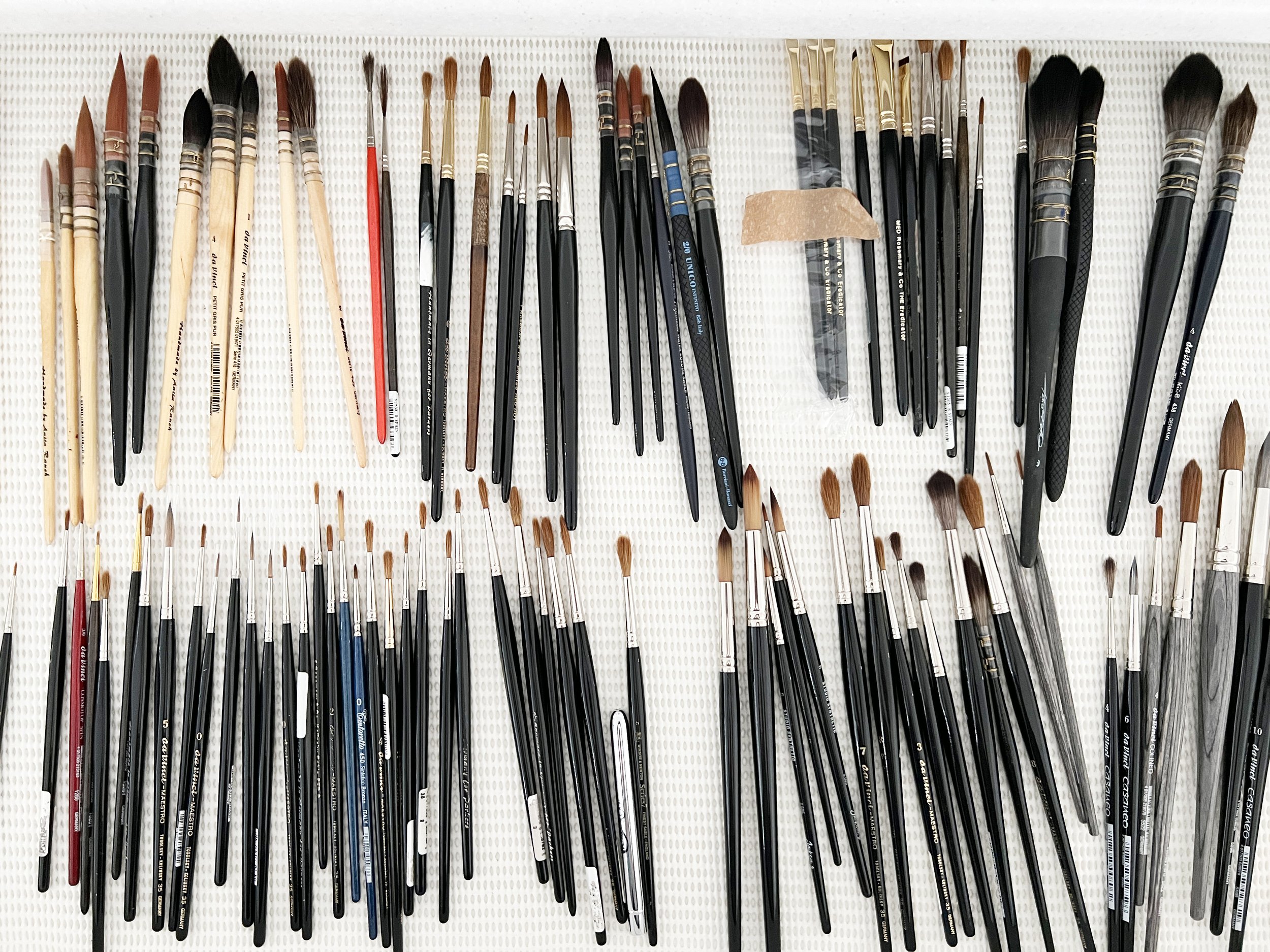
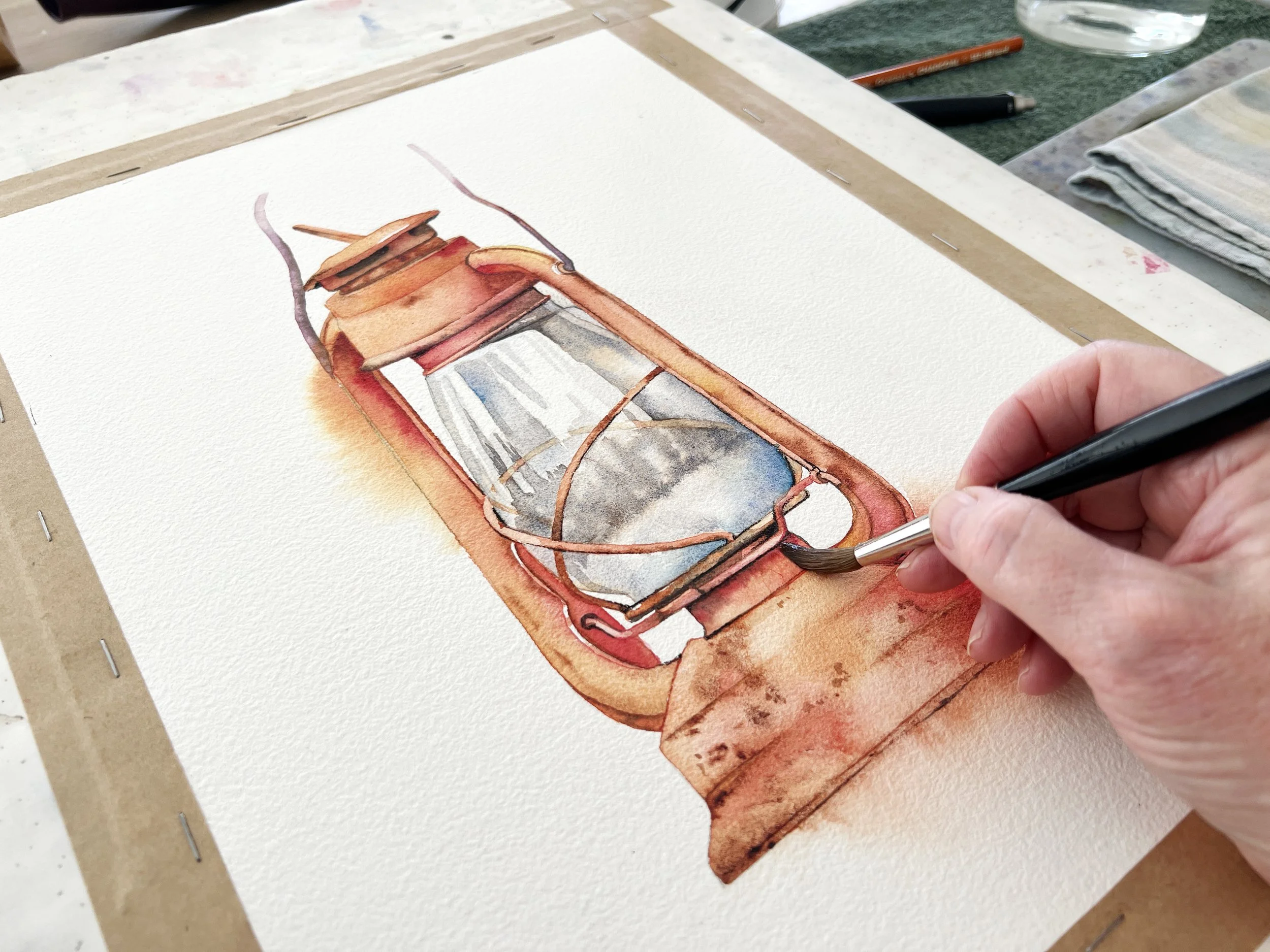
Brush choice influences far more than most painters realise. Watercolour brushes do not just apply paint, they control how much water reaches the paper, how pigment disperses, and how confidently shapes can be placed. When the brush is too small for the area you are working on, the painting process often becomes hesitant. You reload constantly, edges dry too quickly, and washes lose their sense of ease.
Many beginners gravitate towards small brushes because they feel safer. They suggest control. But this often leads to tightness in the hand, in the stroke, and in the painting itself. Large shapes become laboured, and the natural flow that watercolour techniques rely on begins to disappear. A larger brush holds more water and paint, allowing you to work more fluidly and keep washes alive for longer.
A gentler approach:
Choose your brush based on the size of the area you’re painting, not the level of detail you’re aiming for. For larger sections, use a brush that can hold enough water and pigment to move freely across the paper. Fewer strokes usually result in cleaner, more confident marks. When it’s time for details, switch brushes intentionally. Let each brush do what it was designed to do.
Mistake 2. Too Much Water (or Too Little)
Water is the true medium in watercolor art. Pigment simply follows its lead. Every effect, from soft blends to crisp edges, depends on the balance between water, paint, and paper. Too much water can cause blooms, backruns, and uncontrolled spreading. Too little, and the paint sits stiffly on the surface, refusing to blend or soften.
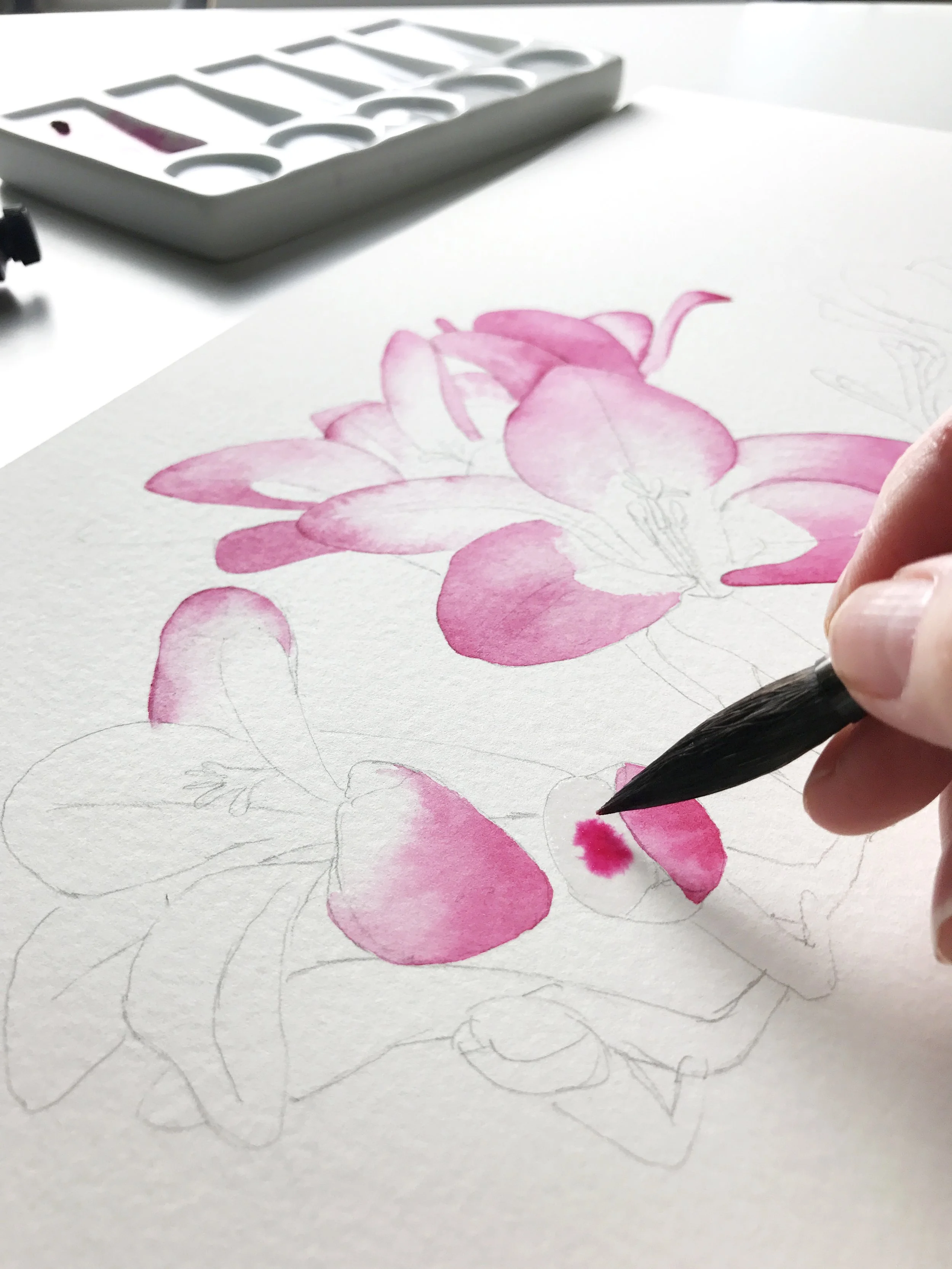
Learn the basics - wet on wet technique.
This imbalance often comes from focusing on colour rather than moisture. Yet when watercolour paint dries, it quietly reveals exactly what happened moments earlier. How wet the paper was, how much pigment was present, and how the brush was loaded.
A gentler approach
If water control feels confusing, I’ve written a detailed guide that breaks down how paper moisture affects every brushstroke. Learn how water behaves on paper.
Slow the process down. Test your mix on scrap paper before committing. Notice the sheen on the paper. Glossy, damp, and dry paper all behave differently. Over time, you will begin to recognise how water moves, how quickly it spreads, and when to step back and let it settle. This awareness forms one of the most important basic techniques in watercolour painting.
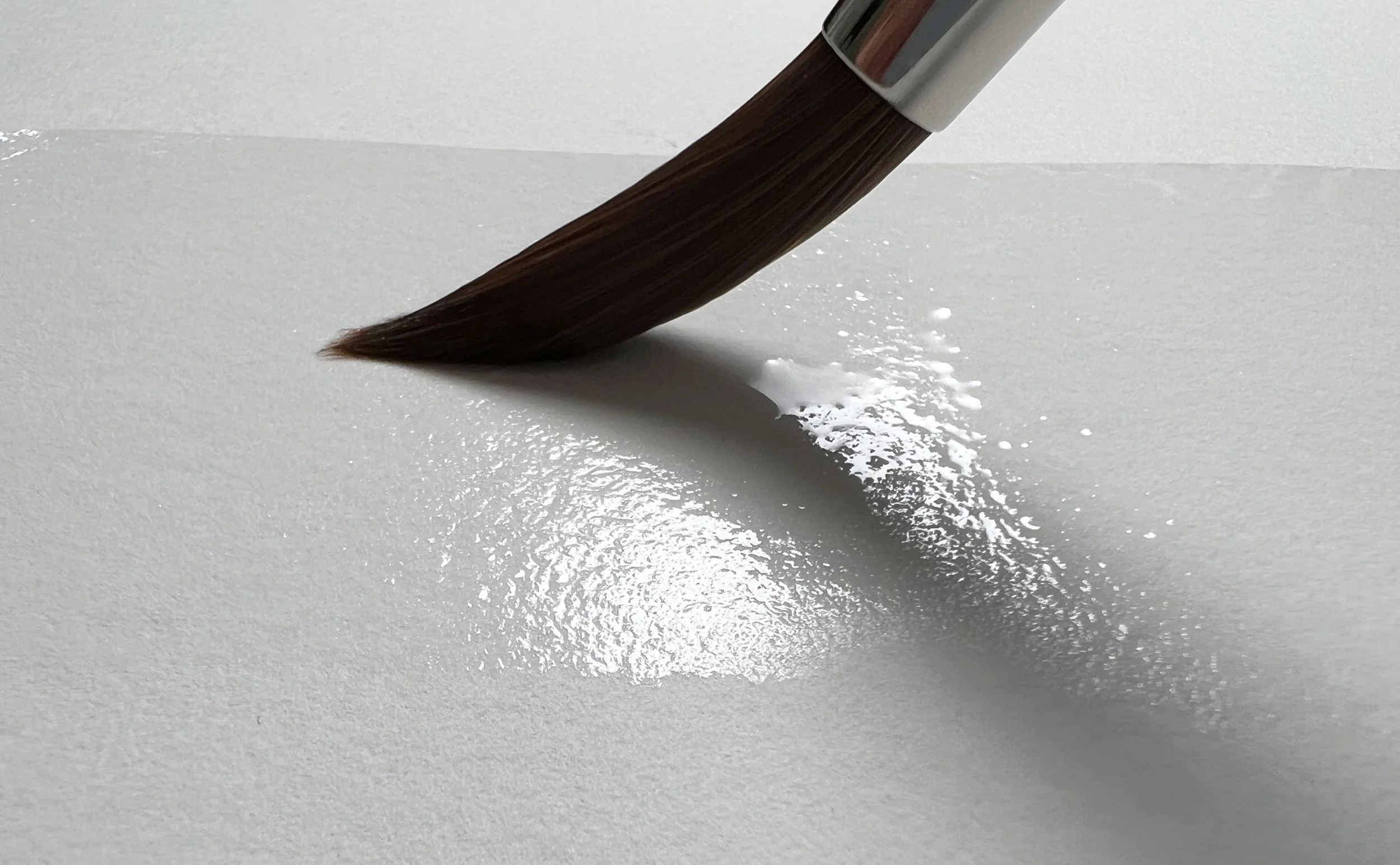
Different techniques require different amounts of water.
Mistake 3. Overworking the Watercolor Painting
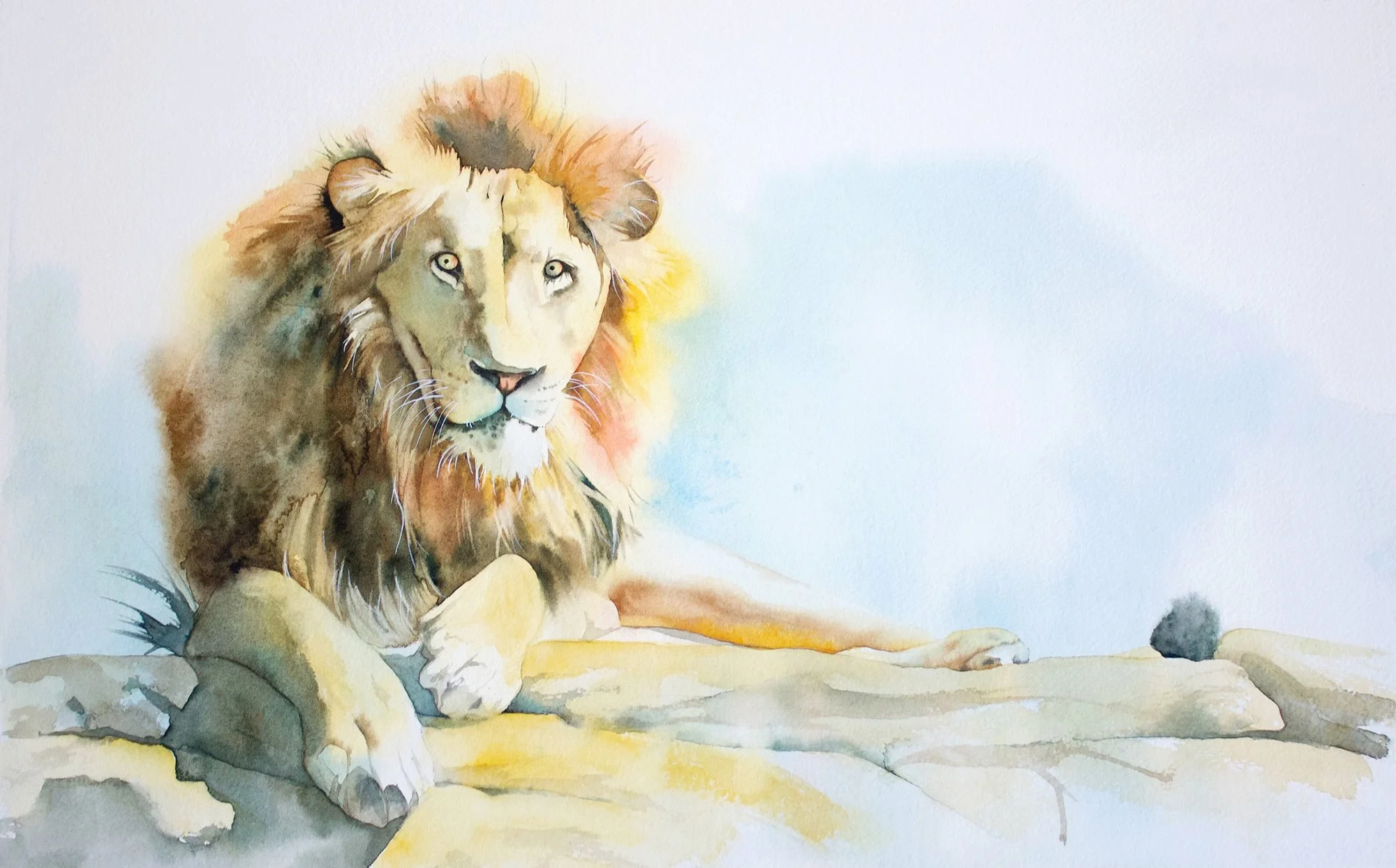
Watercolour rewards restraint. It is tempting to keep adjusting, adding another layer, softening an edge, or lifting colour, especially when a painting does not immediately match the idea you had in mind. But watercolour paper has limits. Too much reworking disrupts the surface, dulls the light, and makes it harder to achieve clean, transparent layers.
Overworking a watercolor painting often comes from uncertainty rather than a lack of skill. Many paintings lose their vitality not because of a single mistake, but because of too many small attempts to correct something that did not need fixing.
A gentler approach
Aim to say more with fewer strokes. Place the paint, then pause. Step back and observe before touching the paper again. If something feels unresolved it might be best to wait until the watercolor paint dries. Returning to dry paper, especially when working wet on dry, restores clarity and control. Sometimes the most effective decision is simply to stop.
Mistake 4. Not Letting Layers Dry
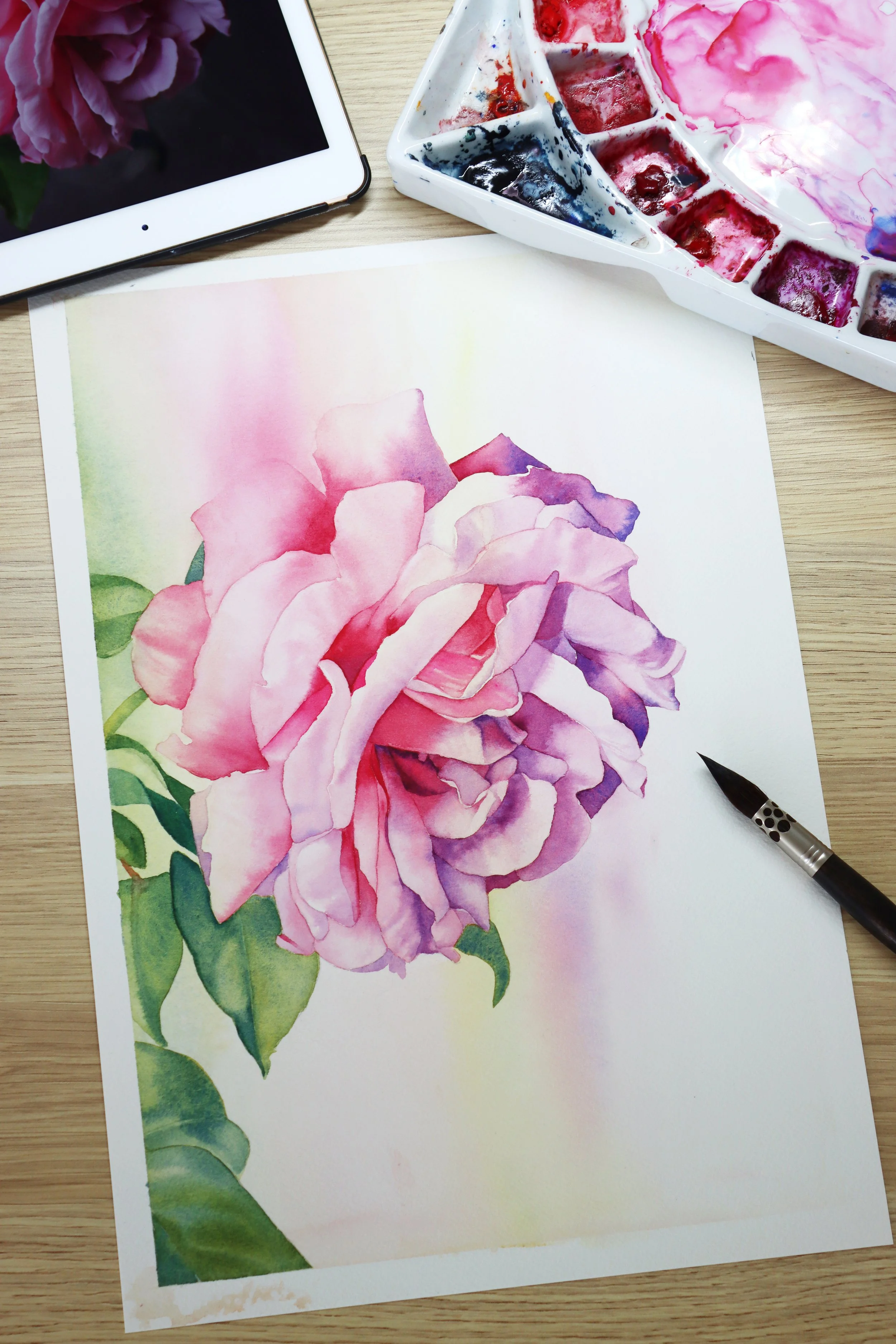
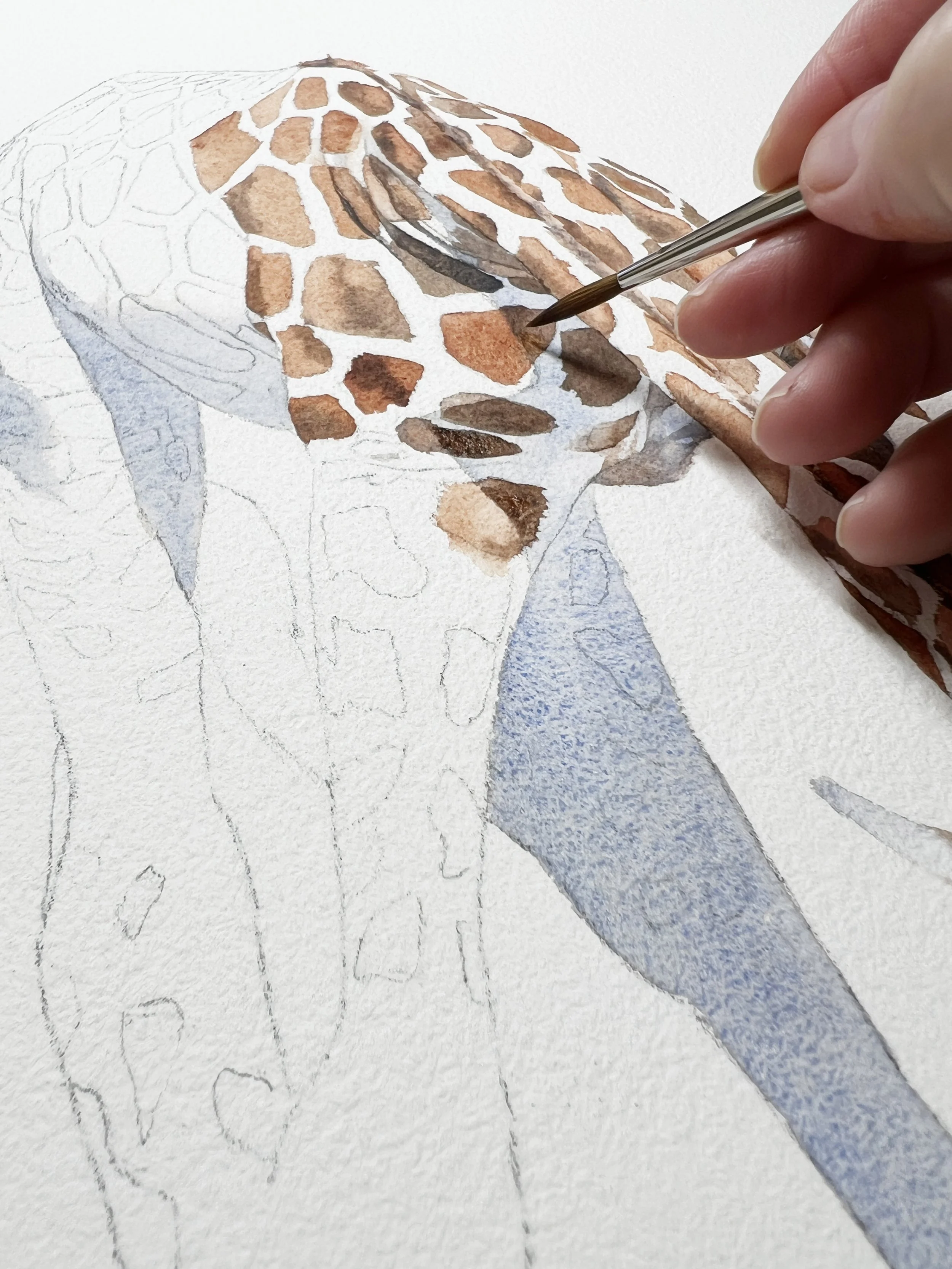
Timing is everything in watercolor techniques. Painting into wet areas can create beautiful softness and movement, but only when it is intentional. When layers are added before the previous wash has dried, colours can bleed together unexpectedly, softening edges and reducing contrast.
This often happens midway through a painting, when momentum builds and patience fades. The painting feels close, and the urge to keep going overrides caution.
A gentler approach
Accept drying time as part of the rhythm of the process. Use those pauses to look rather than act. When you return to fully dry paper, your marks behave predictably. Layers remain distinct. Details stay clear. Watercolour quietly teaches patience and rewards it with light and clarity.
If you’d like to practise this in a supported way, many of my tutorials focus on slowing down, working in layers, and knowing when to stop. Paint along with a full tutorial.
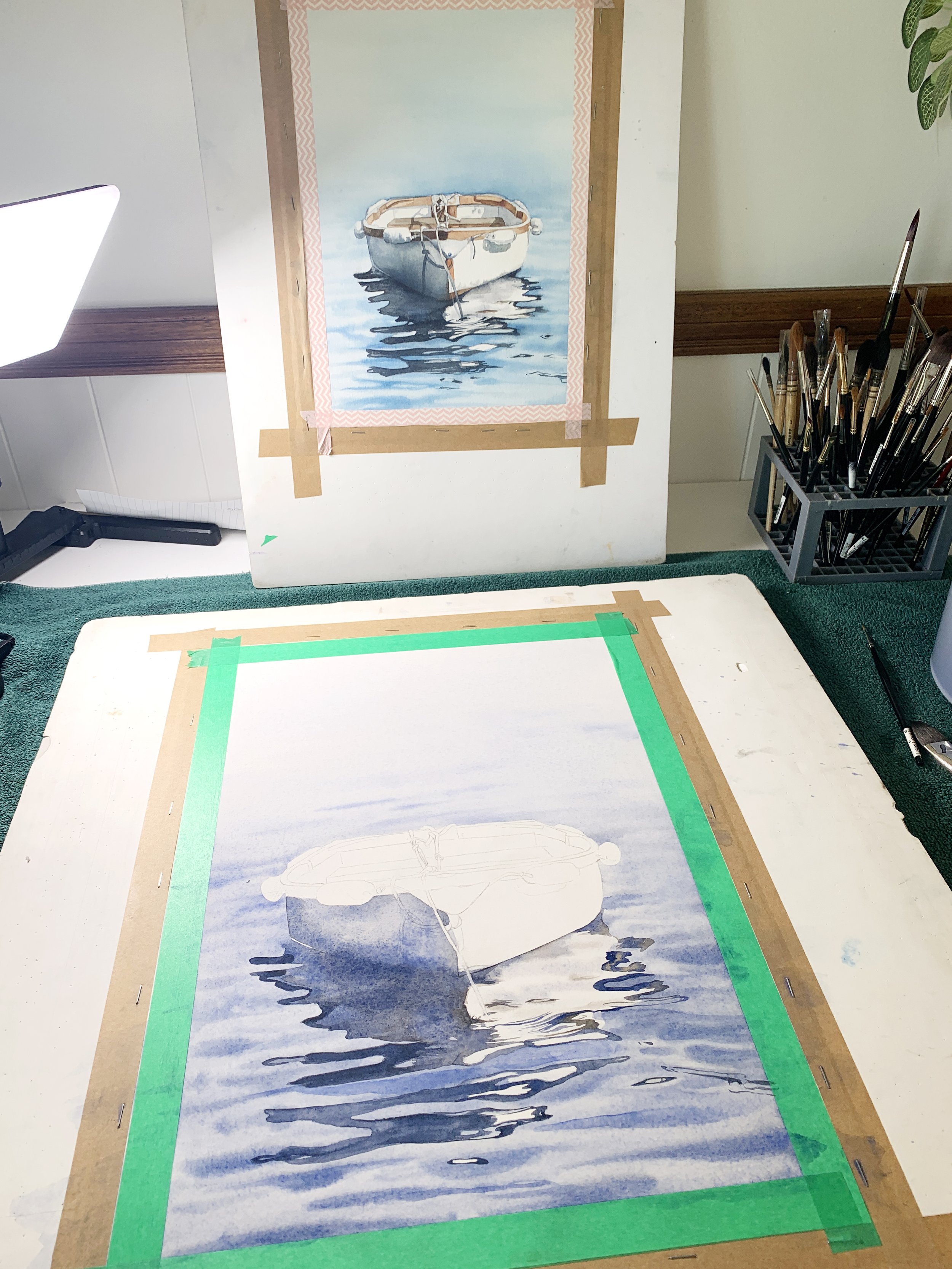
It's very important to wait until each layer is dry before continuing.
Mistake 5. Using Too Many Colours
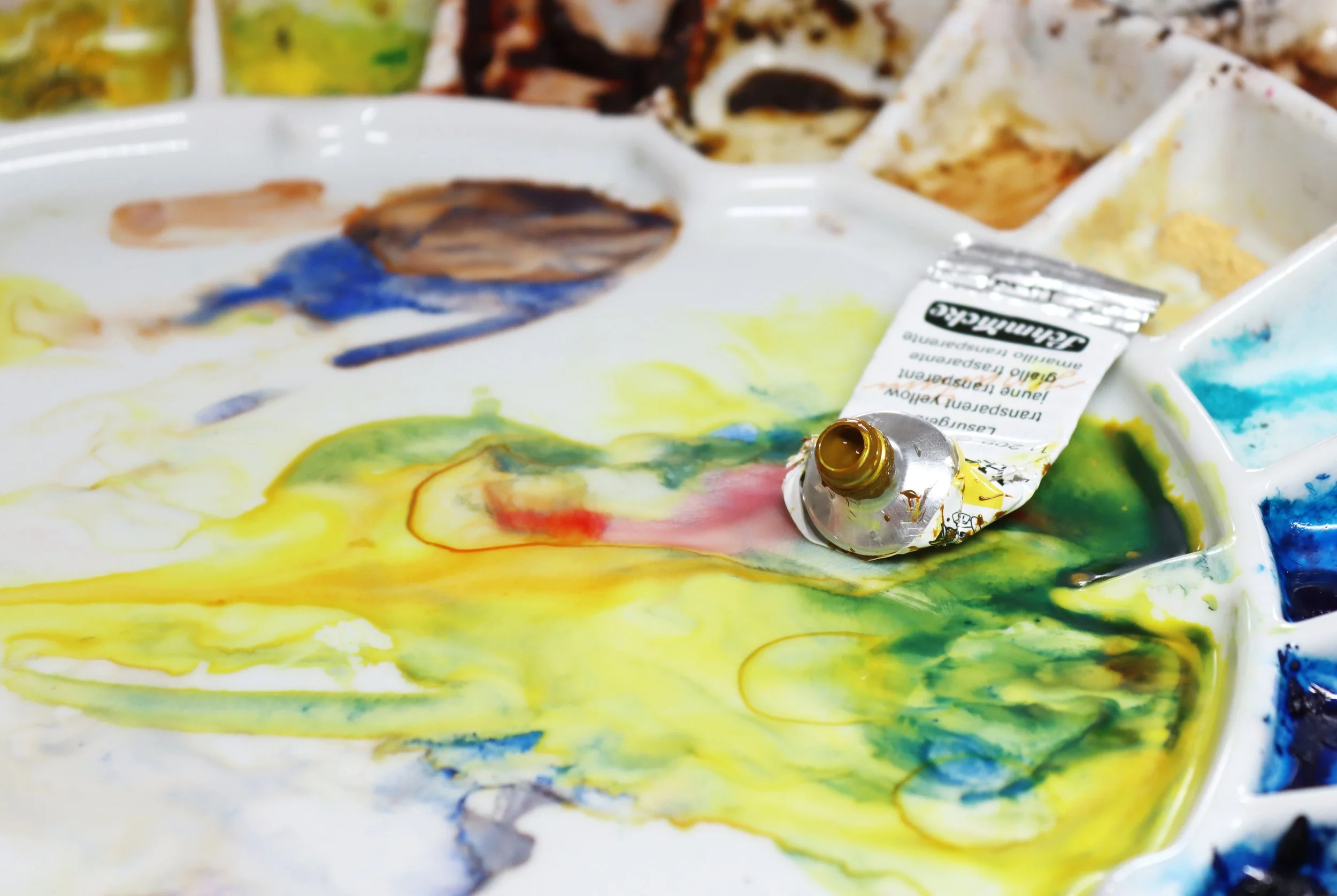
A large palette can feel inspiring, but too many colours in one painting often compete with one another. Repeated mixing of multiple pigments can quickly lead to dull, muddy results, especially when colour theory is not yet intuitive.
Limiting your palette may feel restrictive at first, but it encourages deeper understanding. Using familiar pigments, perhaps burnt sienna, burnt umber, or a single cool tone alongside a warm, helps you learn how colours interact, mix, and repeat across a painting.
A gentler approach
Choose a small palette and stay with it. Three to six colours are more than enough to create variety, depth, and harmony. Repeating the same pigments throughout a painting creates cohesion and quiet balance. Over time, this approach strengthens both your confidence and your skills.
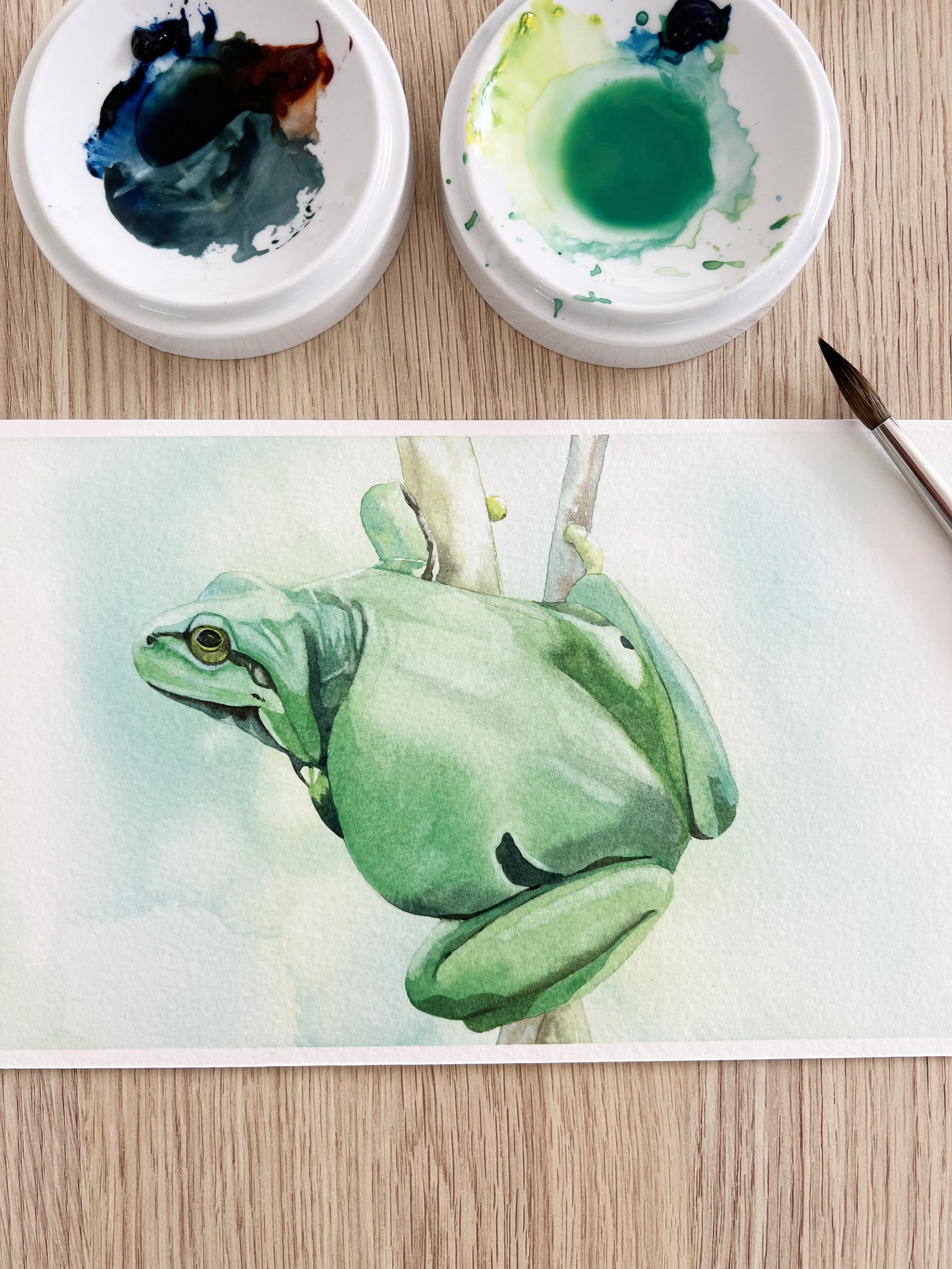
I often paint entire subjects using just a handful of colours. It simplifies decisions and keeps paintings fresh. View my everyday watercolour palette.
A Word of Encouragement
Mistakes in watercolour are not interruptions. They are part of the learning itself. Whether you started painting years ago or are just beginning to explore simple watercolour techniques, these observations form a quiet foundation. They appear again and again across painting tutorials, workshops, and the working habits of every experienced watercolour artist.
Progress comes from attention rather than force. From slowing down. From trusting the process. Watercolour is a conversation between water, pigment, paper, and patience. When you learn to listen, the painting often knows where it wants to go.
If this post resonated, you might enjoy learning alongside me. I share full length tutorials, progress photos, and gentle guidance to help you build confidence in watercolour. View watercolour tutorials or join the newsletter for painting tips.
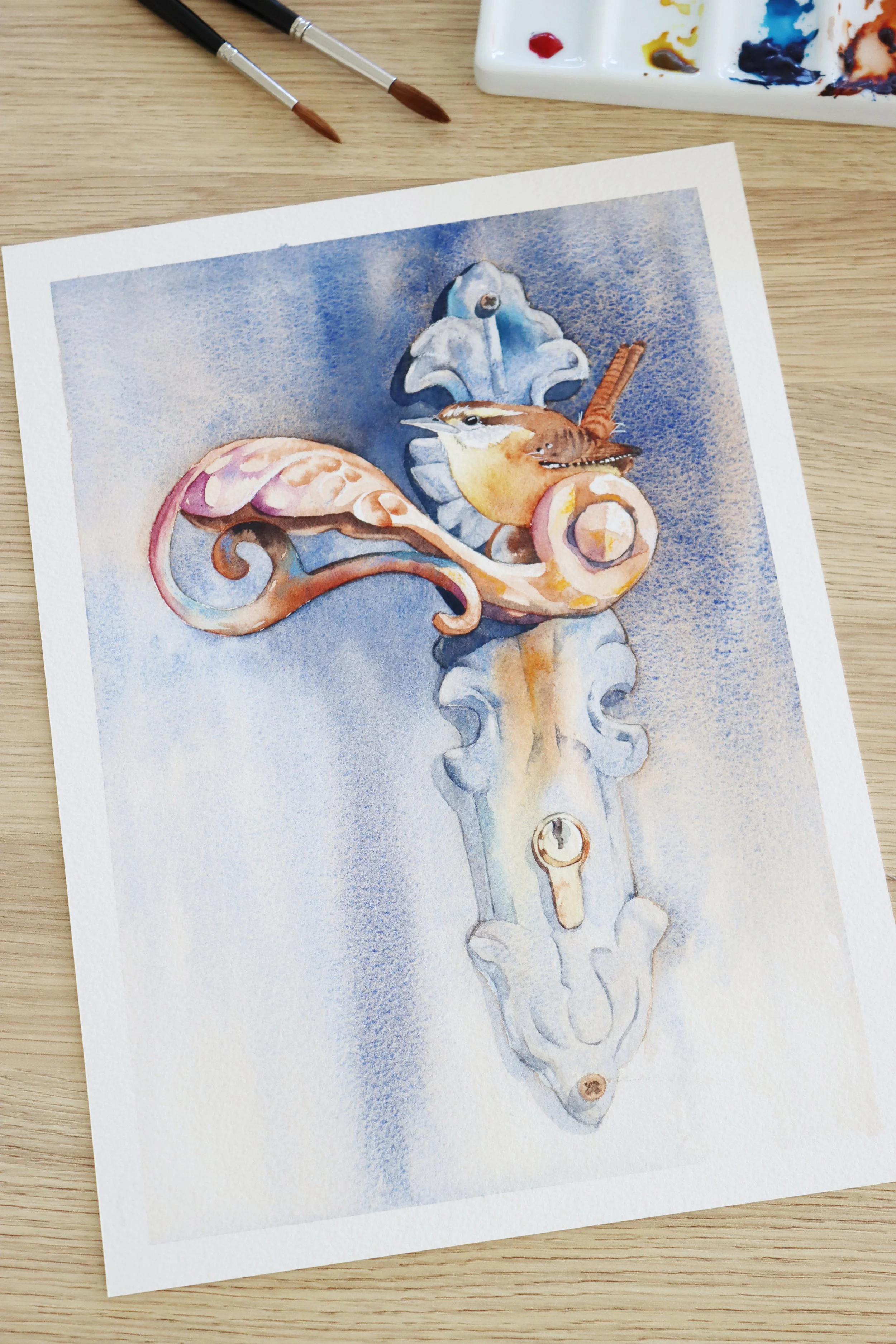
It's also worth remembering that not all colours have the same tonal range.
Some pigments can take you from a very pale wash to a surprisingly deep, dark mixture. Others remain relatively light, even when you use quite a lot of pigment.
This is something I find useful to explore with simple value scales.