
Daily Watercolour Practice Ideas
Small habits that quietly change everything
Daily practice does not mean long practice.
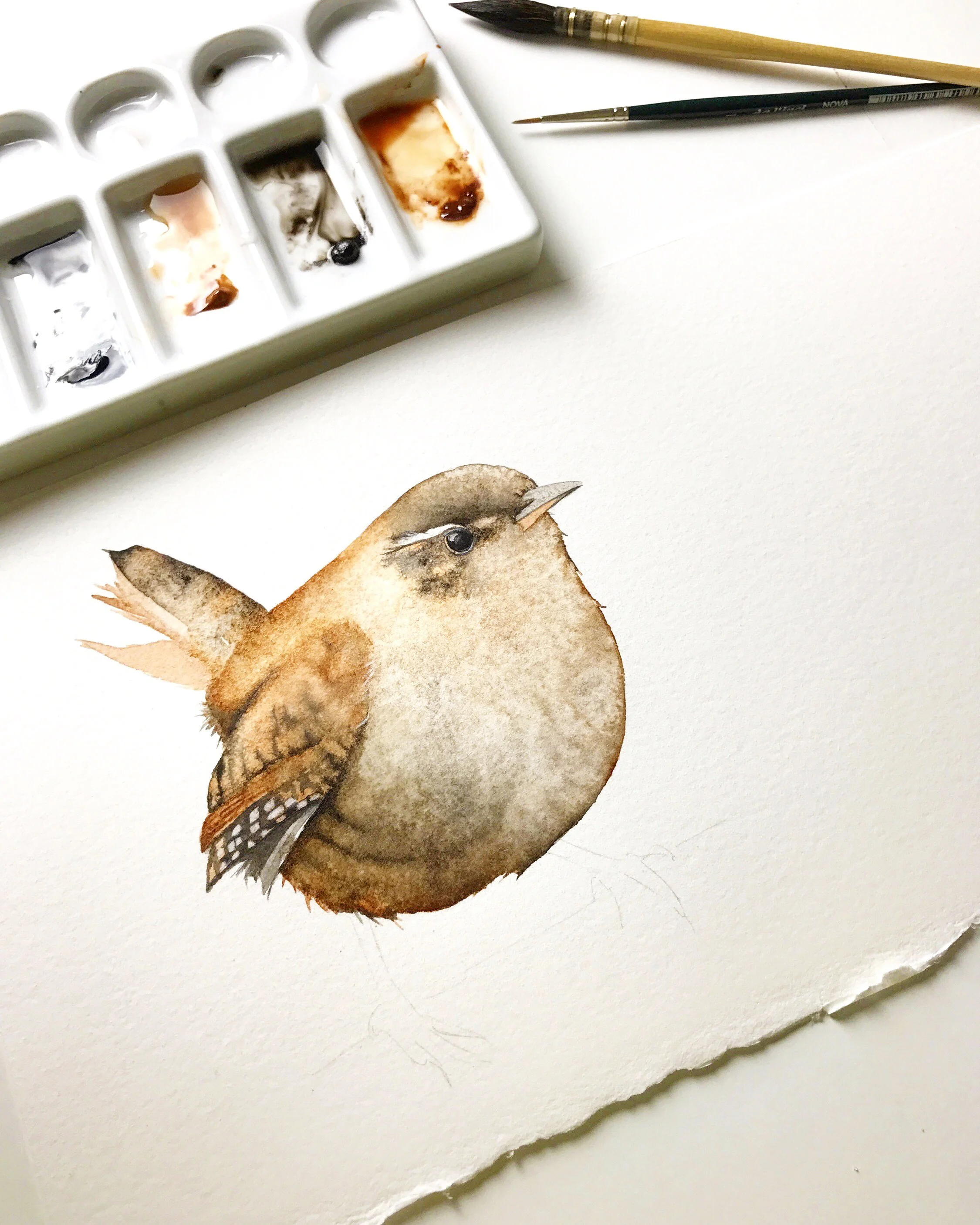
Looking for watercolour bird tutorials? I have a collection of tutorials on Patreon.
For many watercolour painters, the idea of practising every day brings up pressure rather than motivation. There is the fear of wasting paper. The fear of doing it wrong. The fear that every session needs to end with a finished painting.
But daily art practice is not about proving anything.
It is about showing up in a way that feels manageable, safe, and repeatable. When practice is short and focused, the pressure drops and so does the fear. You stop trying to perform and start giving yourself permission to explore.
This kind of watercolour practice builds skill quietly. You learn how water behaves. You develop a feel for timing, edges, value, and control, not by forcing results, but through repetition. You become familiar with your supplies, and over time confidence grows naturally. Painting starts to feel less intimidating and more familiar.
Five to fifteen minutes a day is enough. Not to become perfect, but to become more fluent, more relaxed, and ultimately a better artist.
9 Watercolour Painting Exercises
1. Five-Minute Washes
Paint a single wash on watercolour paper each day. Simply use a large round brush or a flat brush and practice long, meditative brush strokes by painting easy washes. Use your favourite colours and watch the pigments dance on the water.
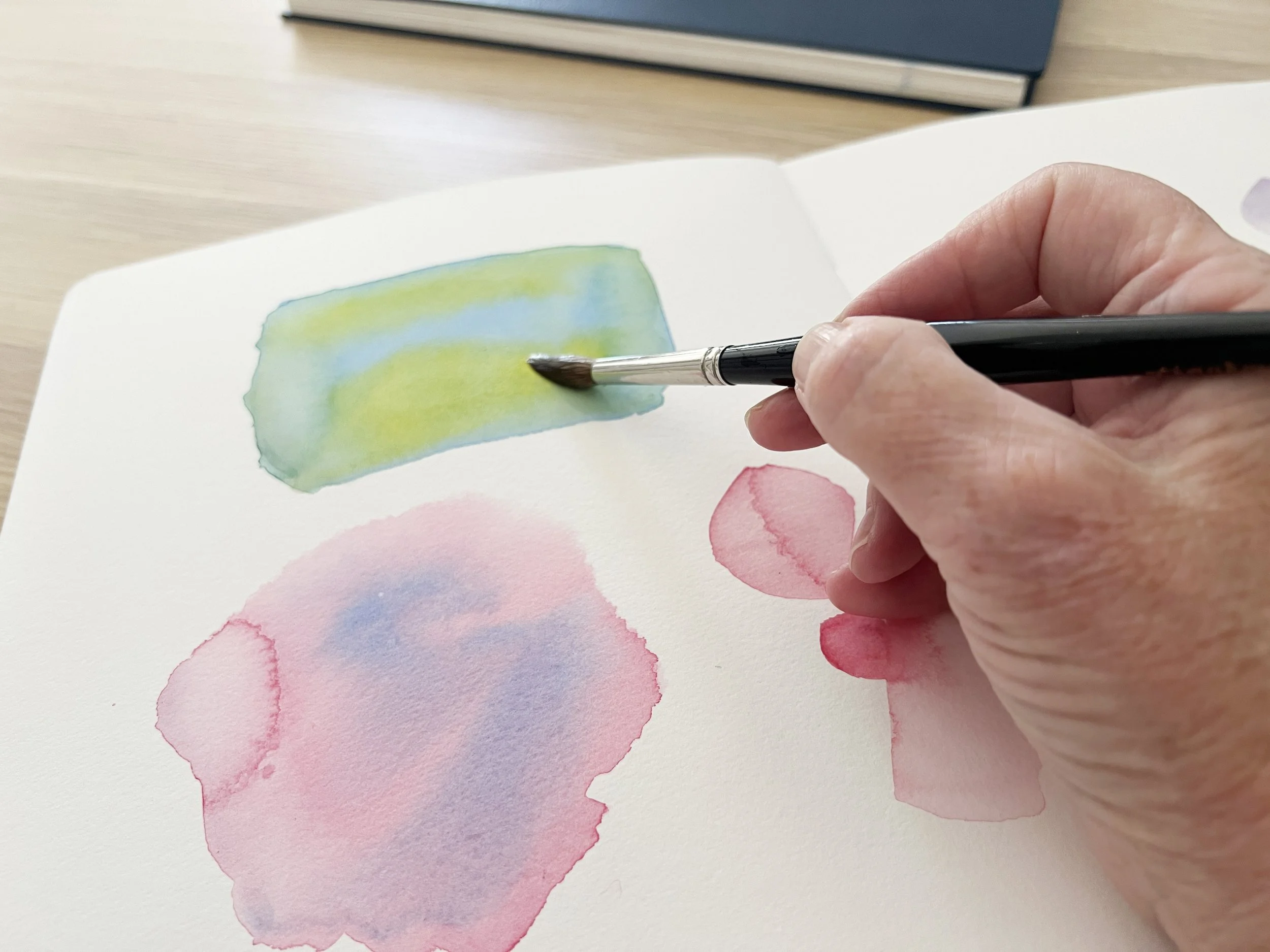
Try painting a:
That’s it.
Why this helps:
Wash control is foundational in watercolour. Practising washes without a subject removes all pressure and builds confidence with water, timing and movement faster than almost anything else.
2. One Colour a Day
Choose one colour and spend a little time with it.
It can be any colour you’re drawn to today.
Paint from light to dark
Create soft blends
Lift out highlights
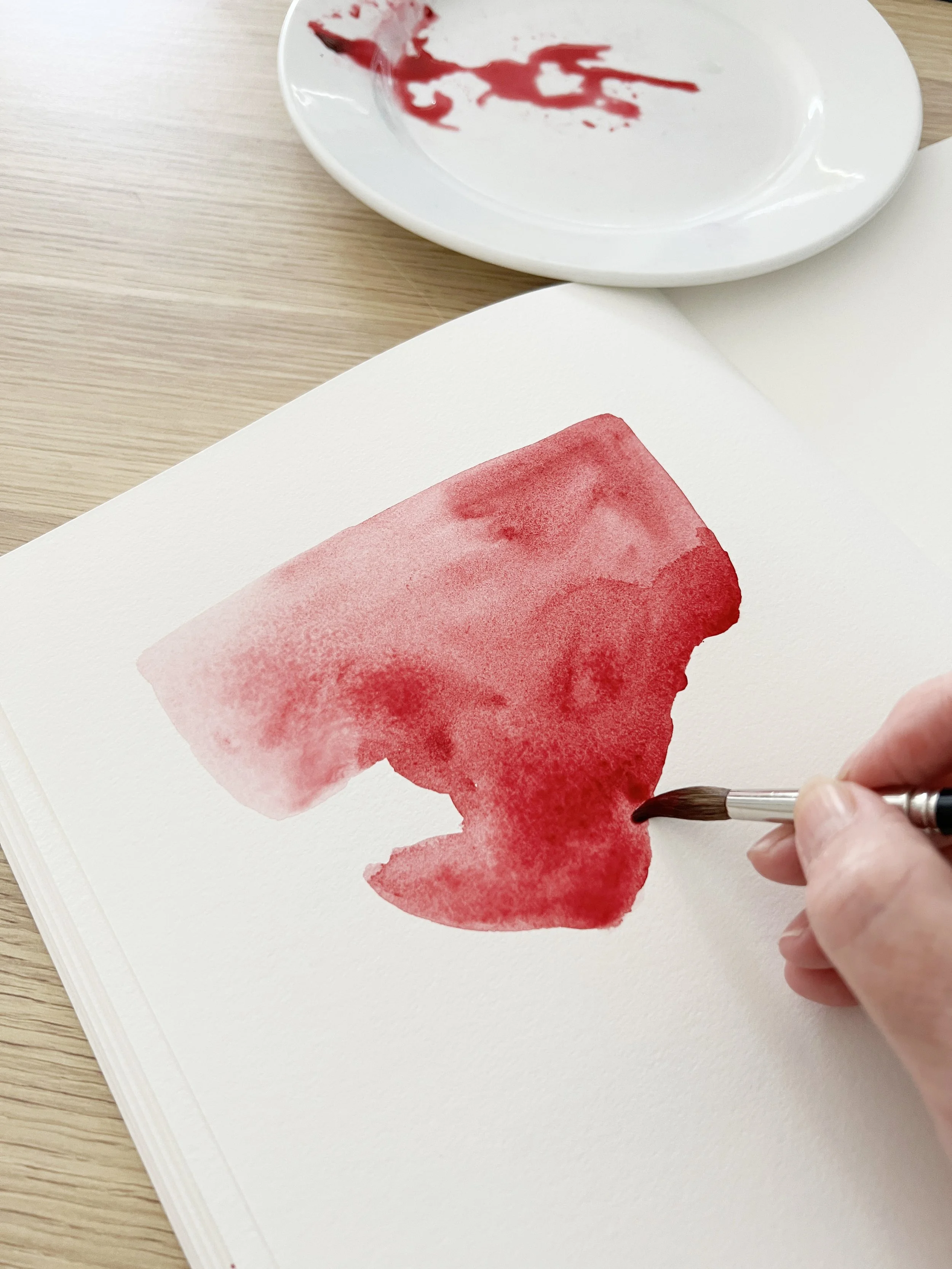
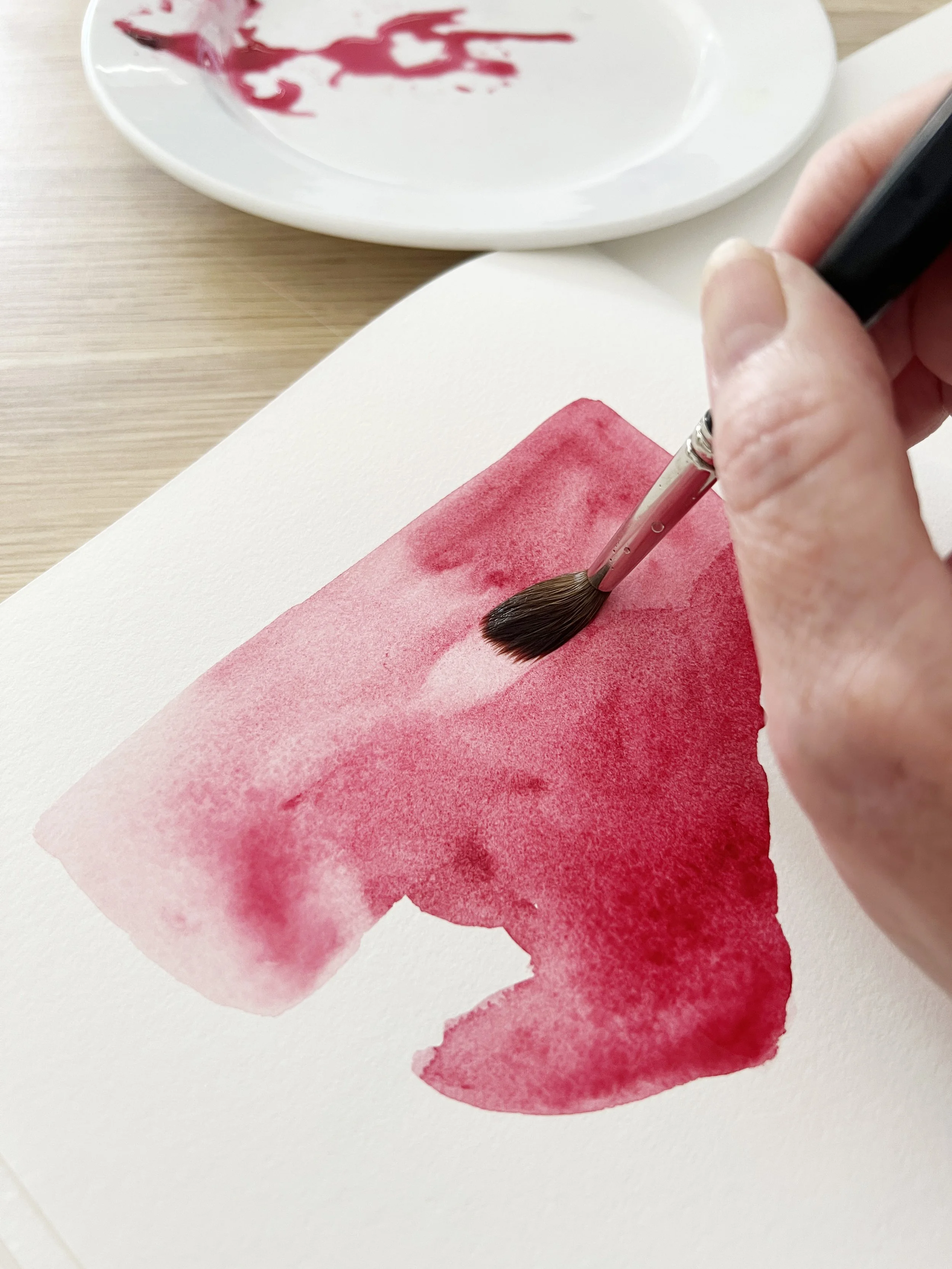
Begin lightly. Let the colour appear almost transparent.
Gradually deepen it, moving from light to dark.
Allow soft blends to form where the paint meets itself.
Lift out highlights while the surface is still damp.
There’s nothing to complete. Just notice what happens.
Why this helps:
Working with one colour helps you see value more clearly, without the distraction of colour choice. It also allows you to understand how each pigment behaves - how it spreads, settles, and lifts. These small observations build familiarity, and with it, quiet confidence.
3. Edge Control Practice
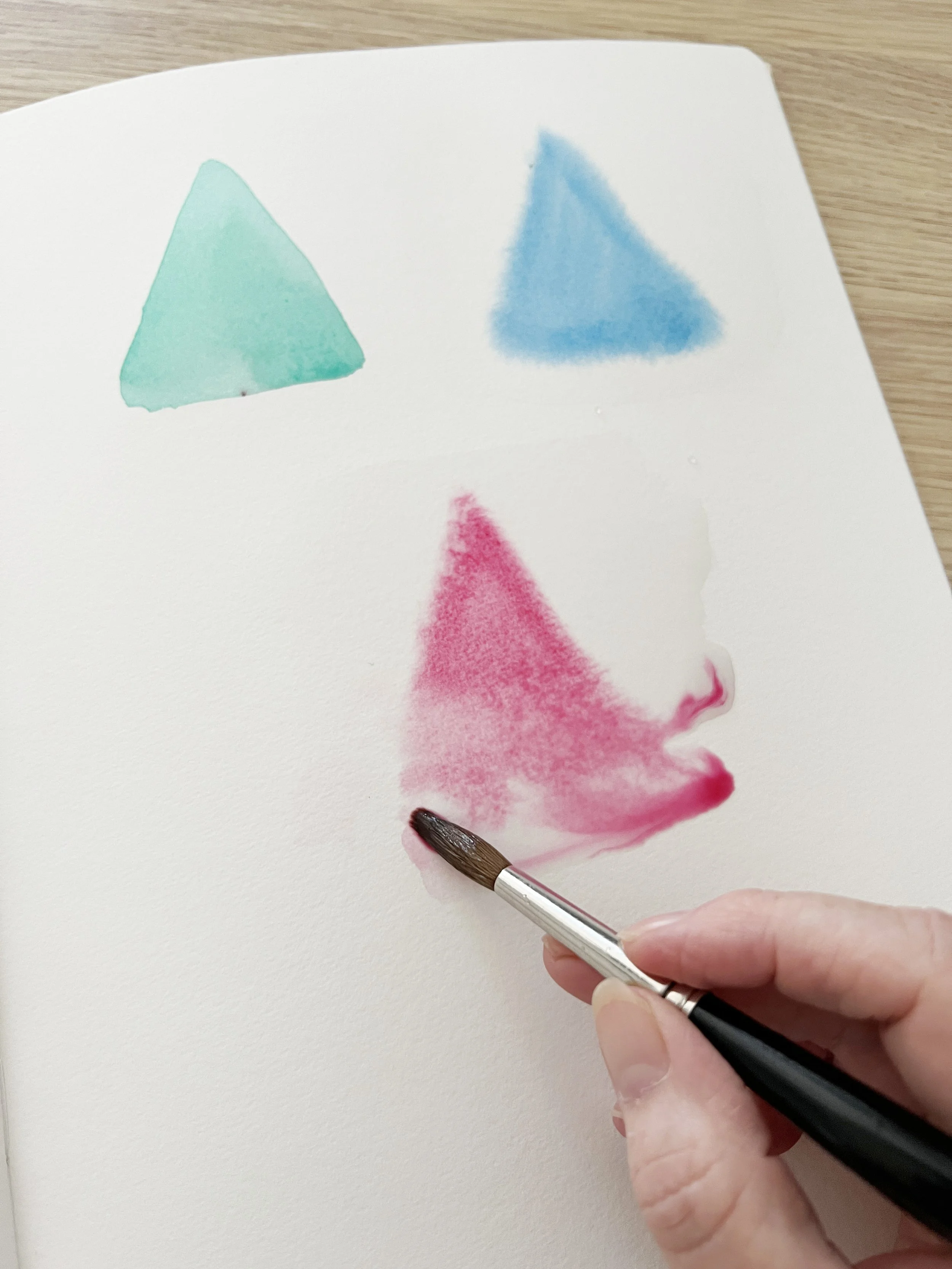
Paint the same simple shape three times.
Begin with clear, defined edges on dry paper.
Then paint it again while the paper is damp.
Finally, allow the edges to dissolve and disappear into the surrounding space on wet paper.
Keep the shape uncomplicated. Let your attention rest on the edge itself rather than the form.
Why this helps:
Edges shape how a painting is read. Knowing when to soften an edge, when to keep it crisp, and when to let it fade creates depth and atmosphere without adding detail. With practice, this awareness becomes instinctive and your paintings begin to feel more confident and intentional.
If you’re unsure about the different ways you can paint edges in watercolour, I’ve got you covered.
4. Simple Shapes, Not Subjects
Forget “painting something”. Just doodle. Turn off your brain (I know that it's hard!) and let your hand guide your brush.
Paint:
Circles
Ovals
Leaf-like shapes
Try them:
Wet-on-wet
Wet-on-dry
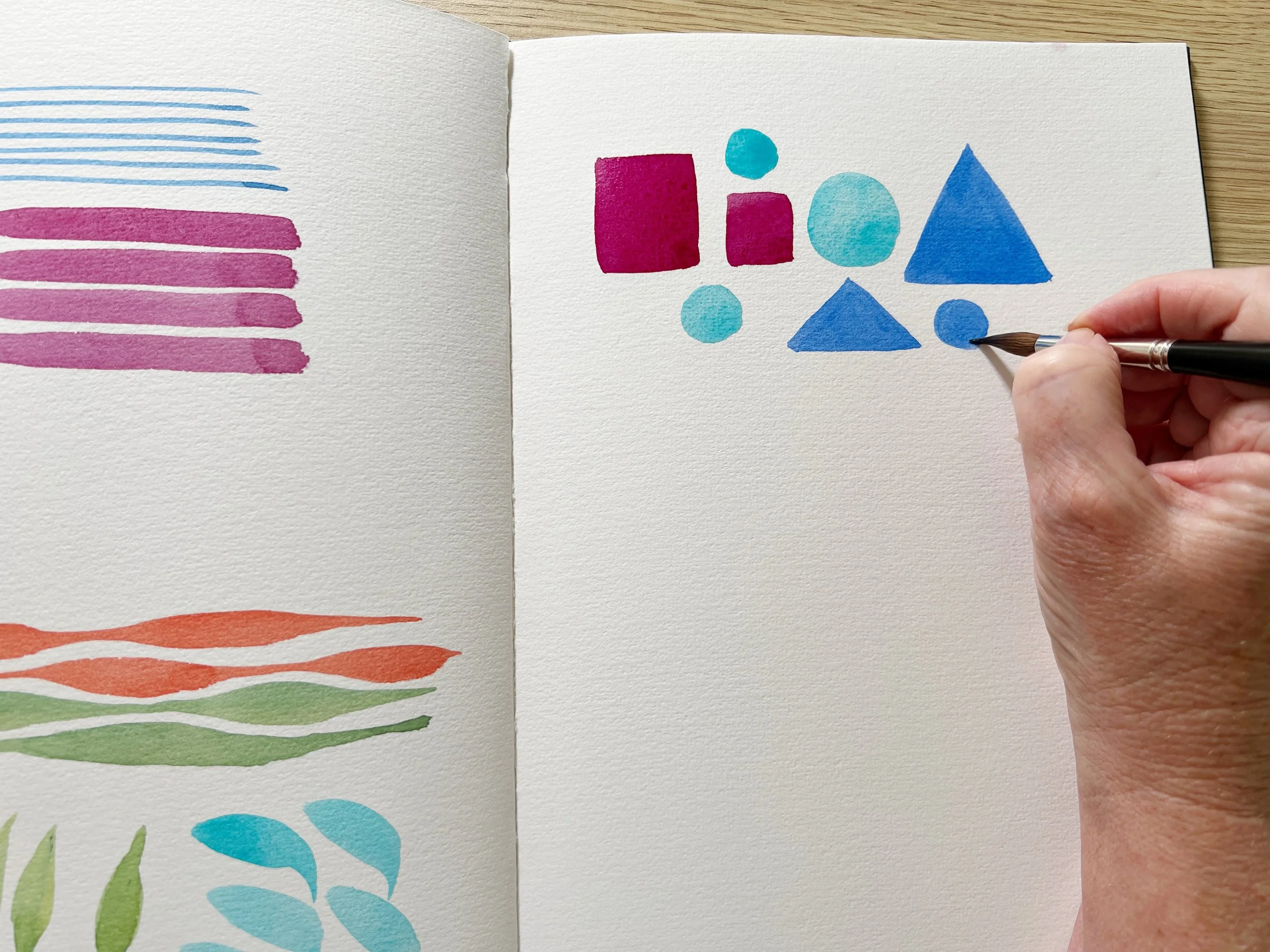
This is one of the techniques tutorials I have on Patreon.
Why this helps:
This removes drawing anxiety completely and allows you to focus purely on paint and water, which is where most beginners actually struggle. I have written a lot about the wet-on-wet and wet-on-dry techniques here.
5. Limited Palette Days
Choose just two colours that harmonise with one another.
Take a moment before you begin. Let the palette feel settled. With fewer colours available, there’s less to decide and more space to simply start.
Mix everything from those colours.
Resist the temptation to add anything extra.
Allow the relationships between the colours to reveal themselves slowly on the page.
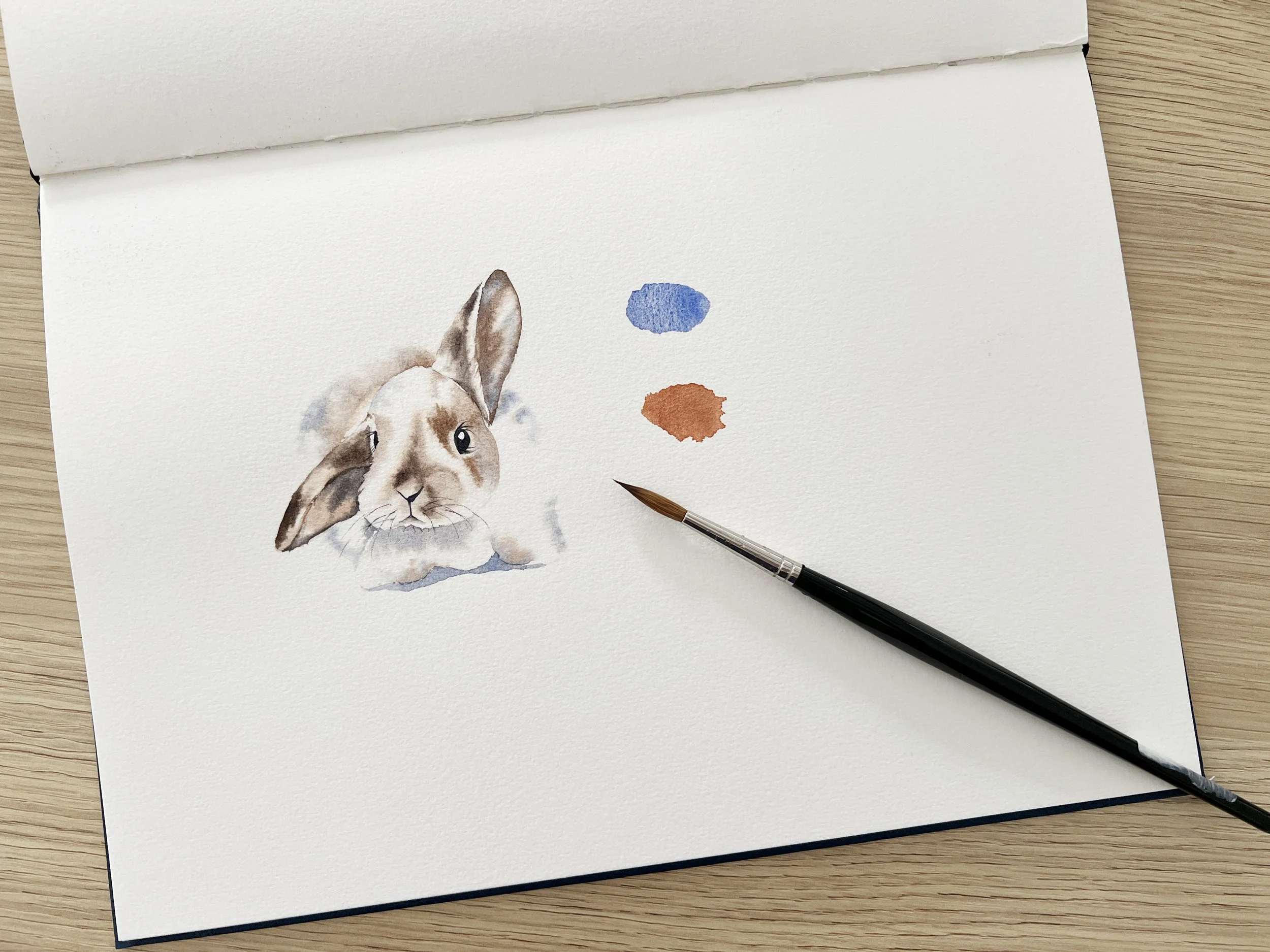
This cute little bunny is a simple tutorial for beginners on Patreon.
Why this helps:
A limited palette leads to cleaner mixes and more natural harmony. It also reduces decision fatigue, making the painting process feel calmer and more focused. Over time, this kind of practice strengthens your colour mixing instincts and builds trust in simplicity.
Working with a limited palette becomes much easier when the colour choices are already decided for you.
6. Value Studies
Choose a simple subject. Something familiar.
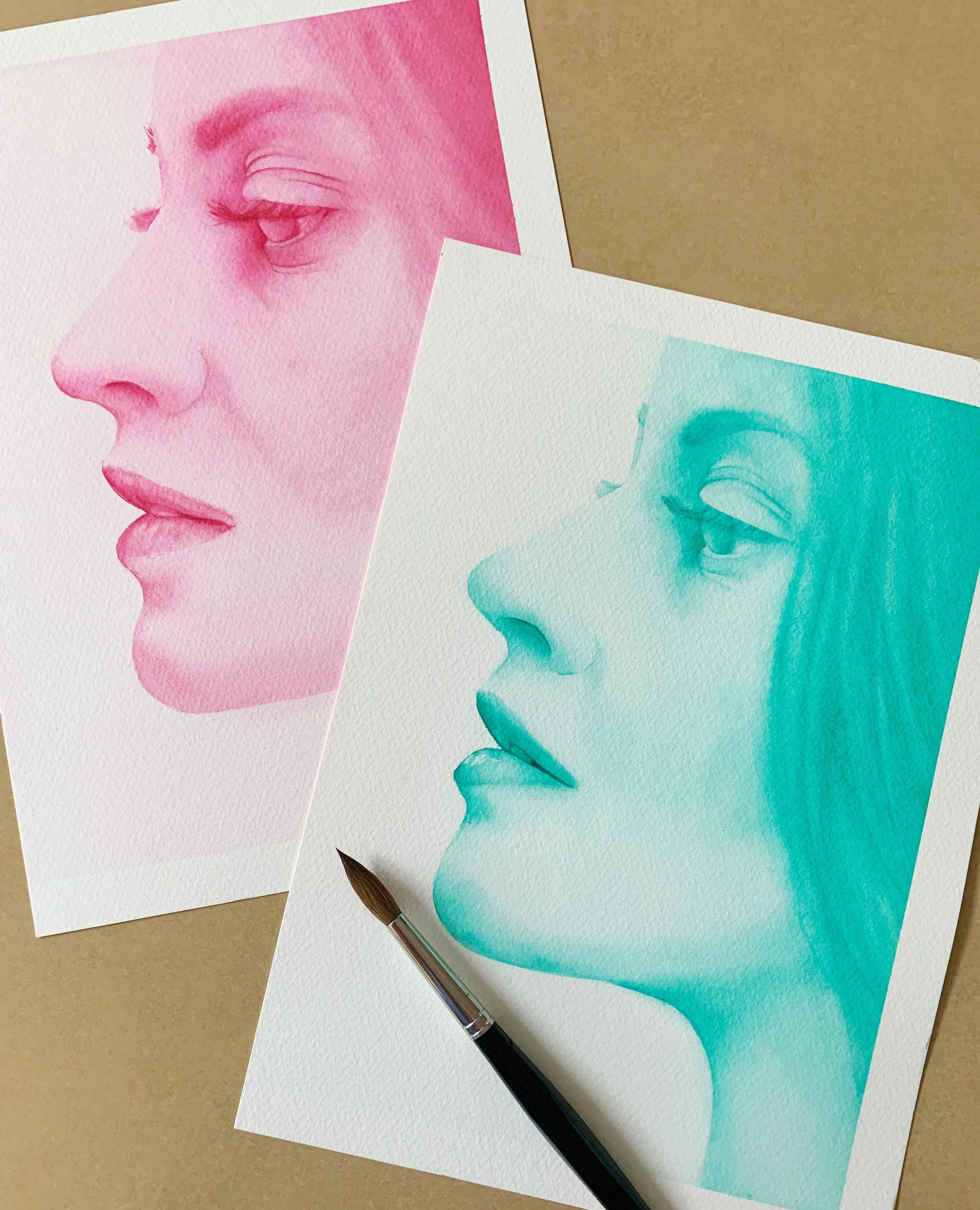
This is not a simple subject- I just wanted to show value studies.
Something with a clear light source.
Something that doesn’t ask much of you.
Paint using only one colour and pay attention to value.
Let the brush move gently.
Allow shapes to remain soft and incomplete.
If it feels unfinished, that’s enough.
Pause occasionally and look at the page from a distance. Notice whether the forms read clearly without relying on colour or detail. Notice where the light sits, and where it gently turns away.
Why this helps:
Value is what allows a painting to hold together. When light and dark are in balance, the eye understands the image even with very little information. Practising value in this quiet, limited way sharpens your seeing and builds trust in simplicity. Over time, you begin to rely less on detail and more on what truly carries the painting.
7. Repeat the Same Subject
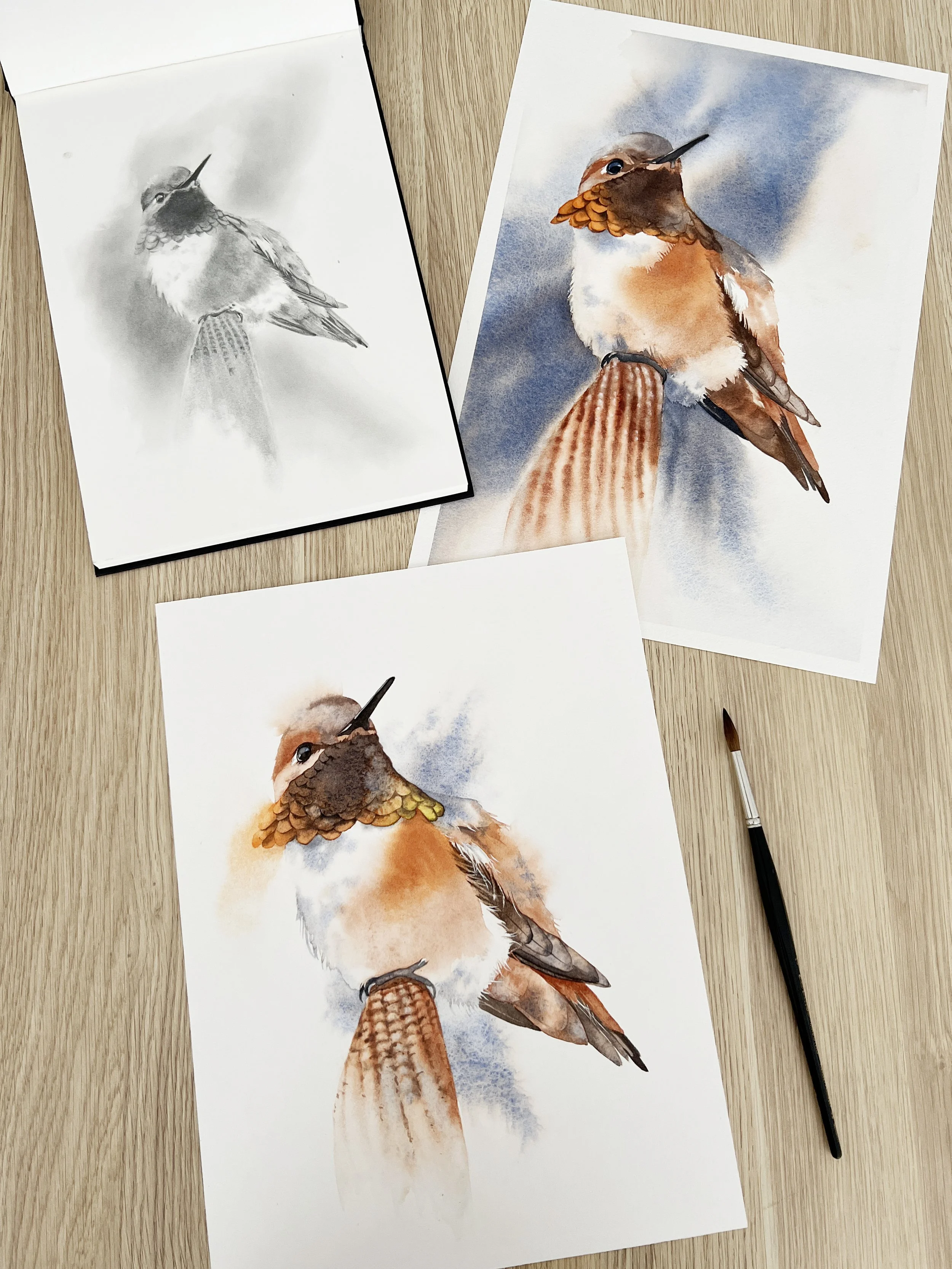
Paint the same simple subject three to five times.
Small size
Fast
No fixing
Choose a simple subject and paint it two or three times.
Keep each version small.
Work quickly.
Resist the urge to fix or correct.
Notice how each attempt differs.
See how your hand and your brush begin to move more freely with each pass.
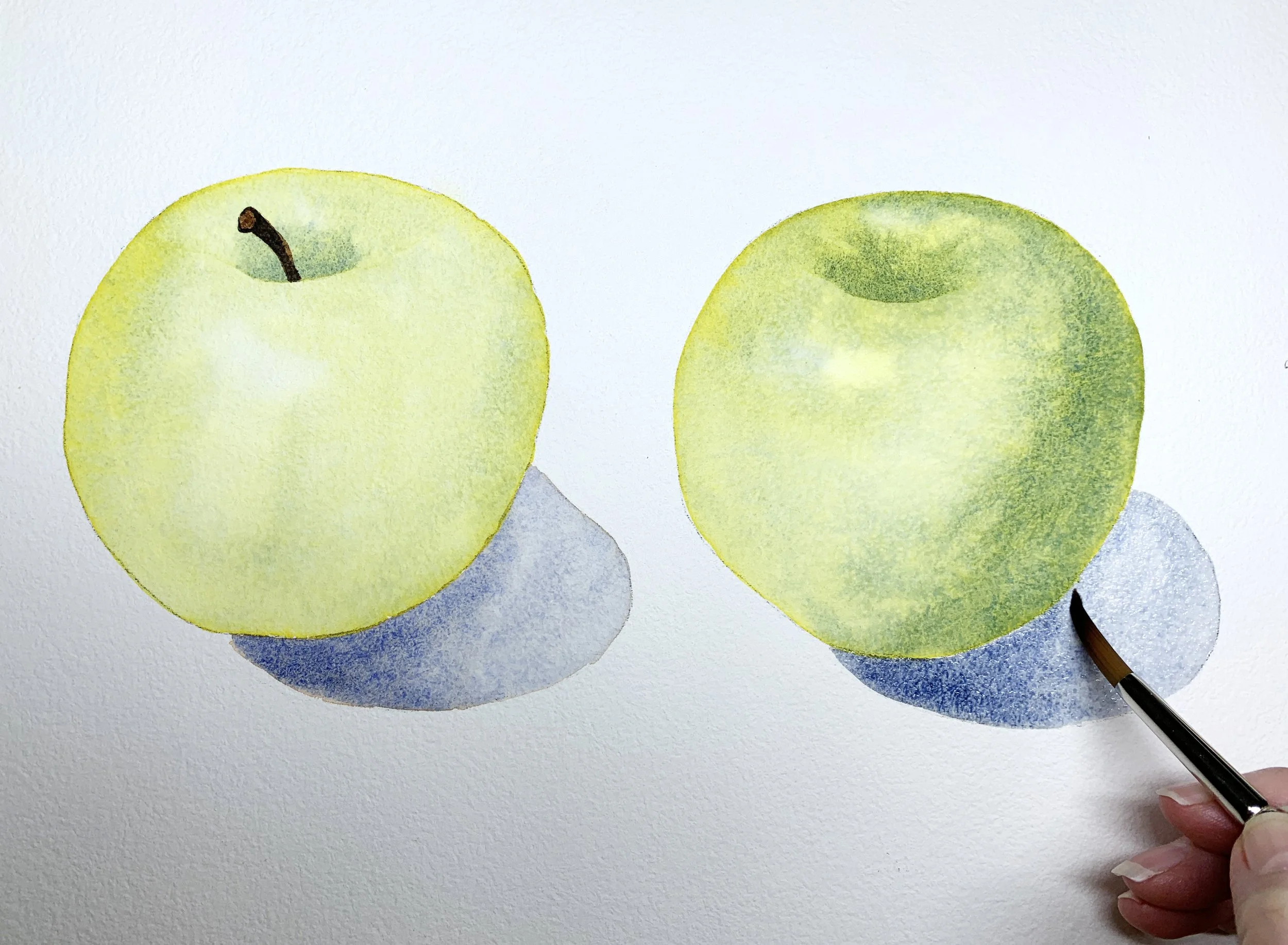
These apples are one of the many beginner tutorials I offer.
Why this helps:
Repetition quietly builds confidence. Each painting teaches something new about - timing, movement, and observation and all without the pressure of starting from scratch. Over time, this practice lets your eye and hand trust each other more, and your work begins to feel more natural.
Sometimes repeating a subject inside a guided lesson removes the pressure of choosing what to paint.
8. Water Control Drills
Spend a few minutes exploring how your brush interacts with the paper.
Try a damp brush on wet paper.
Then a damp brush on paper that is beginning to dry.
Finally, try dry brushing across textured paper.
Notice how each surface responds. Pause. Observe the subtle changes.
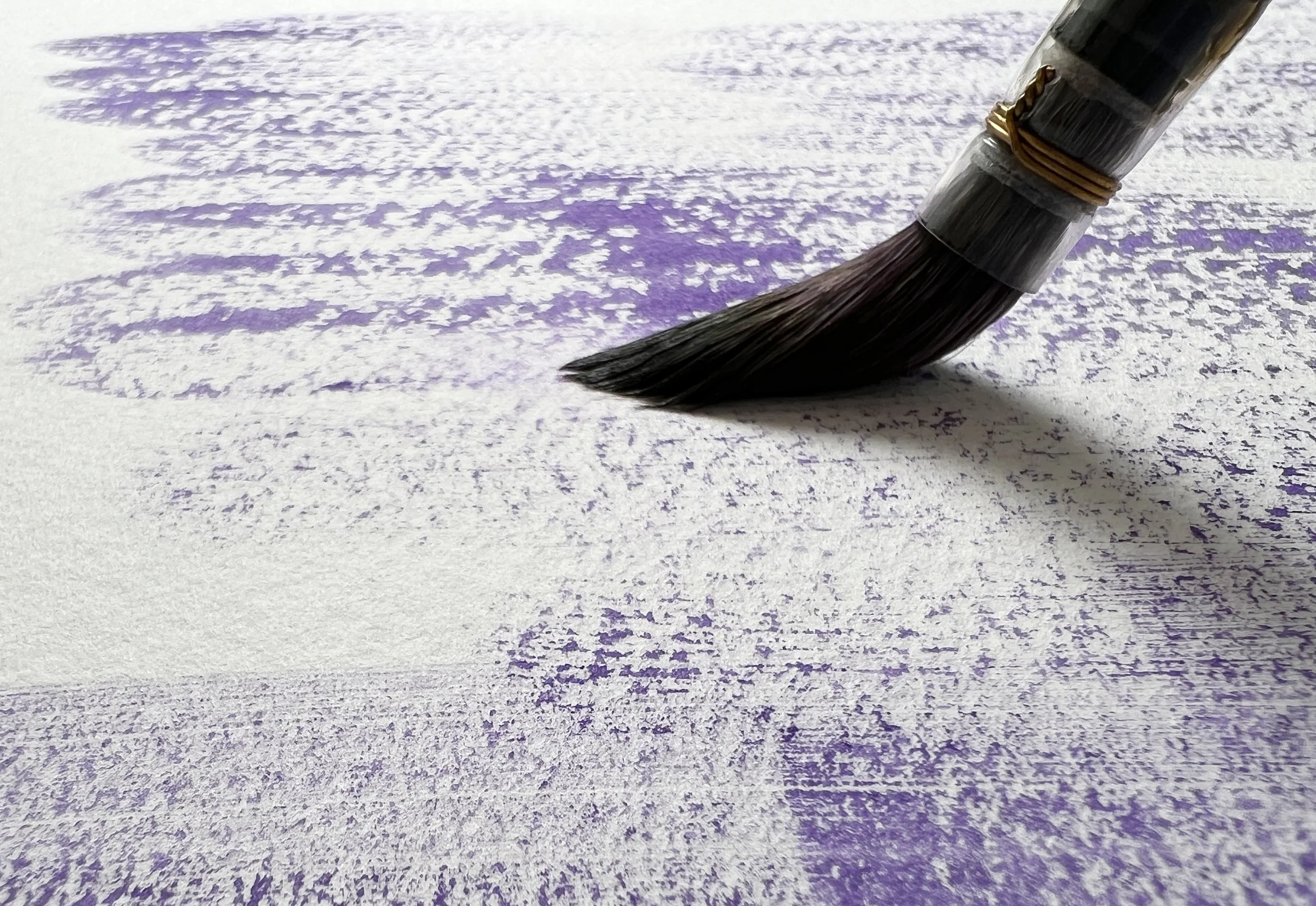
I have a dry brush technique tutorial on Patreon
Why this helps:
Timing is one of the hardest things to learn in watercolour. These small drills train your eye and hand to recognise when the paper is ready.
9. Brush Control Exercises
Choose just one brush for this practice.
Explore what it can do.
Make thick, confident strokes.
Then light, thin lines.
Then gentle, tapered marks.
Notice how the brush responds to your hand and pressure.
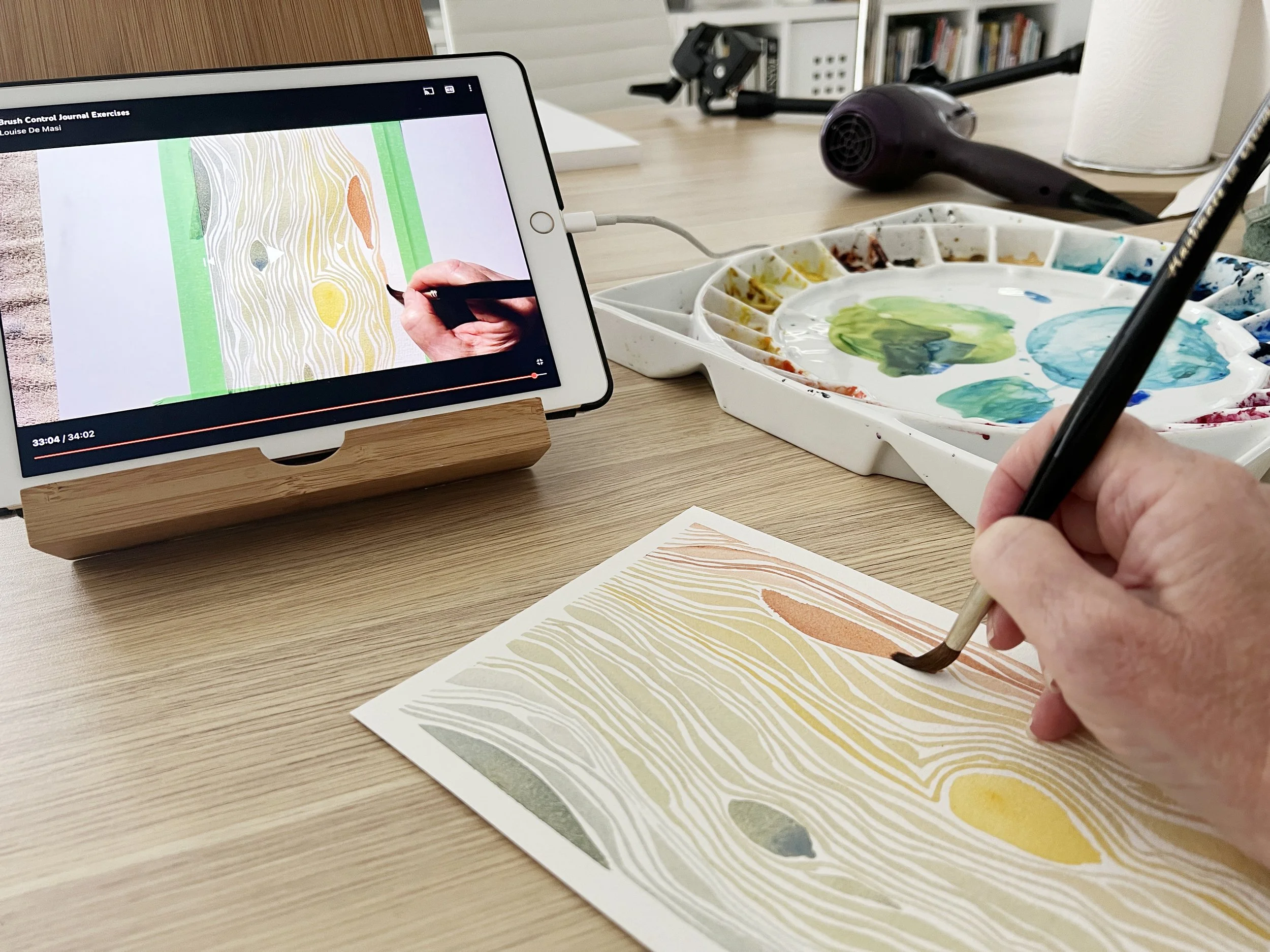
Brush control exercises available on Patreon as a tutorial.
Why this helps:
Confident mark-making comes from familiarity. The better you know your brush, the freer your painting becomes. Here are some basic strokes to practice.
How to Use These Ideas
Work small
Set a timer for 5–15 minutes
Stop when the timer ends
No finished outcomes required
Daily practice isn’t about making finished paintings.
It’s about building quiet skills and basic techniques that slowly, steadily change how your work feels.
If you miss a day, nothing breaks.
Just start again tomorrow.
That’s enough.
If you’re unsure where to begin, choose just one of these ideas and return to it for a week. Let it be simple. Let it be imperfect. Notice how your relationship with your paint starts to change.
And if you’d like more structure, guidance, and gentle support in building a regular watercolour practice, my online courses are designed to help you develop skill without pressure - one small step at a time.
Watercolour doesn’t need more discipline.
It needs consistency, curiosity, and kindness.
Those are things I recommend practicing every day.
Love, Louise.
A few years ago, I looked back at some of my older paintings and found one of a tulip that I had overworked.
It was a useful painting to look at because I could see exactly what I had been doing wrong.
I'd used too many colours and too many layers. I'd tried to record almost everything I could see in my reference photo. I'd worked and reworked areas until the paint had lost its transparency and luminosity.