
Scared of Watercolour? 8 Common Watercolour Mistakes That Create Fear
Over the years, I’ve had many students quietly confess the same thing:
“I’m scared to start.”
“I don’t want to ruin it.”
“I feel tense the whole time.”
"I am afraid of making mistakes."
Fear of watercolour is far more common than people realise. In fact, many beginners feel nervous every time they sit down to paint. I still feel a little nervous when I start a new painting too. That feeling never completely disappears.
But something interesting happens once painters change how they approach the process.
The fear usually fades.
Not because they suddenly become more talented, but because they begin working with watercolour differently.
Here are some simple shifts that can make watercolour painting feel much easier and more enjoyable.
1. Stop Aiming for Perfect Finished Paintings
Many beginners sit down believing every painting needs to be frame-worthy.
When every sheet of paper feels precious, every brushstroke feels risky. Even a small mistake can feel like the whole painting is ruined.
A much healthier approach is to paint studies and practice pieces instead.
Small exercises. Partial paintings. Practice sheets where you explore colour, edges, or washes without worrying about the final result.
When the goal shifts from finishing a painting to learning how watercolour behaves, the pressure drops immediately.
And that’s when real progress begins.
If starting a painting feels intimidating, it can help to follow a calm, step-by-step lesson rather than trying to figure everything out alone.
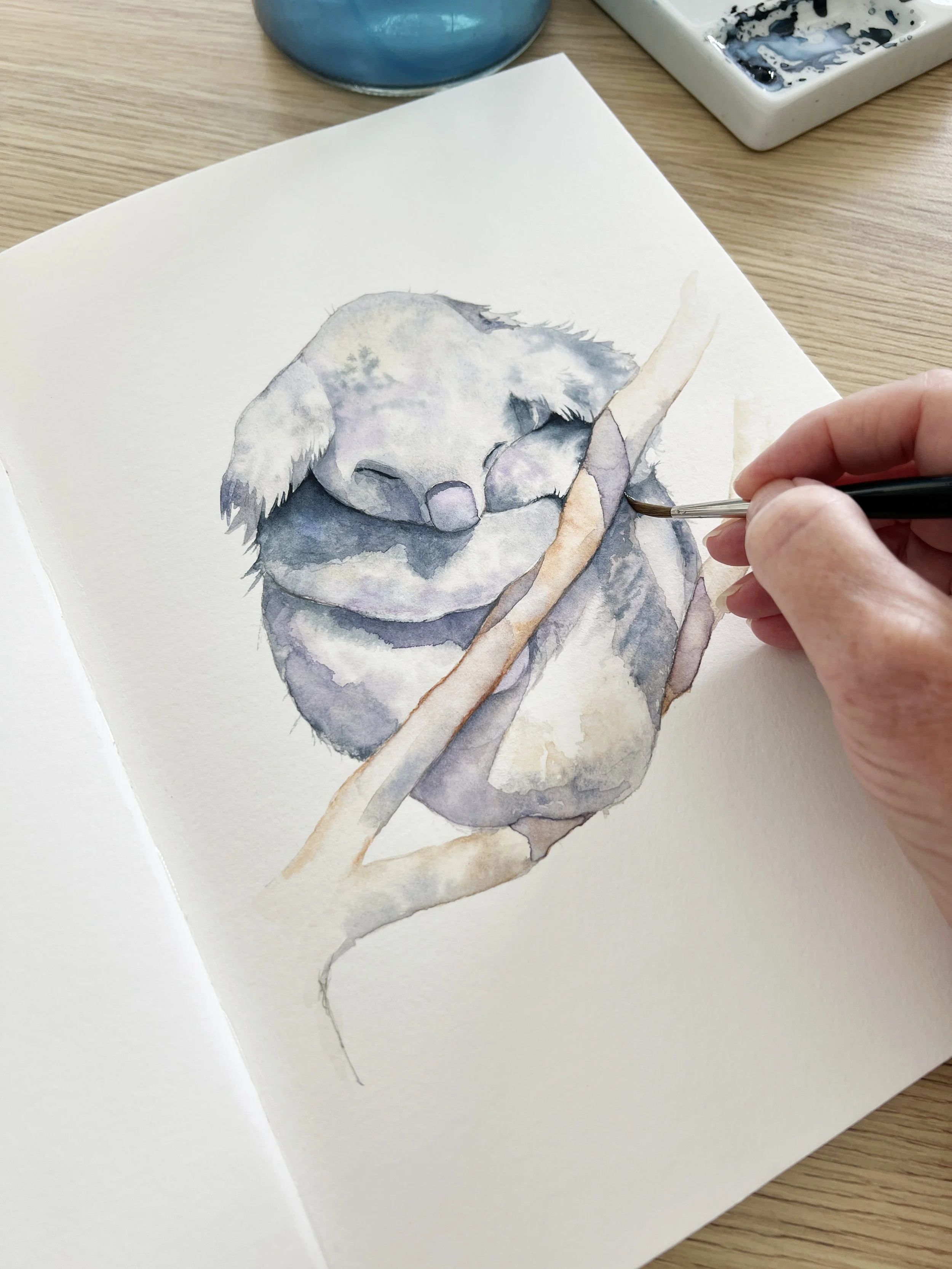
2. Start Lighter Than Feels Comfortable
One of the most common beginner mistakes in watercolour is starting too dark.
Watercolour is the medium of light! When your painting process begins with heavy colour, it quickly becomes difficult to control. Painters often try to fix it, which leads to overworking the paper.
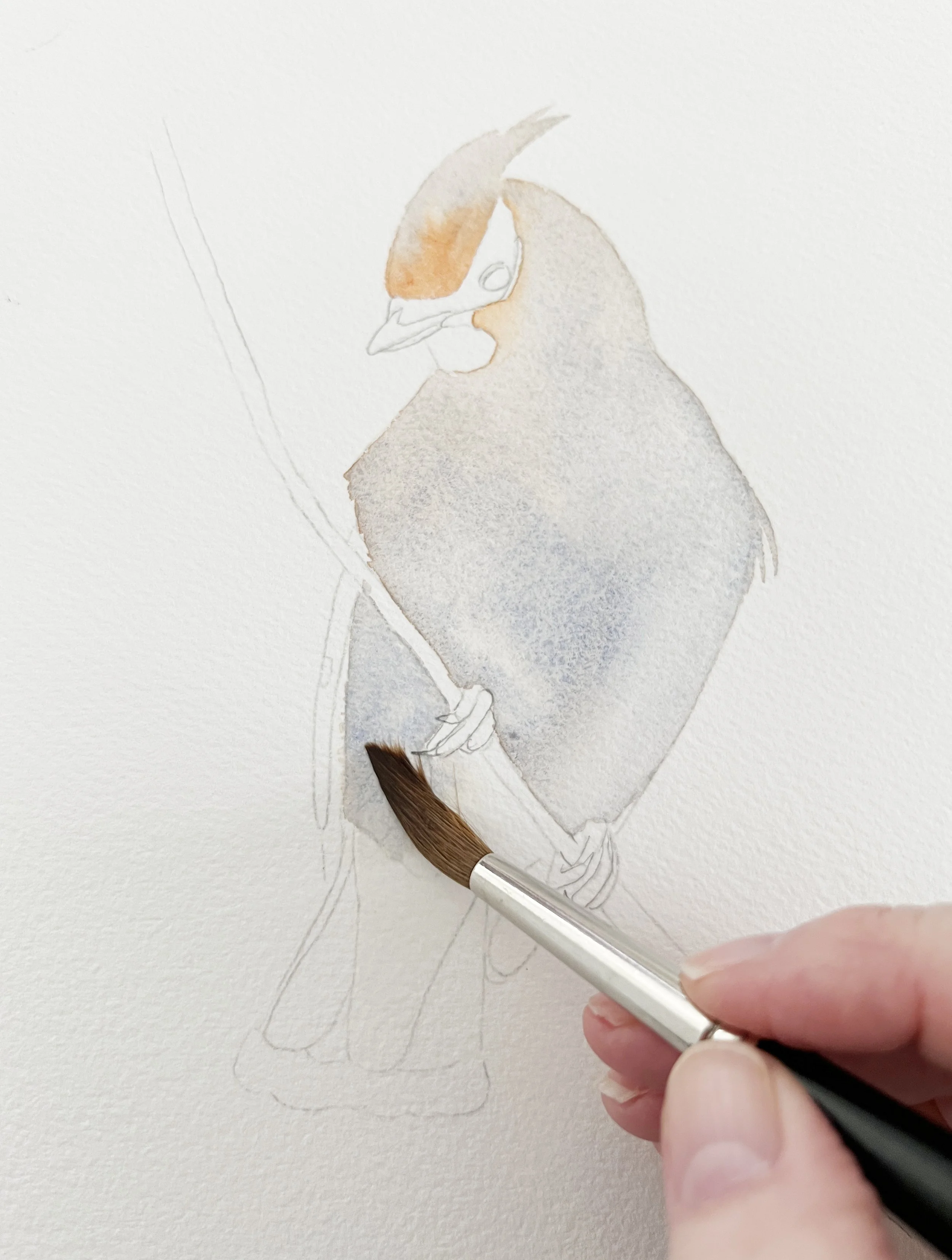
Watercolour works best when it is built gradually.
Starting with very light washes gives you time to adjust values slowly. Early stages often look weak and incomplete, but that is completely normal.
Those pale beginnings create the space needed for a painting to develop naturally.
3. Stop Fighting the Medium
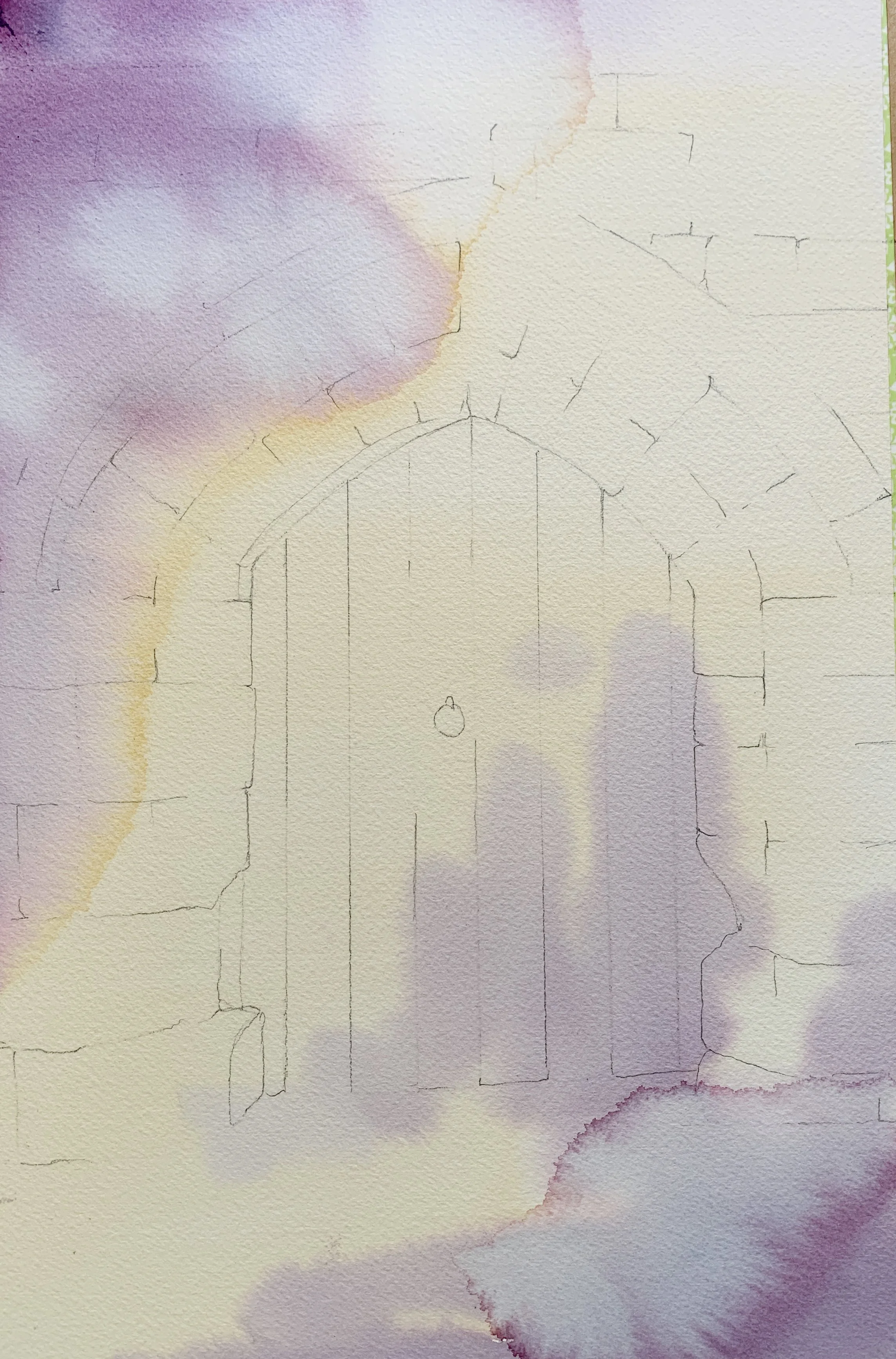
Watercolour moves. It blooms. Edges soften.
Many beginners try to control every part of this process, correcting every unexpected mark as soon as it appears. That can quickly become exhausting.
Instead, try observing the paint before reacting.
Allow soft edges. Watch how colour spreads on wet paper. Use fewer brush strokes rather than more. Often a painting improves when we simplify our brush strokes and let the paint move naturally across the paper.
Often the areas we first think are mistakes become some of the most interesting parts of the painting.
Watercolour works best when you learn to work with the medium rather than against it. Let it surprise you!
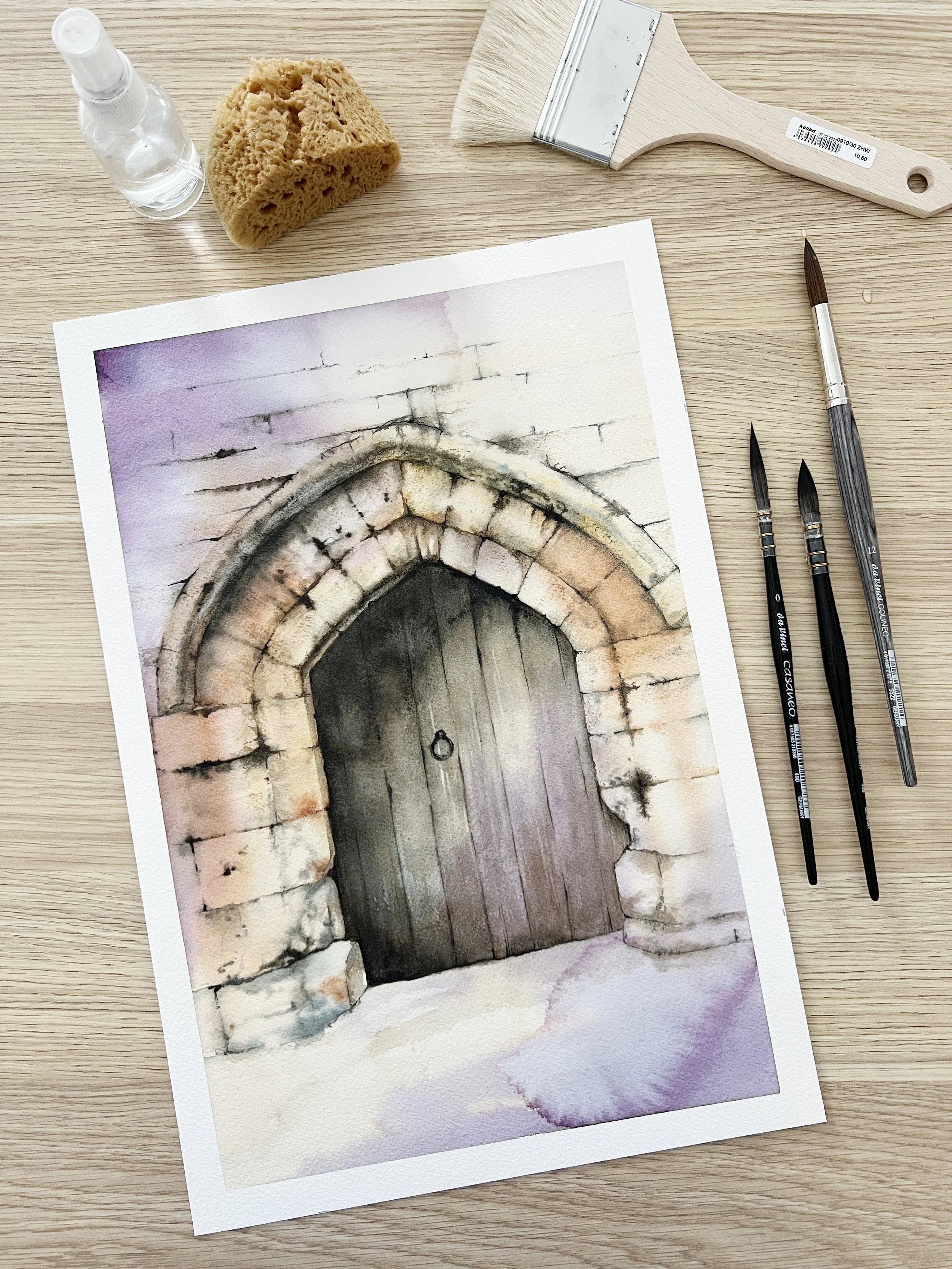
Watching how watercolour behaves in real time often makes these ideas much clearer than reading about them. Watch a free watercolour tutorial.
4. Simplify Your Palette and Your Subject
Anxiety often comes from trying to manage too many things at once.
Too many colours on the palette.
Too many details too early.
Too many decisions happening at the same time.
A limited palette makes watercolour much easier to manage. Focusing on large shapes before adding detail also helps simplify the process.
When there are fewer decisions to make, the mind becomes quieter. And painting becomes far more enjoyable.
5. Practise the Same Subject More Than Once
Many beginner painters try something once. If it doesn’t work, they assume they simply aren’t good at it.
But painting improves through repetition, not perfection.
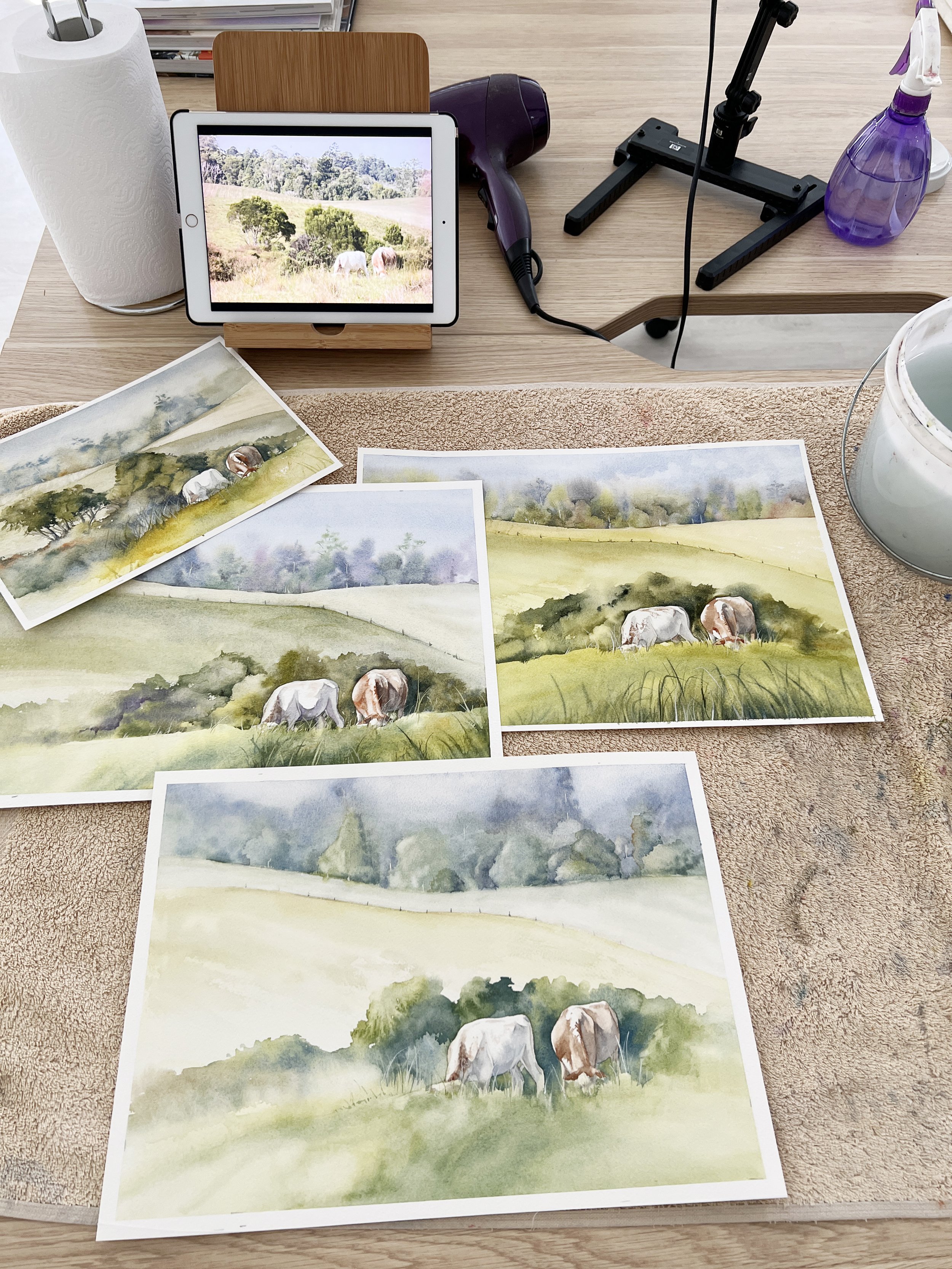
Try painting the same subject several times. Each attempt can focus on one thing: soft edges, values, transparency, or water control.
As familiarity grows, confidence grows with it.
6. Expect the “Ugly Stage”
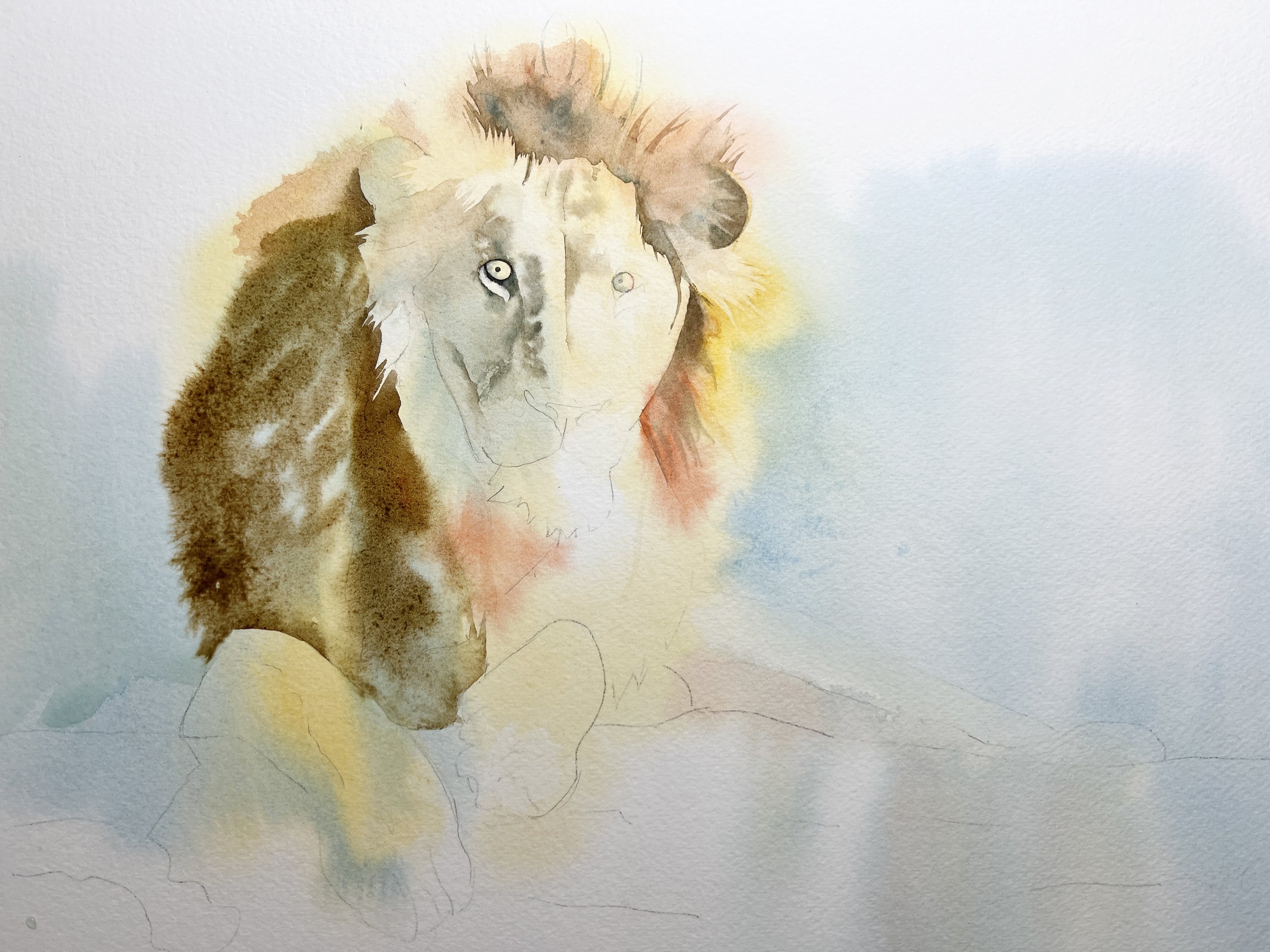
Every watercolour painting goes through an awkward middle stage.
The shapes may look disjointed. The colours may feel uncertain. At this point many painters assume the painting has failed and stop working on it.
In reality, this stage is completely normal.
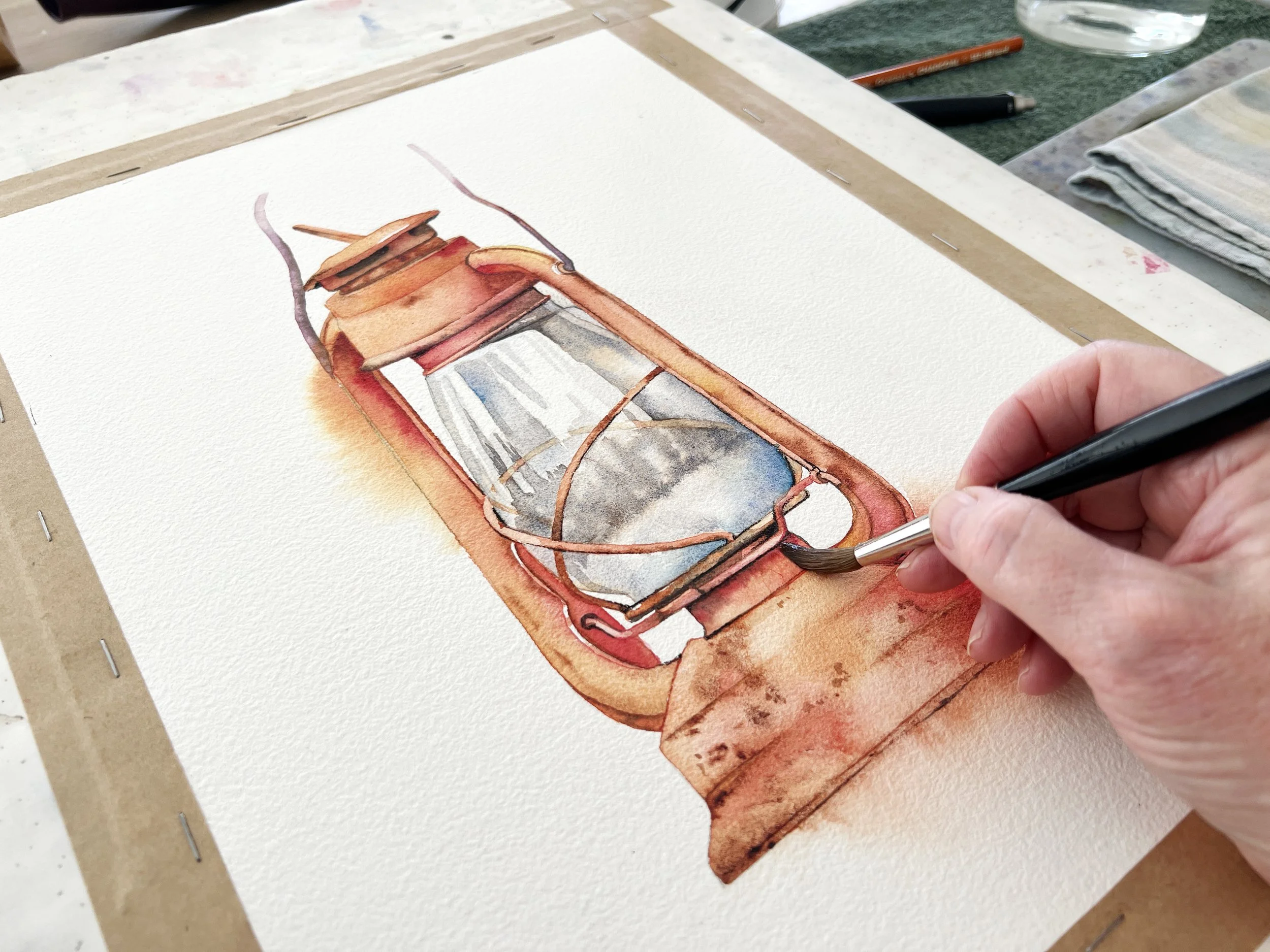
Once darker values are added and the painting develops further, many paintings begin to come together.
What often looks like failure is simply the middle of the process.

7. Use Good Watercolour Paper
Materials make a bigger difference than many beginners realise.
Inexpensive, non-cotton paper can make watercolour painting unnecessarily difficult. Washes may dry unevenly, blending becomes harder, and edges can look harsh.
Cotton watercolour paper behaves very differently.
It allows paint to move more gently across the surface and gives you more time to work before the paint dries.
Sometimes frustration with watercolour has less to do with skill and more to do with the paper being used.
8. Stop Comparing Your Work Online
Social media often shows only finished paintings.
Rarely do we see the practice sheets, the experiments, or the attempts that didn’t work.
When beginners compare their in-progress work to finished masterpieces, it’s easy to feel discouraged.
A far healthier comparison is with your own previous paintings.
Progress in watercolour happens quietly, over time, through practice and patience.
If you see yourself in any of this, you’re not alone. Happy accidents happen. Making common painting mistakes is part of the process.
Most watercolour fear isn’t about the paint.
It’s about expectation.
When the pressure to be perfect disappears, painting begins to feel lighter.
And when painting feels lighter, it becomes something it was always meant to be:
A practice.
A process.
An unfolding.
If you’d like some guidance as you build confidence with watercolour, I’ve created a free class where you can follow a full painting step by step.
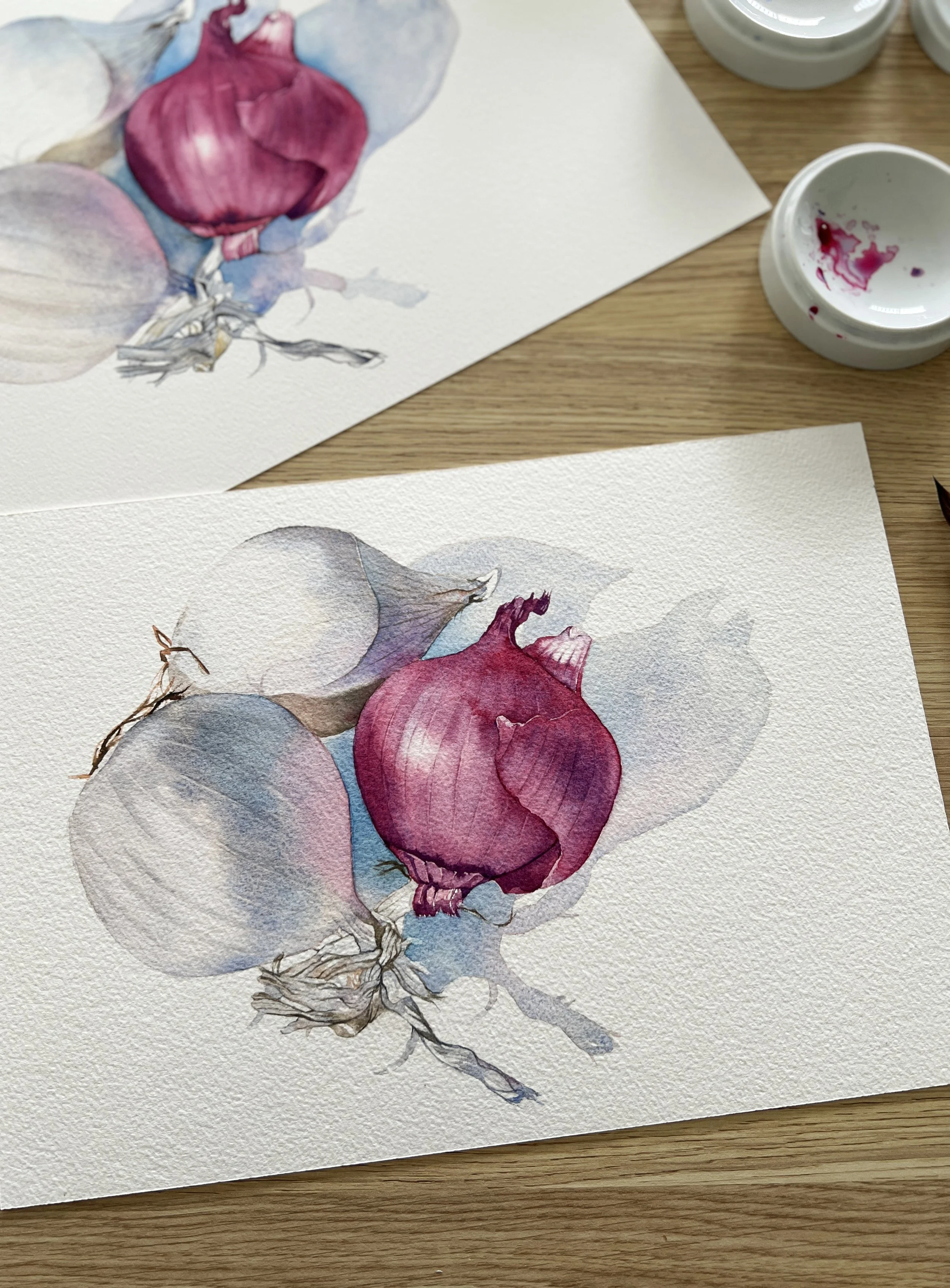

There’s a saying among watercolour painters: “If it looks right when it’s wet, it’s wrong.”
It’s a little dramatic, but it makes a good point. Watercolour often looks darker and more intense while wet. As it dries, the colour loses some of that intensity.
As a general guide, the change can be around 20–30%, although it varies between pigments and depends on how much water and pigment you use.
One way I deal with this is to make sure those areas are strong enough in the first wash, rather than assuming I’ll be able to correct everything later.