
Why Watercolour Dries Lighter
(and What to Do About It)
Have you ever painted a wash that looks beautiful while it’s wet, rich, glowing and exactly the colour you wanted, only to watch it dry and wonder where all that colour went?
It’s one of the frustrations of learning watercolour. You put down a lovely, fresh wash, and a little while later it looks pale and rather underwhelming.
The trick is learning to anticipate what the paint will look like when it dries, rather than judging it by how it looks on the paper right now.
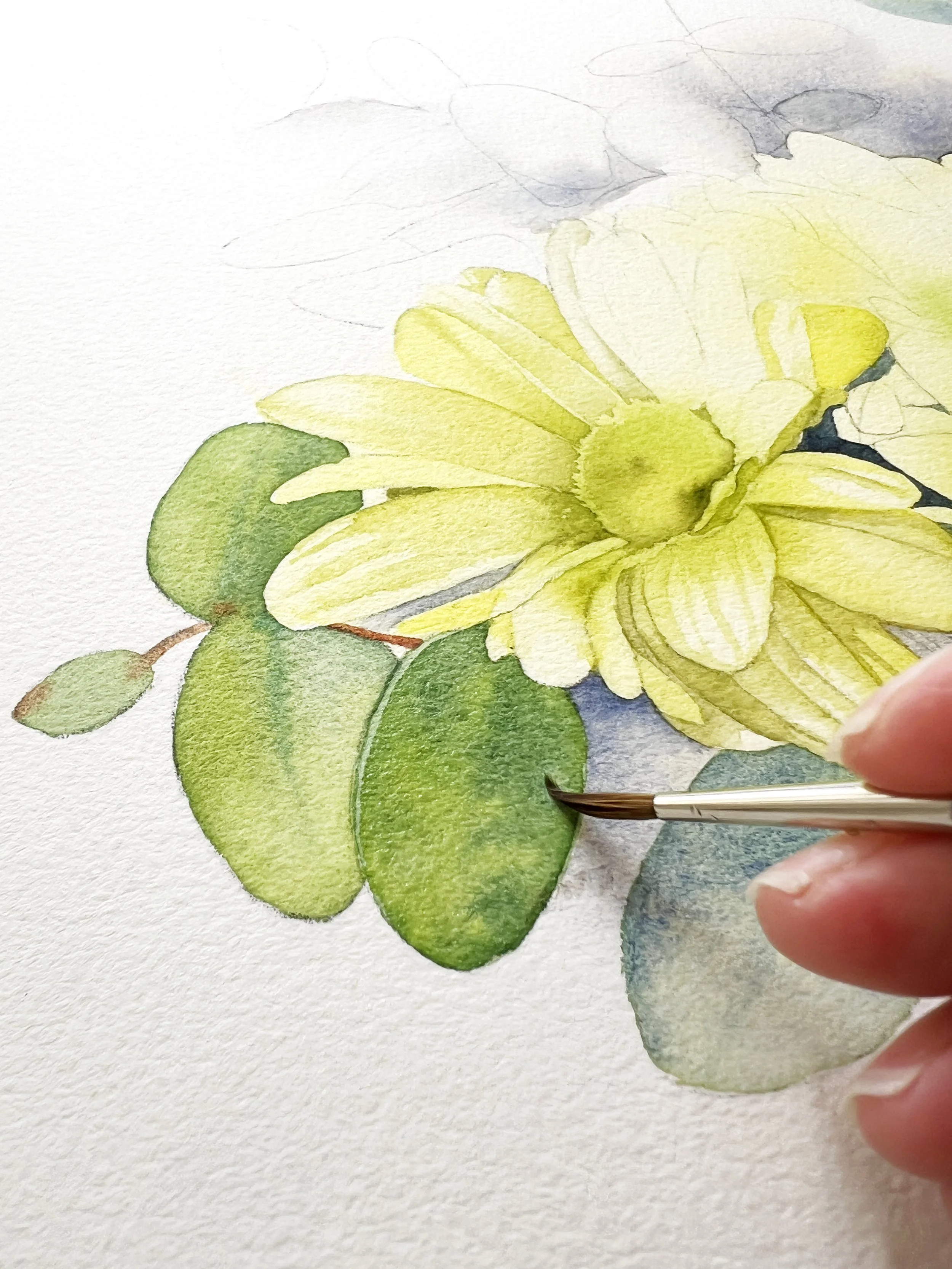
Building colour gradually with transparent layers allows you to deepen tonal values without losing the luminosity of the watercolour. Each layer can be assessed once dry before deciding whether more colour is needed.
Watercolour dries lighter
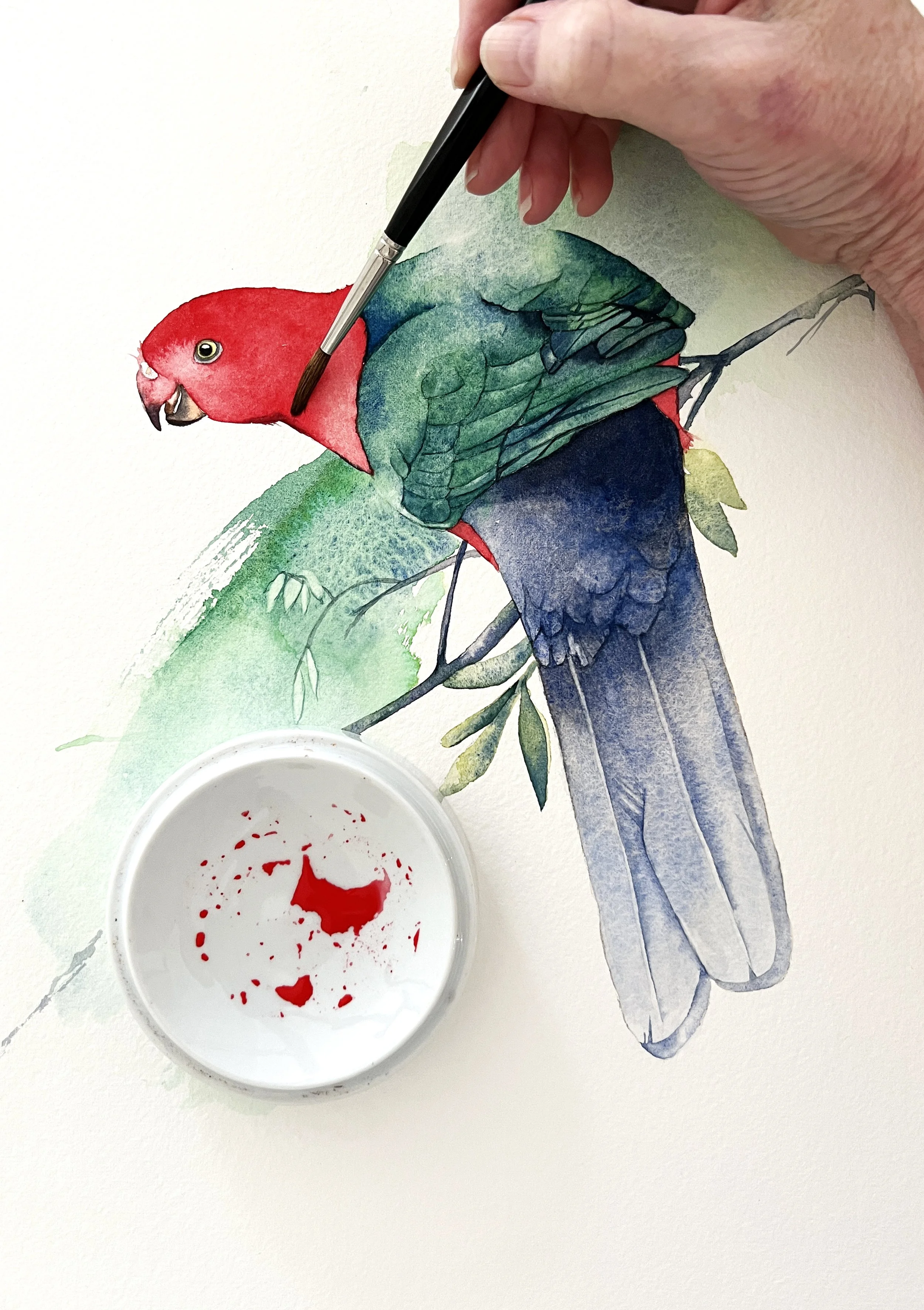
Strong, vibrant colours often need careful control of the pigment-to-water ratio. By allowing washes to dry before assessing their strength, you can build richer colour without unnecessarily overworking the painting.
There’s a saying among watercolour painters: “If it looks right when it’s wet, it’s wrong.”
It’s a little dramatic, but it makes a good point. Watercolour often looks darker and more intense while wet. As it dries, the colour loses some of that intensity.
As a general guide, the change can be around 20–30%, although it varies between pigments and depends on how much water and pigment you use.
I find this drying shift particularly frustrating when I’ve painted a beautiful, fresh wash that needs to stand on its own. You can always go back and make an area darker, but it’s a shame when a wash that looked just right, dries lighter than you intended.
One way I deal with this is to make sure those areas are strong enough in the first wash, rather than assuming I’ll be able to correct everything later.
Too much water, not enough pigment
Sometimes the drying shift is simply part of working with watercolour. But if your colours consistently dry much paler than you expected, take a look at your paint mixture.
It’s easy to add more and more water because you’re worried about making a colour too dark. The mixture looks lovely on your palette, and the wash goes onto the paper beautifully. But there may not be enough pigment in it to leave you with the depth of colour you wanted once the water has evaporated.
If you need a stronger colour, try using a little more pigment and less water.
You don’t need to make every wash dark and intense. A delicate wash might be exactly what your painting needs. The important thing is to understand the difference between a deliberately pale wash and one that has dried pale because the mixture was too diluted.
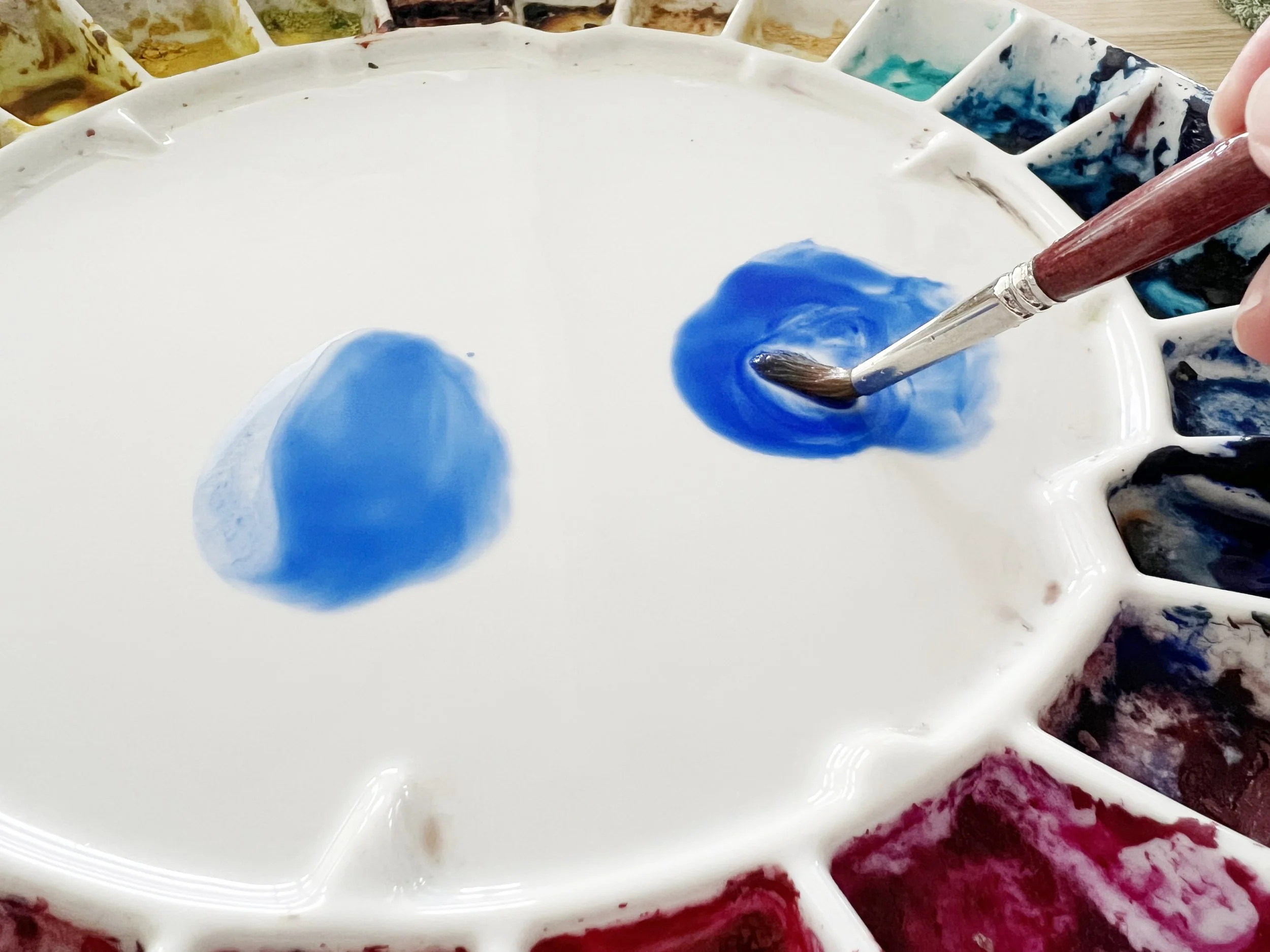
The more water you add to your mixture, the paler the colour will be. For a stronger wash, use more pigment and less water.
Don't judge a wash while it's wet
This is where patience comes in.
You paint an area and start wondering whether the colour is strong enough. So you add a little more paint, move the brush around and try to get the wash just right.
Before long, you’ve disturbed a wash that might have been better left alone.
I try to remember that the wet painting isn’t the finished painting. If I’m unsure about the strength of a colour, I let it dry before deciding what to do next.
Once the paper is completely dry, you can see what you actually have. Perhaps the colour is fine. Perhaps it needs another layer. Either way, you’re making a decision based on the dry wash rather than guessing while it’s still wet.
And you avoid a lot of unnecessary fussing.
Learn how your colours behave
Not every pigment dries the same way. Some colours change noticeably, while others seem to hold their intensity much better.
The best way to understand your own palette is to experiment.
Try painting small swatches of the colours you use most often on your usual watercolour paper. Look at each one while it’s wet, then leave it to dry completely.
You could also try making two swatches of the same colour: one with plenty of water and another with a stronger pigment mixture.
Compare them when they’re dry. You’ll begin to see how both the pigment and the amount of water affect the result.
This is a simple exercise, but it can be surprisingly revealing. You’ll start to recognise how much your different colours change as they dry and how strong your mixtures need to be to achieve the value you want. Over time, you’ll become much better at anticipating the drying shift.
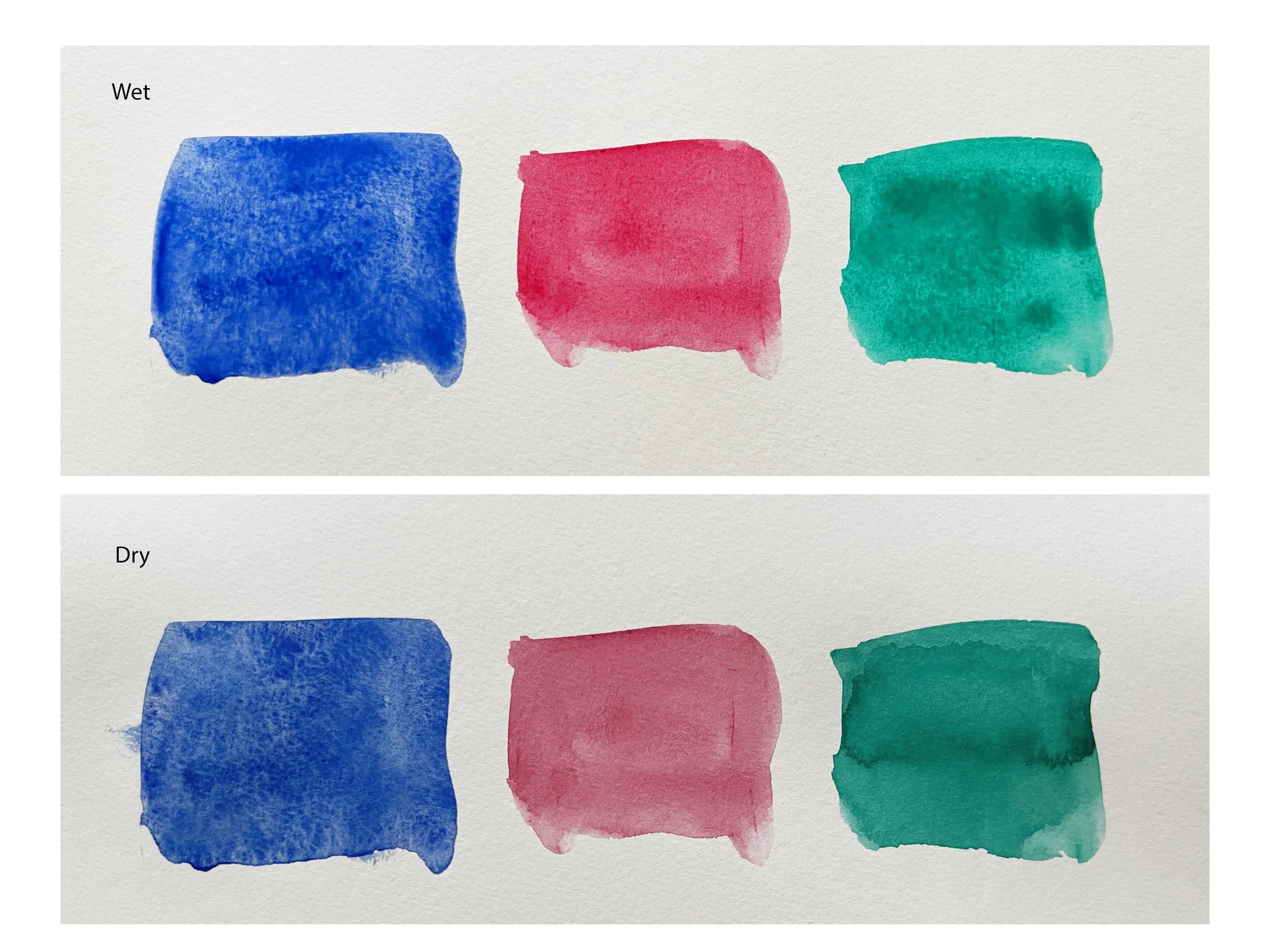
The top swatches are still wet and the bottom swatches are completely dry. Notice how the colours lose some of their intensity as they dry.
Build up colour gradually
If a wash dries too pale, you don’t necessarily need to start again. Often, you can deepen it with another transparent layer once the first one is completely dry.
This is one reason I prefer to build colour gradually. I can begin with a lighter wash, assess it once it’s dry, and then add another layer if it needs more depth.
That doesn’t mean rushing to put in your darkest values. I generally prefer to save those until later in a painting, particularly if I’ll be working around them and risk disturbing them.
There are times, though, when I know an area needs a good strength of colour and won’t require much further work. In that case, I’d rather mix a strong enough wash from the beginning than deliberately make it too pale and rely on additional layers.
The aim isn’t to make everything darker than you want it to be. It’s to become familiar enough with your paint that you can anticipate how a wash will dry and choose the right strength for what you’re painting.
Don’t chase the wet colour
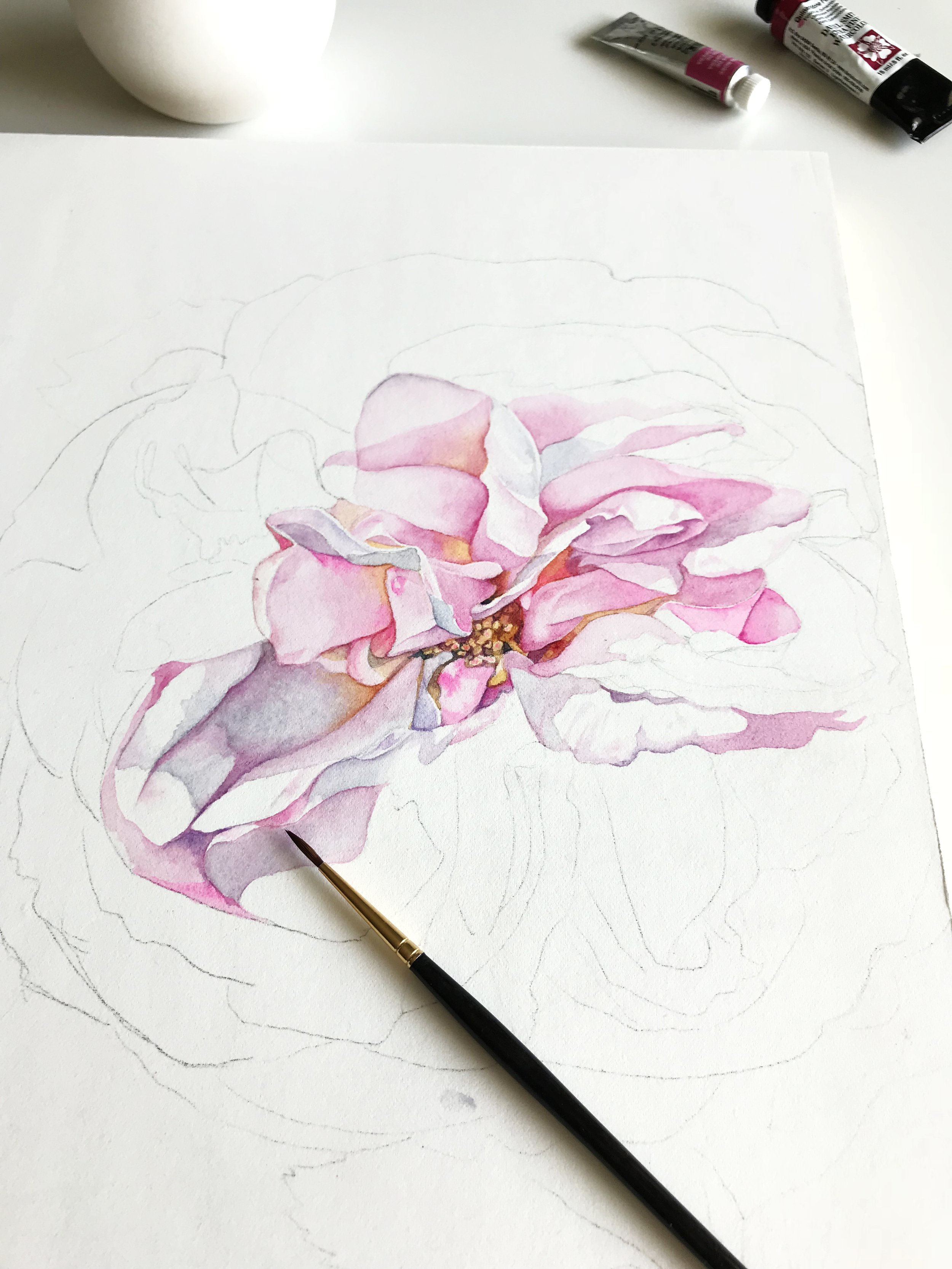
Starting with pale washes allows you to build colour gradually. As each layer dries, you can judge its final strength before adding more pigment to deepen the shadows and define the petals.
Once you understand that watercolour dries lighter, it’s tempting to compensate by making every mixture stronger.
Be careful with that. If you keep adding more pigment while the wash is still wet, trying to account for how much lighter it will eventually dry, you can easily end up with a painting that is darker or heavier than you intended.
Watercolour asks you to think a little ahead. You need to allow for what will happen as the water evaporates, but you also need to give the paint time to do its thing.
Sometimes a wash will dry just as you hoped. Sometimes it will need another layer. And sometimes the best decision is to leave it alone.
Learn to see the dry painting
At first, the difference between wet and dry colour can feel unpredictable. With practice, you begin to anticipate it.
You learn how your colours behave as they dry. You become more comfortable leaving a wash alone while it dries. And you start to judge your paint by the result you’re working towards, rather than by its temporary wet appearance.
So the next time you put down a beautiful wash and think, I wish it would stay like that, resist the urge to fiddle with it.
Let it dry. Then take a proper look.
If it needs more colour, you can add another layer. If it doesn’t, you’ve saved yourself a lot of unnecessary brushwork.
The secret isn’t to stop watercolour from drying lighter. It’s to learn to paint for the colour you’ll have when it does.
Build Your Confidence with Watercolour
Understanding how watercolour behaves is an important part of becoming a more confident painter. In my step-by-step online watercolour classes, I'll show you how I mix colours, control water and pigment, build transparent layers and develop depth in my paintings.
You can watch me work through each painting from start to finish, with clear explanations of the techniques and decisions I make along the way.
New to watercolour? Start with the free class.


There’s a saying among watercolour painters: “If it looks right when it’s wet, it’s wrong.”
It’s a little dramatic, but it makes a good point. Watercolour often looks darker and more intense while wet. As it dries, the colour loses some of that intensity.
As a general guide, the change can be around 20–30%, although it varies between pigments and depends on how much water and pigment you use.
One way I deal with this is to make sure those areas are strong enough in the first wash, rather than assuming I’ll be able to correct everything later.